.webp)


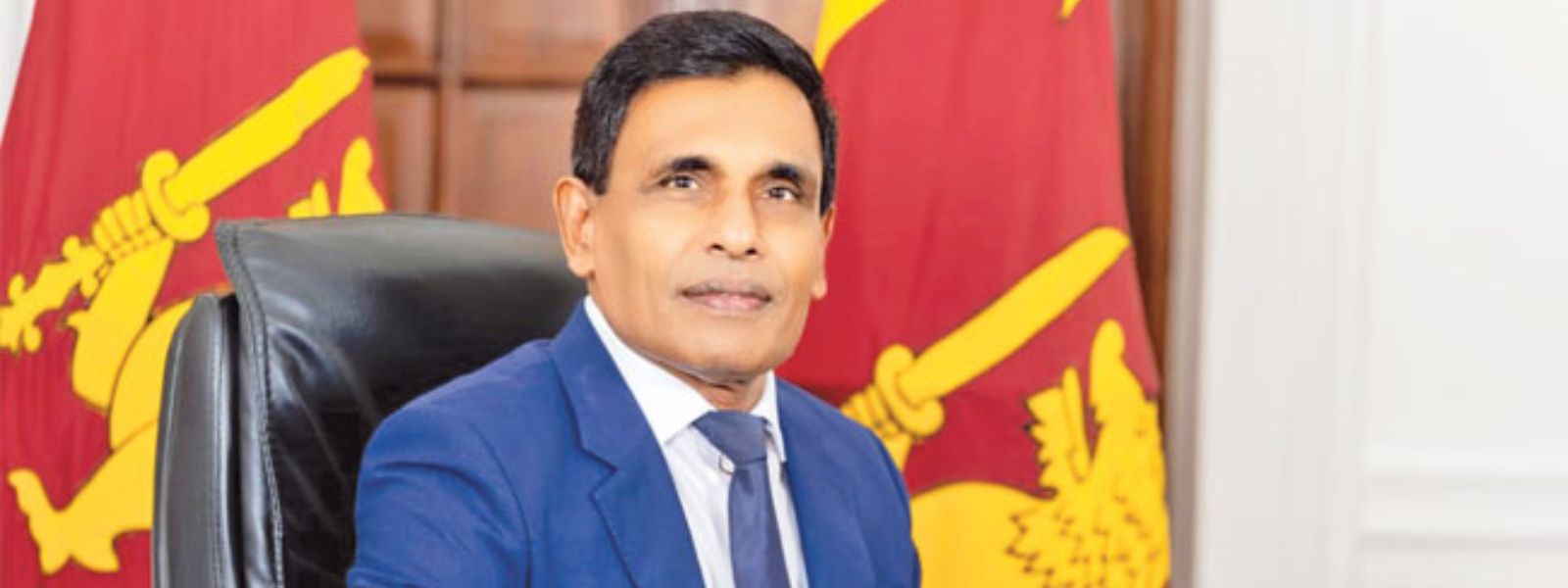
Supreme Court Clears Way to Hear Case Challenging Security Minister’s MP Seat



.png )
COLOMBO (News 1st); Sri Lanka’s Supreme Court has granted leave to proceed with a high-profile appeal seeking a ruling that Public Security Minister Ananda Wijepala is not qualified to hold a seat in Parliament.
The decision was made after considering an appeal petition filed by former Sri Lanka Podujana Peramuna administrative secretary Renuka Perera.
A three-judge bench comprising Justices Janak de Silva, Menaka Wijesundara, and Sampath Wijeratne reviewed the submissions and unanimously determined that the matter warrants a full hearing.
However, the Supreme Court rejected a request by the petitioner’s side to issue an interim order preventing Minister Wijepala from sitting in Parliament and exercising his voting rights until a final determination is made.
The legal dispute originates from an earlier writ petition filed before the Court of Appeal by Renuka Perera, challenging Wijepala’s position as a Member of Parliament on the basis that he had also been serving as Chief of Staff to the President.
The petitioner argued that holding a state position while serving as an MP constitutes a disqualification under constitutional provisions governing parliamentary eligibility.
During proceedings before the Court of Appeal, the Attorney General raised preliminary objections, pointing out that the President had not been named as a respondent in the petition.
It was also argued that despite holding the role of Chief of Staff, Wijepala did not receive any salary from the government in that capacity, making it legally untenable to classify him as a state employee in terms of disqualification criteria.
Accepting these preliminary objections, the Court of Appeal last year dismissed the writ petition without proceeding to a full hearing.
Subsequently, Renuka Perera challenged that decision before the Supreme Court through the present appeal.
During the hearing, counsel for the petitioner, Attorney-at-Law Vishva Vimukthi, argued that under the Constitution, an individual elected to Parliament is not legally permitted to hold a position within the state service, asserting that Wijepala’s dual roles amount to a constitutional violation.
In response, President’s Counsel Jeffrey Alagaratnam, appearing on behalf of Minister Wijepala, strongly rejected these claims.
He maintained that in order to be considered a state employee, an individual must receive remuneration or financial benefit from the government.
He emphasized that Wijepala had served in an honorary capacity as Chief of Staff and had not drawn any salary, thereby disqualifying the argument that he held a state position in the legal sense.
Supporting this position, Deputy Solicitor General Rajeev Perera, representing the Attorney General, argued that disqualification would arise only if an individual held a government position at the time of being elected to Parliament.
He noted that Wijepala did not hold any such post at the time of his election, and therefore there was no legal barrier to him taking his seat or participating in parliamentary proceedings.
After considering submissions from all parties, the Supreme Court bench unanimously decided that an examination on the appeal must be carried out.
Accordingly, the court fixed November 3 as the date to commence the hearing of the appeal.
Other Articles


-844386_550x300.jpg)



Featured News



News 1st, MTV Channel (Pvt) Ltd, MBC Networks (Pvt) Ltd, 45/3, Braybrooke Street, Colombo-02.
T.P : +94 114 792 700, Fax : +94 114 792 733
T.P : +94 114 792 700, Fax : +94 114 792 733




 |  | .webp) |
|---|---|---|
 |  |  |
 |  |  |
 |
