.webp)


Seven Pillars of Peace for a Harmonious Nation



.png )
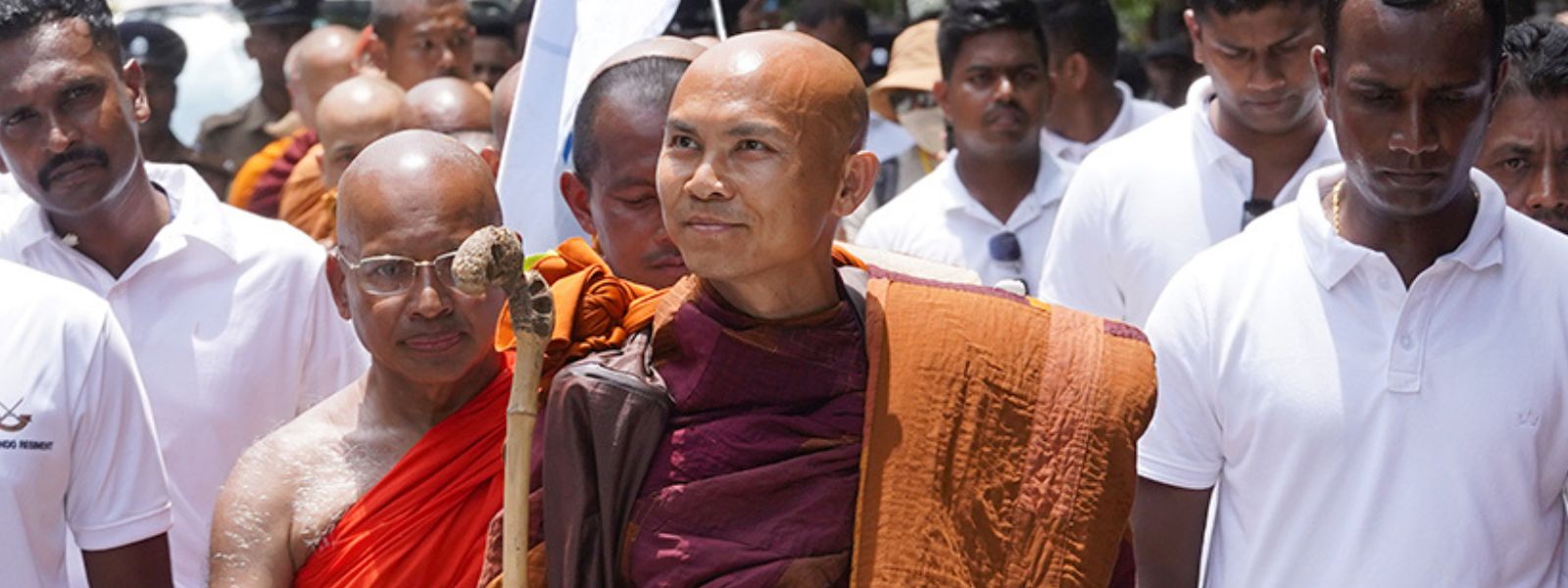
COLOMBO (News 1st); Venerable Pannakara Thero has paid tribute to the people of Sri Lanka for the compassion and kindness shown during the Walk for Peace, while also highlighting seven essential principles taught by Lord Gautama Buddha for maintaining harmony within a nation.
Reflecting on the journey, Venerable Pannakara Thero said participants walked through heavy rain, scorching heat and barefoot on asphalt roads that tested both body and mind. Despite these hardships, he said the people of the country responded not with indifference but with generosity and care. Roads were watered, banana leaves and flower carpets were laid to soften the path, and respect was shown through smiles, kindness and open concern.
Describing this response as the true strength of a peaceful nation, Venerable Pannakara Thero expressed deep gratitude on behalf of himself, the Walk for Peace team and all those touched by the journey.
He then reflected on a broader message drawn from Buddhist teachings, noting that Lord Gautama Buddha did not only guide individuals on living peacefully, but also offered clear guidance on how a nation can establish and sustain peace.
According to Venerable Pannakara Thero, there are seven essential qualities that support harmony in society, which remain deeply relevant today.
First, he said a nation must come together regularly in unity to discuss and reflect on what is right and beneficial, warning that divisions arise when communication rooted in wisdom and understanding breaks down.
Second, he stressed that when people gather, they must meet in harmony, act in harmony and disperse in harmony, noting that peace is shaped not just by meeting, but by how people treat one another.
Third, he said a peaceful nation must respect and uphold justice and ethical principles, and avoid impulsive or harmful actions toward all sentient beings.
Fourth, Venerable Pannakara Thero emphasised the importance of respecting elders who carry experience and wisdom, adding that a society that neglects its elders loses its values.
Fifth, he highlighted the protection of women and children as essential, stating that where there is safety and dignity, there is stability and growth.
Sixth, he said spiritual and cultural values must be preserved, noting that sacred places, traditions and teachings serve as anchors to a nation’s cultural identity and heritage.
Seventh, he said a nation must respect and protect those who live virtuously, as virtuous citizens form the foundation for liberty, stability and moral strength in society.
Venerable Pannakara Thero said that when these seven qualities are upheld, peace does not need to be pursued but becomes a natural way of life. Taking the reflection further, he urged individuals to look inward, noting that each person carries an inner world with its own conflicts and peace.
He said peace in the outer world cannot be sustained without wisdom governing the inner world, and encouraged individuals to question whether they meet their thoughts with mindfulness, avoid what is harmful, listen to wisdom within and around them, and cultivate kindness and patience.
According to Venerable Pannakara Thero, when individuals establish peace within themselves, it naturally extends to families, communities, nations and ultimately the world, as peace is built from the inside out.
He also spoke of a special presence during the Walk for Peace, noting that a canine named Aloka walked alongside the group. Though unable to speak human language, Aloka conveyed a profound message about extending loving‑kindness and compassion to all living beings.
Venerable Pannakara Thero said the way a society treats its animals reflects the depth of its humanity, and described the love, care and protection shown to Aloka and other animals along the way as deeply inspiring. He urged that this compassion should not end with the walk, but continue to grow beyond it.
Other Articles
-860194_550x300.jpg)




Featured News




News 1st, MTV Channel (Pvt) Ltd, MBC Networks (Pvt) Ltd, 45/3, Braybrooke Street, Colombo-02.
T.P : +94 114 792 700, Fax : +94 114 792 733
T.P : +94 114 792 700, Fax : +94 114 792 733




 |  | .webp) |
|---|---|---|
 |  |  |
 |  |  |
 |
