.webp)


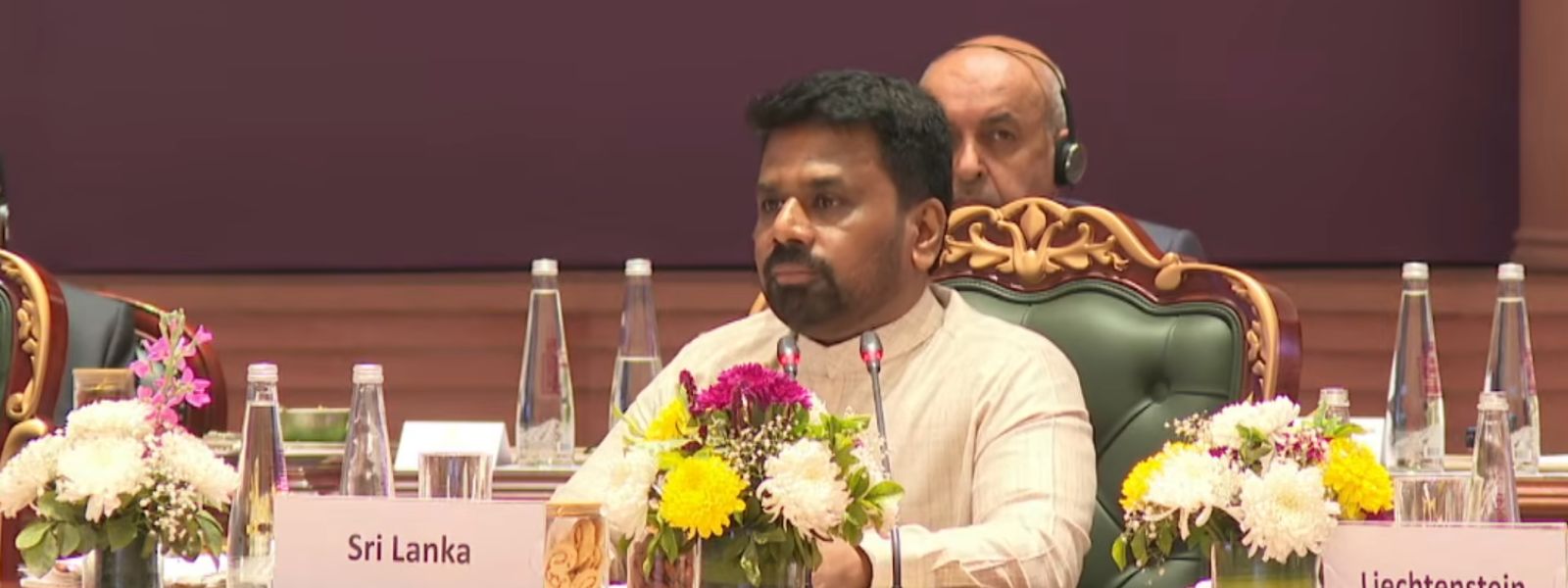
No Nation Can Build an AI‑Ready Future Alone, Says Sri Lanka President In Delhi



.png )
COLOMBO (News 1st); Sri Lankan President Anura Kumara Dissanayake, addressing the AI Impact Summit in New Delhi, India, called for urgent global cooperation to ensure Artificial Intelligence develops in a way that is equitable, culturally aligned, and accessible to all nations.
The President described AI as a transformational force reshaping national development “in a manner comparable to the industrial revolutions of past centuries.”
He warned that the growing gap between AI-empowered nations and those without similar capabilities is creating severe risks, pushing many to the margins of the digital economy.
Countries already lagging behind, he said, may face even greater vulnerabilities as global economic shifts accelerate, threatening shared aspirations for inclusive, equitable, and sustainable development.
He acknowledged that Sri Lanka, like many emerging economies, has not yet fully developed the infrastructure needed to harness AI’s full potential. This, he stated, places the nation at a decisive moment requiring principled, confident, and forward-looking action.
Highlighting Sri Lanka’s strengths, the President noted that the country has a youthful, technically skilled workforce, a strong legal system, and an economic culture shaped by international partnerships.
He said the government is modernising legal frameworks on personal data protection and cybersecurity, investing in digital public infrastructure, and strengthening institutions to support innovation while maintaining public trust.
Turning to global debates on AI governance, ownership, and safety, President Dissanayake drew attention to what he called an overlooked but critical dimension: cultural alignment.
AI systems, he stressed, must uphold and advance humanity’s cultural values. If global AI development is dominated by a few languages and ideologies, the world’s cultural diversity risks being eroded.
For nations like Sri Lanka and India, where language and culture form the foundation of dignity and identity, broad inclusion and active preservation are essential. He called for local languages and cultural knowledge to be digitised and integrated into AI systems, supported by safeguards that protect against harmful impacts on cultural heritage.
The President emphasised that Sri Lanka’s vision is based on collective progress rather than isolated success.
He identified AI infrastructure as the next frontier for economic and cultural cooperation and proposed a regional approach grounded in four pillars: shared and cost-efficient data governance, common language data sets, unified evaluation mechanisms, and integrated security frameworks with capacity development.
Such an approach, he said, would ensure AI’s benefits remain broad-based and equitable.
Under this framework, Sri Lanka is exploring the development of national and regional AI-ready data infrastructure that meets both domestic and regional needs.
He noted that India and other partner states already demonstrate global leadership in digital public infrastructure and technical expertise, positioning Sri Lanka to collaborate on building sustainable, secure, and future-ready regional AI data facilities.
President Dissanayake reaffirmed that no country can build an AI-ready future in isolation. He welcomed the joint declaration to be endorsed at the summit, which recognises the importance of cooperative effort across regions and the world.
He stated that Sri Lanka stands ready to share common values, learn collectively, and move forward together to ensure AI remains ethical, inclusive, and guided by principles that leave no one behind.
Other Articles

-827720_550x300.jpg)








Featured News

-822734_550x300.jpg)
News 1st, MTV Channel (Pvt) Ltd, MBC Networks (Pvt) Ltd, 45/3, Braybrooke Street, Colombo-02.
T.P : +94 114 792 700, Fax : +94 114 792 733
T.P : +94 114 792 700, Fax : +94 114 792 733




 |  | .webp) |
|---|---|---|
 |  |  |
 |  |  |
 |
