.webp)


IMF Commitments Revised to Ease Public Burden : Deputy Minister Confirms



.png )
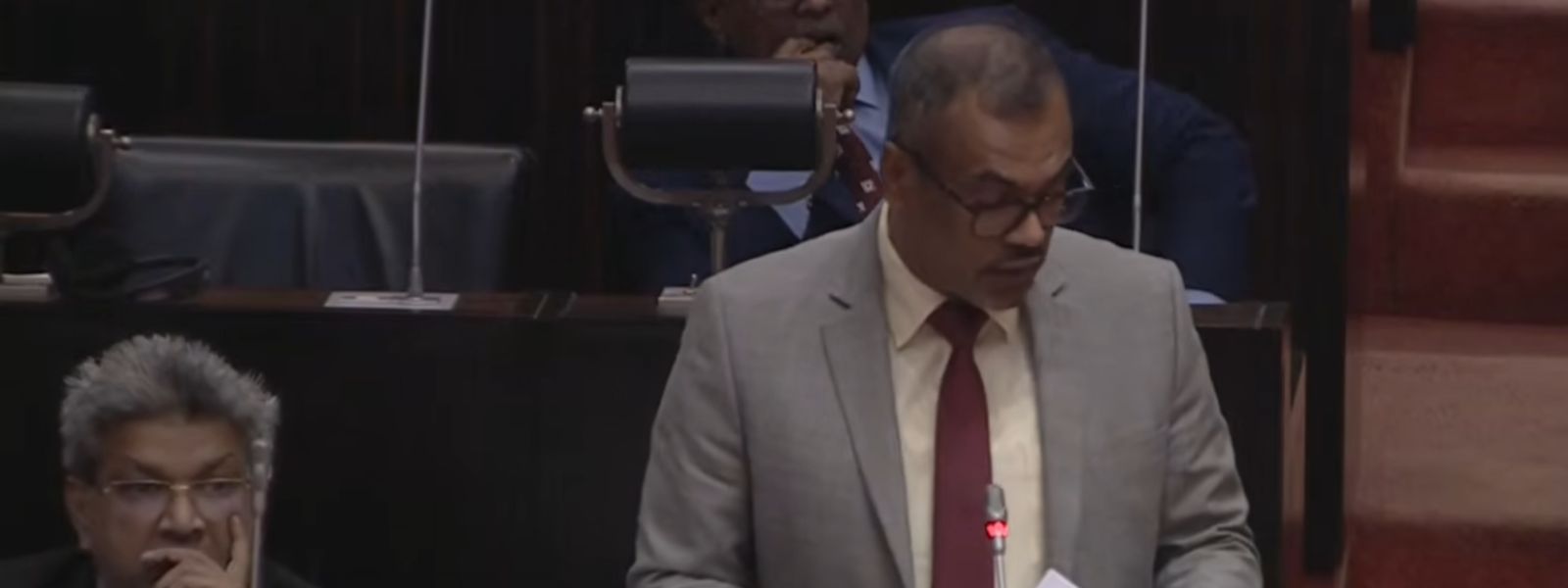
COLOMBO (News 1st); Sri Lanka’s Deputy Minister of Finance and Planning, Anil Jayantha outlined a series of key revisions made to the country’s IMF-supported Extended Fund Facility (EFF), revealing substantial relief measures, tax revisions, and restored international confidence following the nation’s debt crisis.
Jayantha noted that the Letter of Intent requesting the EFF had originally been signed on 6 March 2023 by the former President, then serving as Minister of Finance, and the Governor of the Central Bank.
The IMF’s Executive Board approved the EFF on 20 March 2023, but the agreement had not been submitted to Parliament prior to approval.
He emphasised that the current government renegotiated several commitments during the programme’s fourth review, including additional discussions with the IMF to accommodate post-cyclone spending requirements.
Upon President Anura Kumara Dissanayake assuming office, further steps were taken to revise terms under the third review. Following staff-level talks concluded in November 2024, several amendments were introduced to ease public hardship and deliver more equitable outcomes.
Among the decisions announced:
Personal income tax relief: The tax-free threshold was raised from Rs. 1.2 million to Rs. 1.8 million per year. The tax bracket was expanded from Rs. 500,000 to Rs. 1 million with a 6% tax rate.
Support for local industries: VAT was removed on the production of local fresh milk and yoghurt made from domestically sourced milk, aiming to promote child nutrition and strengthen local agriculture.
Property tax safeguards: Taxes based on imputed rental income will not be levied until appropriate valuation methods and administrative procedures are established.
Corporate tax relief: The tax rate on service exports was reduced from 30% to 15%.
Withholding tax adjustments: The 10% withholding tax will not apply to individuals whose annual assessable income is below Rs. 1.8 million.
Jayantha stressed that despite Sri Lanka’s ongoing commitment under the IMF programme to maintain a primary surplus of at least 2.3% of GDP and keep primary expenditure below 13% of GDP, the government successfully negotiated exemptions to protect social spending and introduce additional welfare-oriented measures.
Reflecting on Sri Lanka’s financial crisis, Jayantha explained that the declaration of a debt standstill had severely damaged the country’s global reputation and creditworthiness. International rating agencies downgraded Sri Lanka to default categories, blocking access to global capital markets.
This restricted new foreign financing and heightened perceived risk premiums on Sri Lankan debt, further constraining private investment inflows.
He said rebuilding credibility required consistent policy commitment, fiscal discipline, and transparency in negotiations with creditors and global institutions.
The progress achieved so far under the IMF programme has been crucial in gradually restoring investor and development-partner confidence.
Other Articles

-827720_550x300.jpg)








Featured News



-822734_550x300.jpg)
News 1st, MTV Channel (Pvt) Ltd, MBC Networks (Pvt) Ltd, 45/3, Braybrooke Street, Colombo-02.
T.P : +94 114 792 700, Fax : +94 114 792 733
T.P : +94 114 792 700, Fax : +94 114 792 733




 |  | .webp) |
|---|---|---|
 |  |  |
 |  |  |
 |
