.webp)


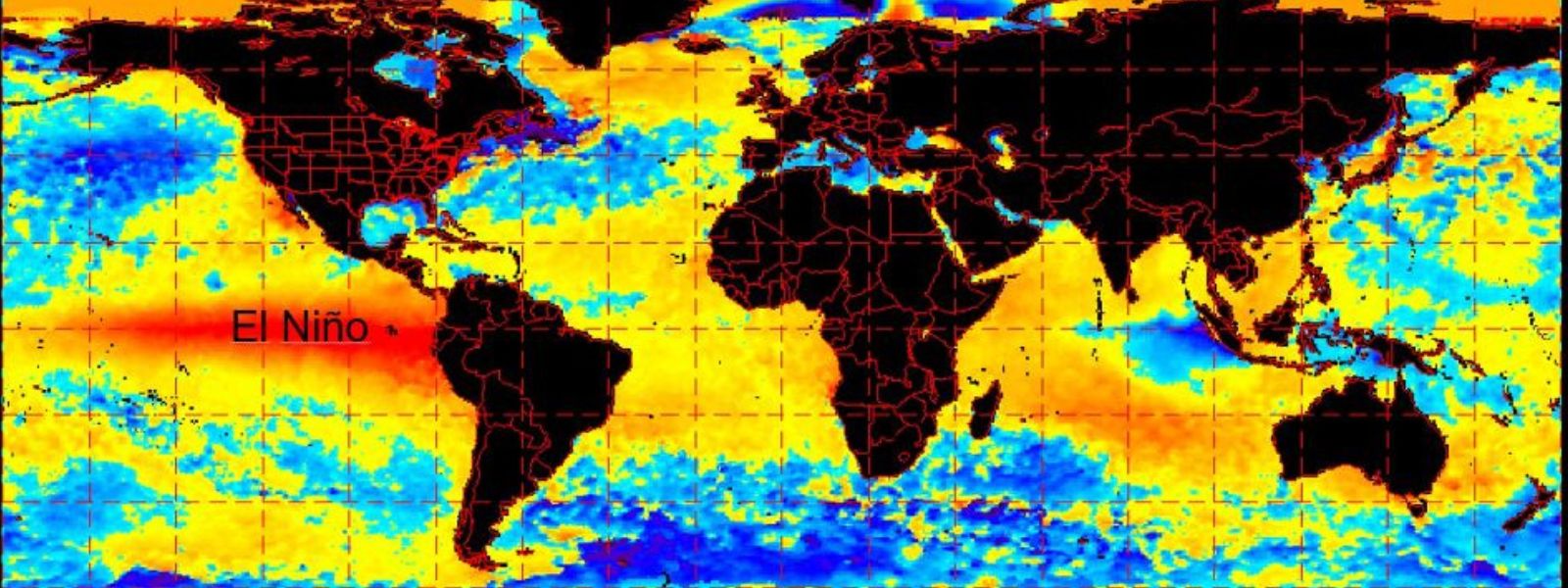
Major El Niño Impact on Sri Lanka in Coming Months



.png )
COLOMBO (News 1st); The temperature in the central Pacific Ocean could rise to as much as 3.6 degrees Celsius above average due to the developing El Niño phenomenon, according to the Australian Bureau of Meteorology.
The bureau's latest data indicates that the peak warming is expected to be recorded in November this year.
Meteorologists note that such a powerful El Niño event has rarely been observed over the past century.
Against this backdrop, what does it mean for Sri Lanka's weather in the coming months?
From May to September, Sri Lanka is typically under the influence of the Southwest Monsoon.
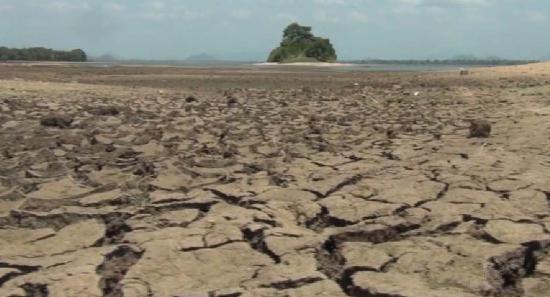
At present, however, all parts of the country apart from the southwestern regions are experiencing severe dry weather conditions.
According to the Department of Meteorology, while relatively dry weather during these months is not unusual, the strengthening El Niño phenomenon has intensified conditions, contributing to a more severe drought situation.
During an El Niño event, warmer ocean waters shift from the Indian Ocean towards the Pacific Ocean. As sea surface temperatures around Sri Lanka decline, rainfall is significantly reduced.
This is the situation currently affecting Sri Lanka.
Official figures show that 70,828 people have been affected by the prevailing dry weather conditions.
The Monaragala District has reported the highest impact, with 33,023 people affected.
Residents in several parts of the country say the prolonged drought has severely disrupted their livelihoods.
A resident in Polonnaruwa said, "We haven't had rain for nearly four months. All the tanks have dried up, and our cultivation activities have been badly affected."
Another resident said, "There isn't even a blade of grass left for animals to feed on. That's how severe this drought has become."
In Puttalam, a farmer said, "Even coconut trees are beginning to die. There is very little water left in the Deduru Oya. We are now digging channels just to water the coconut trees."
He added, "I have about three to three-and-a-half acres of land. Earlier I harvested around 3,500 coconuts, but now the yield has dropped to around 1,700 to 1,800. Production has been cut by almost half."
In Anuradhapura, a woman said, "All the crops cultivated this season have been destroyed. There is no water left even in tanks and wells."
Another resident warned, "If the dry weather continues next month as well, we won't have drinking water. There won't be water for bathing or even for animals."
A farmer in the area said, "The sesame crop was just about to flower when it dried up and was destroyed. These are crops we cultivated using our own hard-earned money."
Meanwhile, temperatures in the Pacific Ocean continue to rise.
According to the latest data released by the Australian Bureau of Meteorology, temperatures in the central Pacific are currently around 2.2 degrees Celsius above average.
Forecasts indicate that this could increase to 3.6 degrees Celsius by November, while Sri Lanka's Department of Meteorology says there is a strong possibility that this could become the most powerful El Niño event in nearly 75 years.
Sri Lanka typically experiences a mixed impact from El Niño events.
This is largely due to the country's location in the Indian Ocean and its exposure to both the Southwest and Northeast Monsoons.
Director General of the Department of Meteorology, Ajith Wijemanne, said:
"We do not expect continuous drought, nor do we expect continuous rainfall. Sri Lanka generally experiences a combination of both. At the moment, we do not expect significant rainfall across most parts of the country during the early part of September. However, if weather disturbances develop near the Philippines or over the Bay of Bengal and lead to cyclonic activity, the Southwest Monsoon could become active again. If that happens, we could receive rainfall during September. Based on current forecasts, we expect some rainfall towards the latter part of September. We also anticipate above-normal rainfall during October and November. In fact, rainfall during those two months could exceed seasonal averages. These rains may continue into December and even early January. However, during December and January, the Northern, Eastern and North Central Provinces are likely to receive the most rainfall as the Northeast Monsoon becomes active."
With forecasts pointing to a developing El Niño event, the Government has decided to begin the upcoming Maha cultivation season earlier than usual.
Current reservoir storage levels stand at 39 percent, which is above the average 32 percent generally required at the start of the Maha season.
The overall water level in Mahaweli reservoirs currently stands at 54 percent.
As a result, the Department of Agriculture expects to commence Maha cultivation across most major irrigation schemes during the early part of October.
Minister of Agriculture, Livestock, Lands and Irrigation K.D. Lal Kantha said:
"We have decided to bring the Maha season forward by about two weeks. That means water releases, fertiliser distribution and all related activities will begin two weeks earlier. Forecasts suggest there could be flood conditions around November. If paddy crops have already reached a reasonable stage of growth by then, they will be better able to withstand such conditions."
As Sri Lanka grapples with one of its most challenging dry spells in recent years, authorities remain focused on balancing preparations for drought conditions in the short term while planning for the possibility of above-normal rainfall and flooding later in the year.
Other Articles

-851263_550x300.jpg)







Featured News


-849213_550x300.jpg)

-848028_550x300.jpg)
News 1st, MTV Channel (Pvt) Ltd, MBC Networks (Pvt) Ltd, 45/3, Braybrooke Street, Colombo-02.
T.P : +94 114 792 700, Fax : +94 114 792 733
T.P : +94 114 792 700, Fax : +94 114 792 733




 |  | .webp) |
|---|---|---|
 |  |  |
 |  |  |
 |
