.webp)


Sri Lanka Emerges on Global Supply Chain Radar in White House Report



.png )
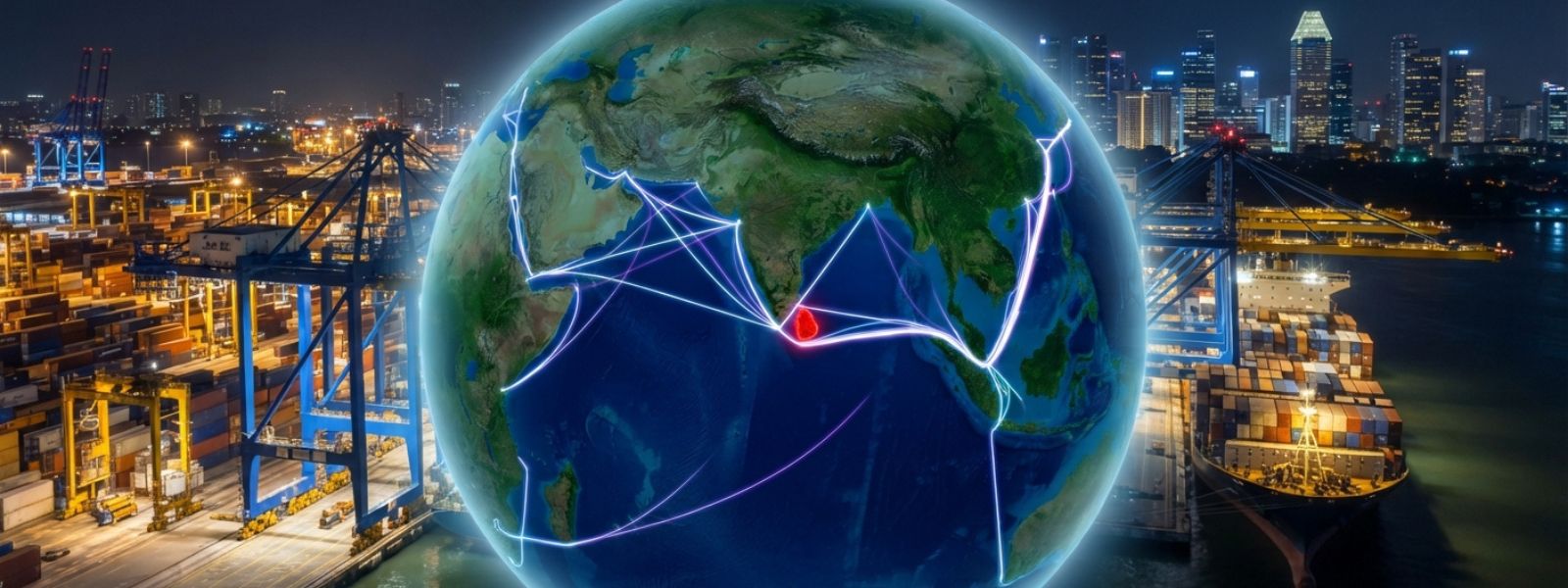
COLOMBO (News 1st); Sri Lanka has been named in a report released by the White House Office of Trade and Manufacturing Policy examining changes in global trade flows following the introduction of US tariffs on Chinese goods.
The report, titled The Great Transshipment Scam, argues that the restructuring of global supply chains since 2018 has enabled goods originating from higher-tariff jurisdictions, particularly China, to reach the US market through intermediary countries.
According to the report, Sri Lanka is among more than 40 countries identified as having become part of a broader network of manufacturing, logistics and trade hubs that have gained importance as companies diversify production and distribution channels in response to changing trade policies.
The document places Sri Lanka in a category it refers to as “Tier 3” economies, which includes smaller countries that offer advantages such as strategic geographic locations, logistics infrastructure, warehousing facilities, free trade zones, competitive labour costs and access to international markets.
In a separate classification, Sri Lanka is grouped with Bangladesh, Cambodia, Laos and the Philippines under a category termed “Southeast Asian Microhubs.” The report notes that these countries can play roles in activities such as light manufacturing, export processing, assembly operations and regional distribution within modern supply chains.
The White House report acknowledges that changes in trade patterns do not automatically indicate illegal activity. It notes that many shifts in production and exports may reflect legitimate foreign investment, manufacturing expansion, supply-chain diversification and the relocation of industrial activity following the tariffs imposed on Chinese goods by the United States in 2018.
The report argues that China's response to the tariffs has included deeper integration with regional and global manufacturing networks. Over the past several years, production, assembly and logistics operations have increasingly been distributed across Asia, the Middle East, Latin America and other regions, creating a more interconnected international supply chain system.
Countries identified in the report include India, Vietnam, Malaysia, Thailand, Singapore, the United Arab Emirates, South Korea, Japan, Brazil and Sri Lanka, among others. According to the document, these countries perform different functions within global trade networks, ranging from manufacturing and assembly to logistics, warehousing and distribution.
The report estimates that trade exposure linked to these evolving supply chains ranges from US$40 billion to US$303 billion annually, depending on the methodology used. It argues that the trend has implications for US tariff revenues and domestic manufacturing competitiveness.
The Trump Administration has proposed expanding customs enforcement through artificial intelligence-driven systems capable of analysing global trade and supply-chain data to identify potential tariff-evasion risks. The report also highlights plans to strengthen customs compliance requirements and trade monitoring mechanisms.
While Sri Lanka is named in the report, no specific allegation, investigation, enforcement action or financial estimate relating directly to Sri Lanka is presented. Instead, it is listed among a number of countries that have become increasingly significant within global supply chains as international trade patterns continue to evolve in response to geopolitical and economic shifts.
Other Articles



-857388-857423_550x300.jpg)

-857406_550x300.jpg)


.png)


Featured News




News 1st, MTV Channel (Pvt) Ltd, MBC Networks (Pvt) Ltd, 45/3, Braybrooke Street, Colombo-02.
T.P : +94 114 792 700, Fax : +94 114 792 733
T.P : +94 114 792 700, Fax : +94 114 792 733




 |  | .webp) |
|---|---|---|
 |  |  |
 |  |  |
 |
