.webp)


-848667.jpg)
Should We Feed The Strays? Insight from Sahana, the Solo Rescuer



.png )
COLOMBO (News 1st): “I think for me, as long as I'm alive, I will always advocate for the strays.”
Sahana says this, crouched in the backseat of a car, crammed between teeming buckets of rice, fish, and chicken that weigh more than her.
She runs a charity called ‘Purrs and Woofs SL,’ and most days, it is just her and her tuk (now car) driver keeping the cause alive. Right now, she is doing ‘the rounds’: driving through the Western Province, keeping Sri Lanka’s stray dogs and cats alive.
“It's a minimum [of] 500-600 [dogs and cats] a week,” she estimates. Her work has been ongoing since 2015, despite major hurdles and crises that interfere with it.
She stops at Nawala, Udahamulla, Peliyagoda, Oragodawatte, Demetegoda, Colombo 10 and Maharagamma, feeding strays who leap into her arms, already bounding to her at the sound of the engine and her whistling.
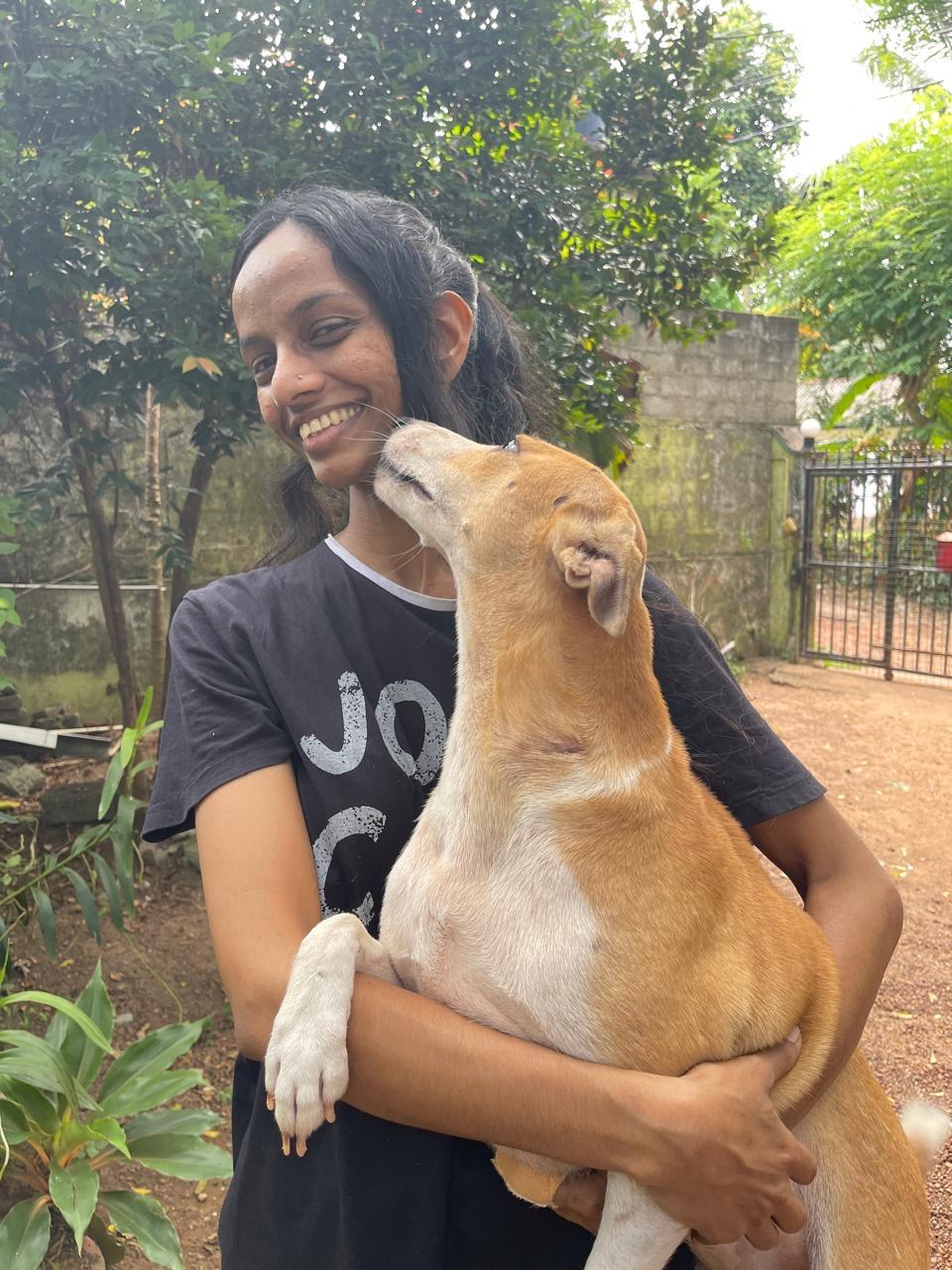
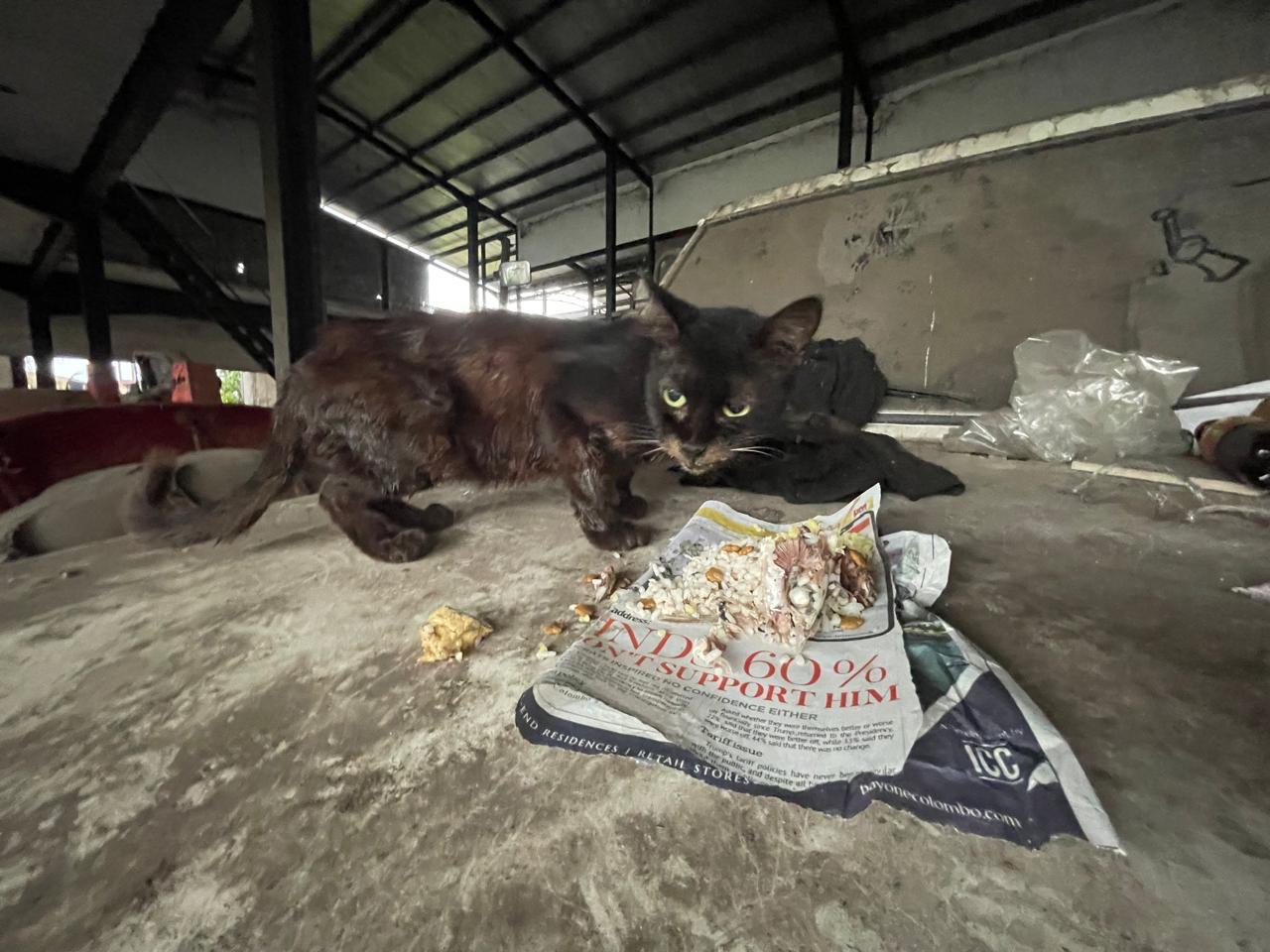
“Poopy girl!” …That’s the refined nickname given to the caramel-colored dog who leaps into her arms. Poopy Girl’s tail wags uncontrollably. Other dogs know Sahana, but keep a distance. Interaction with the violence of humanity has made them skittish, fleeing and whimpering even when the rice and chicken pack is placed in front of them. Their ribs poke through. Sahana’s rounds today were a good choice.
Is work just on the streets? No--dozens of cats and dogs are sheltered in her home. Those which cannot stay on the streets. Some are grey and milky-eyed with age, living far longer than they would on the streets alone. Some are mother tabbies not much older than their own kittens.
“Some people throw out housecats if they become pregnant. Sometimes if they find out [the cat is] a girl.” Sahana states.
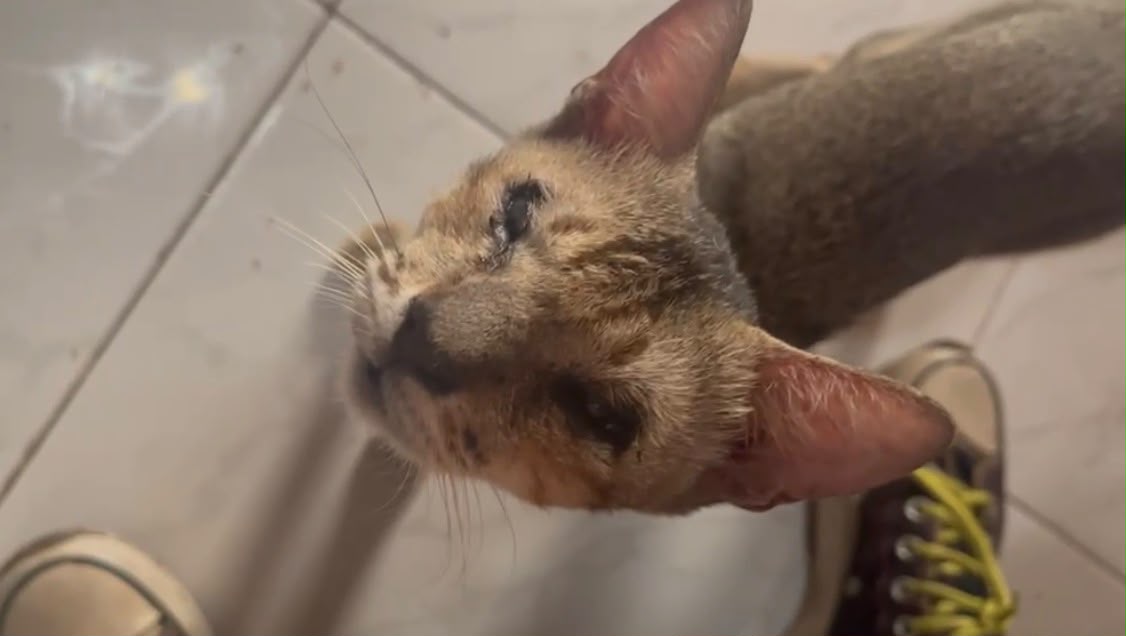
A tan-striped cat nuzzles against my leg. You can feel his purring through the cloth. His head lifts: he has no eyes. “Born without them,” she explains, “but he’s one of the most loving.” In the yard, a floppy-eared puppy has mange--a condition that eats away at the fur, leaving bare skin beneath. She embraces them all the same.
Isn’t it making the stray problem worse? By feeding them? Many criticize individual feeding efforts. It’s a valid concern. People are scared: scared of rabies, of being attacked, of uncleanliness. Feeding the animals would keep them alive, let them multiply.
However, this line of reasoning ignores one of the fundamentals of true rescue work: vaccination drives and sterilizations. Vaccinating the strays reduces the spread of rabies, “and it’s not even that expensive,” Sahana adds.
Sterilization is the most effective way to tackle the stray problem. By sterilizing strays, fewer litters are produced. Aggressive behavior related to heats or mating conflicts reduces, and, interestingly, a whole host of cancers and infections exclusive to the reproductive organs are eliminated. For instance, pyometra--a severe uterine infection that can cause painful death--affects 1 in 4 female dogs who live to 10 years old. This is eliminated if spaying (female sterilization) is committed to--reducing veterinary burden.
“What makes it worse is when you don’t spay and neuter,” Sahana states. A large portion of Sahana’s work involves getting strays vaccinated and sterilized, contrary to criticism of the feeding practice.
But there’s just one issue. Donations have been few and far between these days. “Most days, my [bank] account has hit 100 or 50 rupees,” she states. Savings? Not an option--she’s already drained them for the most critical cases. Rounds are only in the evening now--not enough for the morning. Some of her locations have not been tended to in two months.
“I'm so nervous today,” she admitted before we arrived, “because it's been 2 months since I went [to this location]. I don't know who's there…and who's not there. My heart is in my mouth.” Poopy Girl’s appearance was a welcome one.
Veterinary clinics have been turning her rescues away until all outstanding dues are paid. One such case included a puppy that had been poisoned. Easily treatable. Yet died in her arms.
The strays will always eat before she does. She’s thinner than when we last met.
Currently, her neighbors are attempting to shut down her practice. “[One of the neighbors] threw stones at the dogs,” one of her supportive neighbors alleges, “they’re angry with the animals.” The supportive neighbor states that the opposers have rallied other neighbors “who don’t even know [Sahana]” to attempt to petition her out of the neighborhood--filing complaints over smell from several houses away, and migrating flies from the food.
“These animals have no one, you know?” Sahana states. With a lack of donations, volunteers, and now concerted efforts to terminate her rescue work, it seems as though no good deed goes unpunished. Fear permeates the effort to give strays dignity.
Isn’t fear of attacks warranted, though? Well, for someone who has fed 600 dogs and cats per week for eleven years, Sahana affirmed that “none of the stray dogs and cats I have fed have ever attacked me.”
Rather, “people agitate the animals, they throw stones, they shout at them, they pose [as a threat] to…scare them,” she states. Then, when the agitated animal lashes out, it only affirms public fear of strays.
Picture yourself in Sahana’s house: you’re holding a kitten in your hand--one hand--the size of a breadroll. Your thumb rests on her soft white belly. She’s meowing, squirming, looking up at you with all the hope in the universe. This animal is entirely at your mercy. As human beings, we determine the life or death of countless innocents: it all rests on one choice--to help or to hurt?
At times, the world appears cruel to those who do not have a voice. Cruel to animals. Reliant on the exceptional few who sacrifice themselves to the cause. Sahana is one of four or five solo-rescuers. “The government needs to get more involved,” Sahana states, “There’s only so much we [solo-rescuers] can do. Putting more responsibility or blame on us is not the answer.”
But it’s not all gloom and doom. If you followed Sahana around for the day, yes, you would see the neighbors who are trying to kick her out, the puppies in dumpsters, and those who throw the rice packs away. But you would also see that there are more who care than you’d think.
“I come across a lot of heartless people who do not want people helping animals,” she states, “but I met the most genuine people who were not very rich, but rich in heart, you know?”
“These were poor people: drug addicts, janitors, security guards, laborers. They would call me for emergencies, for a sick animal.” Despite some of the rounds being delayed two months due to lack of donations, security guards in parking lots were feeding little cats. One guard adopted thirteen dogs from one area. All of them greeted Sahana with beaming smiles, updating her on how a spayed cat has been recovering, whether a dog has passed away.
For now, you can make a difference by either helping rescue efforts or adopting. Adoption is one of the most significant ways you can help. Even just one dog taken off the street can live a better life. While government intervention is the best possible method to tackle the stray problem--strays are still here. Someone needs to take care of them.
Strays are not going anywhere. Simply ignoring them or driving them out under the reasoning that they will perish on their own has not worked here. The lack of responsibility taken for the animals is what has led to such a stray problem in the first place.
We are the ones who domesticated dogs from wolves, cats from wildcats--they rely on us for survival because we have conditioned them to, over millenia. It is only right that we care for them. That we take responsibility.
To help Sahana, contact @purrsandwoofssl on Instagram.
An Article by Clement Deane
Other Articles
-855936_550x300.jpg)


-855911_550x300.jpg)
-855905_550x300.jpg)
-855899_550x300.jpg)


.png)


Featured News




News 1st, MTV Channel (Pvt) Ltd, MBC Networks (Pvt) Ltd, 45/3, Braybrooke Street, Colombo-02.
T.P : +94 114 792 700, Fax : +94 114 792 733
T.P : +94 114 792 700, Fax : +94 114 792 733




 |  | .webp) |
|---|---|---|
 |  |  |
 |  |  |
 |
