.webp)


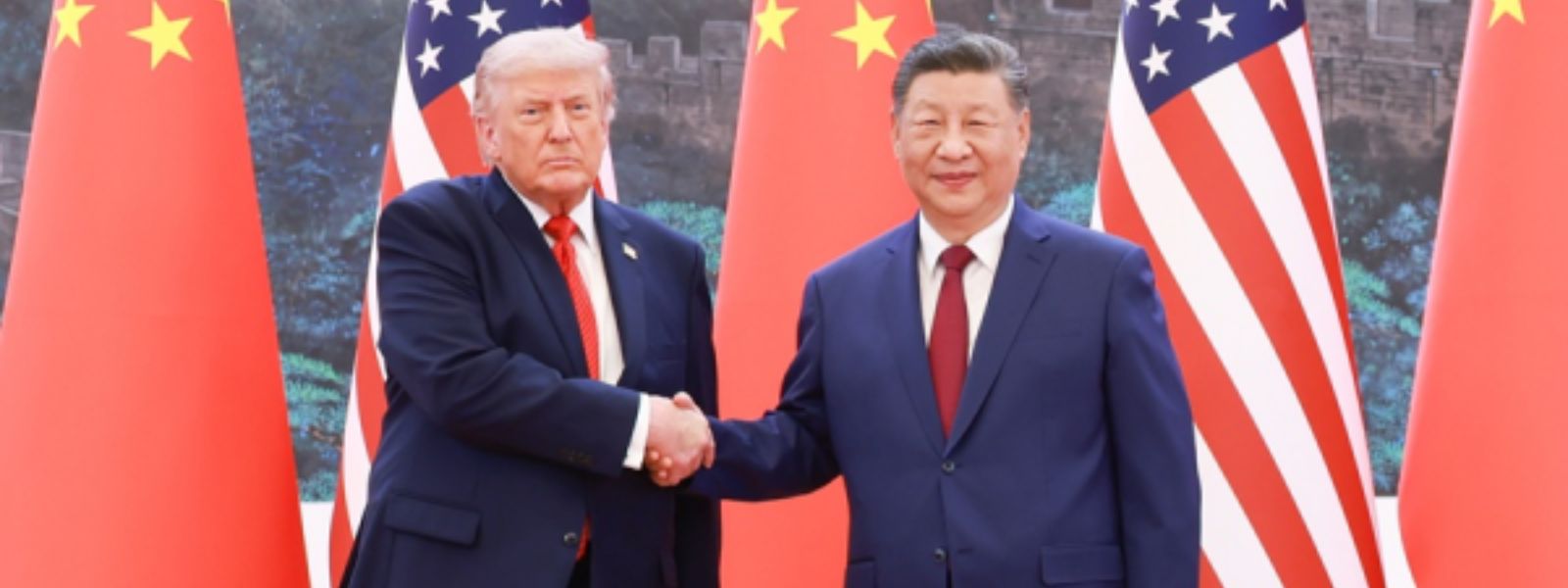
China, US Agree on ‘Strategic Stability’ Framework



.png )
COLOMBO (News 1st); China and the United States agreed on a new vision to build a “constructive relationship of strategic stability” during high-level talks between President Xi Jinping and U.S. President Donald J. Trump in Beijing, marking a key outcome of the American leader’s state visit, said the Chinese Foreign Ministry.
The meeting, held at the Great Hall of the People, focused on guiding bilateral relations amid what President Xi described as an increasingly fluid and turbulent global environment. He stressed the need for both nations to work together to avoid conflict, address global challenges, and provide stability for the world.
President Xi said the agreed framework of “constructive strategic stability” would shape relations over the next three years and beyond.
He explained that this approach emphasizes cooperation as the cornerstone, allows for competition within proper limits, ensures differences remain manageable, and promotes long-term stability and peace.
On economic and trade ties, President Xi highlighted their mutually beneficial nature, noting that recent discussions between the two sides had yielded “generally balanced and positive outcomes.” He called for sustaining this momentum through equal-footed consultation, adding that China would continue opening its economy and welcomes further cooperation from U.S. businesses.
Both leaders agreed to strengthen communication channels across political, diplomatic, and military spheres while expanding collaboration in areas including trade, health, agriculture, tourism, law enforcement, and people-to-people exchanges.
A key point of discussion was the Taiwan issue, which President Xi described as the most important matter in China–U.S. relations. He warned that improper handling could lead to clashes or conflict, stressing that maintaining peace and stability across the Taiwan Strait is essential and urging the United States to exercise caution.
The leaders further exchanged views on major international and regional issues, including the Middle East situation, the Ukraine crisis, and developments on the Korean Peninsula. Both sides agreed to support each other in hosting key international events this year, including the APEC Economic Leaders’ Meeting and the G20 Summit.
Other Articles

-839035_550x300.jpg)

 Sagar INS Sunayna 2-839017_550x300.jpg)



Featured News

-835300_550x300.jpg)


News 1st, MTV Channel (Pvt) Ltd, MBC Networks (Pvt) Ltd, 45/3, Braybrooke Street, Colombo-02.
T.P : +94 114 792 700, Fax : +94 114 792 733
T.P : +94 114 792 700, Fax : +94 114 792 733




 |  | .webp) |
|---|---|---|
 |  |  |
 |  |  |
 |
