.webp)


-819029.jpg)
U.S. C-130 Super Hercules Airlifts Sahana Yathra Aid as Gammadda Flood Response continues



.png )
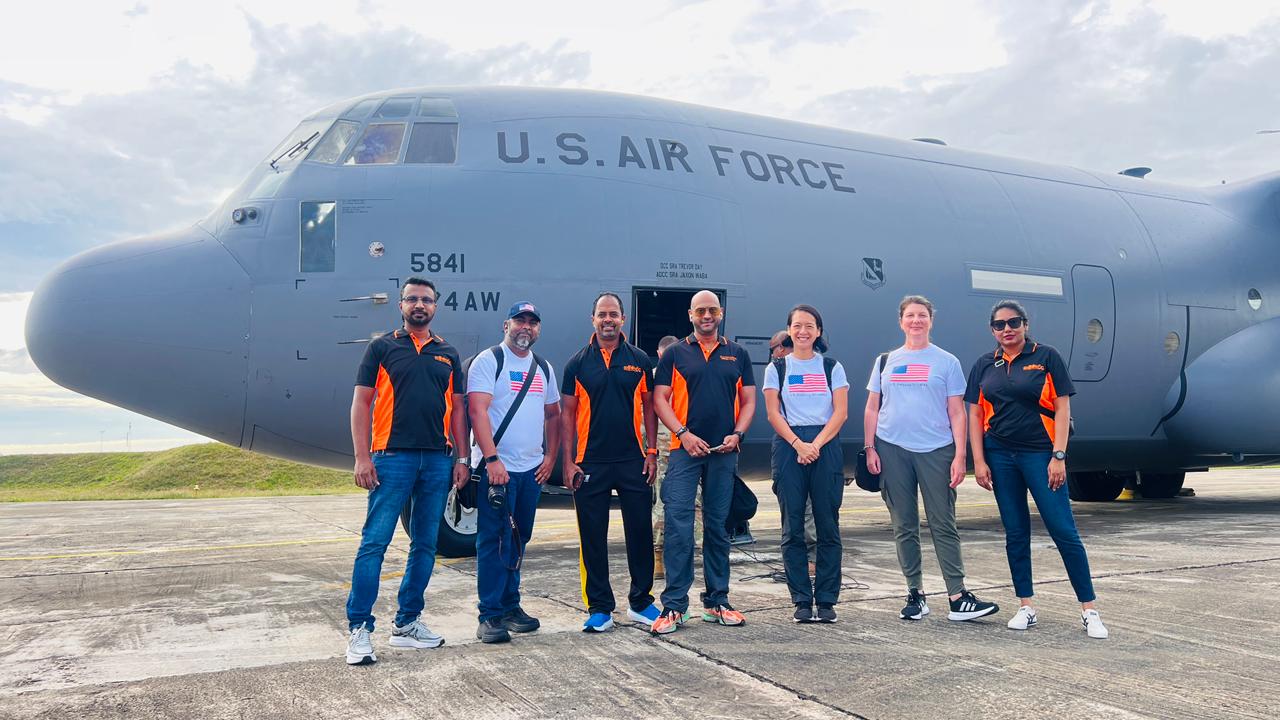
Katunayake, Sri Lanka — In a landmark moment for Sri Lanka’s flood response, a U.S Air Force C-130 Super Hercules transport aircraft took off from Bandaranaike International Airport this morning, carrying urgently needed flood relief mobilised through Sirasa #SahanaYathra, the Disaster Response arm of the Gammadda Movement.
Two C-130J Super Hercules and Airmen from the U.S. Air Force 36th Contingency Response Group (CRG) arrived a few days ago, to provide American airlift capability in support of Sri Lanka’s Cyclone Ditwah response.
The aircraft is bound for Mattala International Airport, where the aid will be offloaded and sent by road into the battered hill-country districts of Badulla, Nuwara Eliya, Monaragala and surrounding regions. With many roads washed out and terrain access severely compromised, the aerial bridge marks a critical escalation in the race to reach families who have been cut off for days.
Today’s deployment is the latest chapter in what has become one of Sri Lanka’s most complex, volunteer-driven disaster responses in recent memory.
We extend our heartfelt appreciation to the US Embassy in Sri Lanka, the Disaster Management Centre, and the Sri Lanka Air Force for their unwavering support in driving the Sahana Yathra Flood Relief Initiative.
For over a week, Sahana Yathra has been delivering aid on land, water and air. Convoys of trucks have pushed through to multiple districts carrying food rations, drinking water, medicines and bedding. Boats, in partnership with Sarvodaya and Sri Lanka Life Saving, have ferried supplies across floodwaters to marooned communities in the North Western, Sabaragamuwa and Central provinces. Helicopter drops with the support of the Sri Lanka Air Force and India have moved critical stocks into isolated pockets where landing zones are scarce.
But the scale of devastation in the hill country demanded heavier lift capability, and today, that gap was bridged.
Speaking on the arrival of the aircraft, US Ambassador Julie Chung noted that Sri Lanka’s responders are doing heroic work.
“The United States is here to take on some heavy lifting—bringing American airlift and logistics muscle to push critical supplies into the hardest-hit areas so Sri Lanka’s frontline teams can stay focused on people, not transportation. The United States stands steadfast with Sri Lanka in this challenging time, committed to supporting recovery and rebuilding efforts.”, noted Ambassador Chung.
“This C-130 airlift allows us to bypass some of the most impassable roads in the region and get a very large stock of food to critical areas, very fast,” said Chevaan Daniel of the Gammadda Movement.
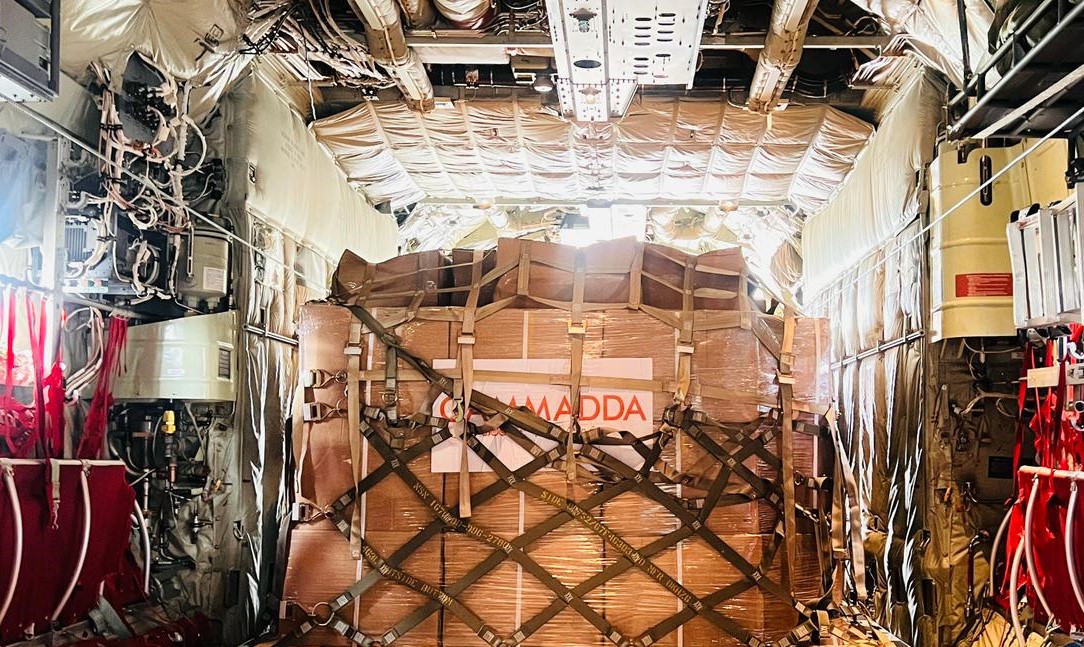
Inside the airframe’s cavernous hold were pallets of emergency rations — "all packed by hundreds of ordinary Sri Lankans at Sahana Yathra’s logistics centres", noted Birendra Siriwardhana, a young volunteer who was part of a small team that worked on preparing the stock for the airlift.
Volunteers, some arriving straight from workplaces or schools, have been sorting, sealing and dispatching supplies in a continuous 24-hour cycle.
It is this national mobilization — citizens donating, carrying, packing and transporting relief — that has enabled the operation to move at such speed. What began as a grassroots collection drive has transformed into a nationwide, multi-modal humanitarian network involving ground convoys, rescue boats, helicopter sorties and now, one of the world’s most advanced tactical airlifters.
As the C-130 climbed through the monsoon clouds over Colombo, the message from coordinators was simple: this is only the beginning.
More flights, more convoys and more boat missions are expected in the days ahead as volunteers and partner agencies race to stabilize communities shaken by one of the worst flood events in recent memory.
.jpg)
Other Articles
-840789_550x300.jpg)

-840777_550x300.jpg)




Featured News
-835300_550x300.jpg)

News 1st, MTV Channel (Pvt) Ltd, MBC Networks (Pvt) Ltd, 45/3, Braybrooke Street, Colombo-02.
T.P : +94 114 792 700, Fax : +94 114 792 733
T.P : +94 114 792 700, Fax : +94 114 792 733




 |  | .webp) |
|---|---|---|
 |  |  |
 |  |  |
 |
