


Sri Lanka’s Inflation to Stay Above 8% Before Easing, Says Central Bank Governor



.png )
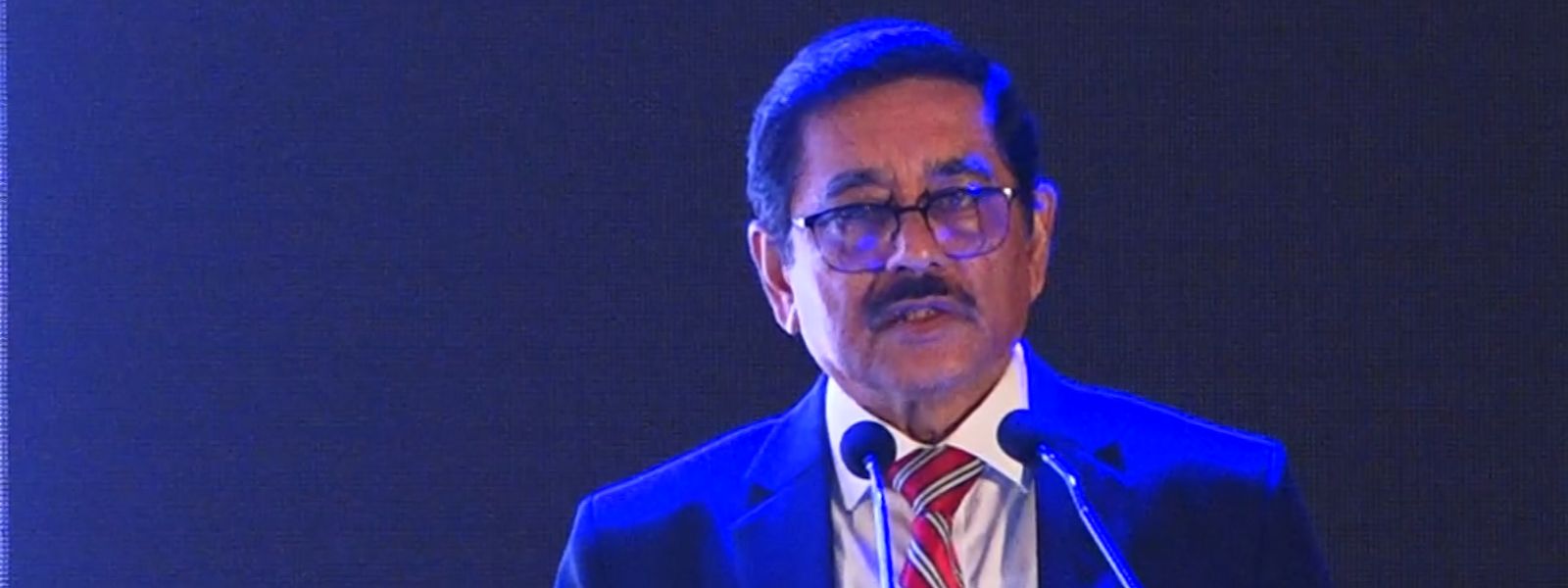
COLOMBO (News 1st); Sri Lanka's inflation is expected to remain elevated in the coming months before gradually easing, while the country's foreign reserves, remittances and government revenue continue to show signs of a remarkable recovery from the depths of the economic crisis, according to Dr. Nandalal Weerasinghe, Governor of the Central Bank of Sri Lanka.
Offering a comprehensive assessment of the country's economic outlook, the Central Bank Governor said inflation is likely to remain around eight percent through the remainder of this year and into the first quarter of 2027 before gradually returning to the Central Bank's target level.
"What we see now in our projections is that inflation, around 8 percent or slightly above 8 percent, will remain towards the end of this year as well as during the first quarter of next year. Then, partly because of the base effect and based on current assumptions, particularly if petroleum prices remain around current levels, we can expect inflation to come back to 5 percent from the second half of next year, starting from the second quarter of 2027."
The Governor explained that inflationary pressures created by rising energy and transport costs typically do not disappear overnight.
"Once inflation goes up and prices increase due to energy and transport price shocks, they do not come down immediately. It takes time to stabilise before returning to our targeted level of 5 percent."
Despite those challenges, Sri Lanka's external sector continues to receive crucial support from tourism and worker remittances, two sectors that have played a major role in stabilising the country's balance of payments.
Dr. Weerasinghe noted that while tourism experienced some disruption earlier this year due to tensions in the Middle East affecting air traffic, the sector has since recovered and returned to levels comparable with last year.
"Tourism was affected around April due to disruptions in Middle Eastern air traffic. However, it has since moved back in line with last year's trend and is now performing at almost the same level as last year."
Worker remittances, meanwhile, continue to outperform expectations.
"Remittances, which recorded growth of over 20 percent last year, are still growing strongly. This year, it appears we will record close to 9 billion dollars in remittances, equivalent to almost 9 percent of GDP. This is a huge support and one of the key reasons we are seeing a favourable current account position."
Perhaps one of the clearest indicators of Sri Lanka's economic rebound has been the recovery in official foreign reserves.
According to the Governor, official reserves, which had fallen at the height of the crisis in 2022, have now risen to nearly US$7 billion and are expected to move close to the US$8 billion mark by the end of the year.
"We have recovered from around 1.9 billion dollars at the lowest point in 2022 to 6.9 billion dollars according to the latest published figures, and we have already moved above 7 billion dollars. We expect to publish updated figures soon."
"What we expect is that by the end of this year reserves will be very close to 8 billion dollars. Initially, we expected to exceed 8 billion dollars comfortably, but a recent government dollar bond issuance was unsuccessful. Even so, with the IMF tranche, funding from the Asian Development Bank and the World Bank, together with our market operations, we expect reserves to reach close to 8 billion dollars."
While describing the improvement as significant, Dr. Weerasinghe cautioned that Sri Lanka must continue building stronger external buffers to protect itself against future global uncertainties.
"The future remains uncertain. Given global developments and other uncertainties, it is important for us to build the strongest possible buffers so that we are able to absorb potential shocks."
The Governor also highlighted what he described as one of the most impressive aspects of the country's recovery: the dramatic turnaround in government revenue collection.
"The government's fiscal consolidation effort has been remarkable. Revenue as a percentage of GDP fell to around 8 percent during 2020, 2021 and 2022. Today it has risen to more than 16 percent, effectively doubling within about three years."
"This is one of the strongest revenue performances in Sri Lanka's history. Fiscal performance has exceeded expectations, including those of the IMF. Stronger revenue collection, expenditure management and the generation of primary budget surpluses have all contributed to this improvement."
Taken together, the Governor's assessment paints a picture of an economy that is not yet free from challenges, particularly inflationary pressures and global uncertainties, but one that is steadily rebuilding its financial strength through stronger reserves, robust remittance inflows, improved fiscal performance and growing resilience against future economic shocks.
Other Articles


-860599_550x300.jpg)

Featured News




News 1st, MTV Channel (Pvt) Ltd, MBC Networks (Pvt) Ltd, 45/3, Braybrooke Street, Colombo-02.
T.P : +94 114 792 700, Fax : +94 114 792 733
T.P : +94 114 792 700, Fax : +94 114 792 733




 |  |  |
|---|---|---|
 |  |  |
 |  |  |
 |
