


-860599.jpg)
Sri Lanka Pushes for Space Innovation That Benefits Ordinary People



.png )
COLOMBO (News 1st); As nations across Asia and the Pacific gathered in Bangkok to discuss the future of space technology and sustainable development, Sri Lanka used the global platform to deliver a clear message: the real value of technological innovation lies not in satellites orbiting above the Earth, but in the lives it improves on the ground.
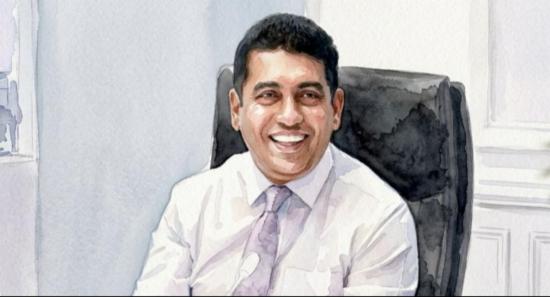
Addressing the Fifth Ministerial Conference on Space Applications for Sustainable Development in Asia and the Pacific, jointly organized by the United Nations Economic and Social Commission for Asia and the Pacific (UNESCAP) and the Royal Thai Government, Minister of Health and Mass Media Dr. Nalinda Jayatissa highlighted Sri Lanka's growing engagement in the use of space technology to support development, disaster management and public services.
Dr. Jayatissa noted that Sri Lanka has been actively involved in the Regional Space Applications Programme (RSEP) and its consultative mechanisms for more than fifteen years, benefiting from knowledge-sharing and capacity-building initiatives across several critical sectors.
"Over the past decade and a half, Sri Lanka has been an active participant in the Regional Space Applications Programme, RSEP, and its intergovernmental consultative processes, including successive sessions of the Intergovernmental Consultative Committee on RSEP. This engagement has provided valuable opportunities for knowledge sharing and capacity building among national institutions in irrigation, agriculture, meteorology, natural resources management, and disaster risk reduction."
The Minister emphasized that Sri Lanka sees enormous potential in the rapidly growing convergence of space technology and artificial intelligence, particularly as countries look for smarter solutions to increasingly complex challenges.
"Sri Lanka attaches particular importance to the growing convergence of space technologies and artificial intelligence."
From tracking weather systems and monitoring environmental changes to improving disease surveillance and predicting health risks linked to climate change, Dr. Jayatissa said emerging technologies are already proving their value far beyond the traditional boundaries of space science.
"From the health sector perspective, these technologies can strengthen public health systems through disease surveillance, assessment of climate-related health risks, disaster preparedness, and improved health care access. Such applications demonstrate how the benefits of space technologies extend across sectoral boundaries."
However, he stressed that technological progress alone is not enough. The greater challenge, he said, is ensuring that developing countries are not left behind in the race towards innovation.
"Our challenge is not merely to advance technological capabilities but to ensure that their benefits reach all countries, particularly developing countries facing resource and capacity constraints."
To achieve that goal, Dr. Jayatissa called for stronger international collaboration through the sharing of technology, operational platforms, expertise and long-term technical cooperation.
"This calls for sharing operational tools and platforms, adapting them to national requirements, and sustaining capacity building and technical cooperation."
Reaffirming Sri Lanka's commitment to regional collaboration, the Minister said the ultimate objective must be to translate scientific and technological breakthroughs into tangible benefits for communities.
"We reaffirm our commitment to regional cooperation that translates technological advances into tangible development outcomes and meaningful improvements in people's lives, leaving no one behind."
At a time when climate disasters, health emergencies and environmental challenges are becoming increasingly complex, Sri Lanka's message in Bangkok was simple but powerful: technology must not only reach new heights, it must reach the people who need it most.
Other Articles



-860581_550x300.jpg)
-860575_550x300.jpg)

Featured News




News 1st, MTV Channel (Pvt) Ltd, MBC Networks (Pvt) Ltd, 45/3, Braybrooke Street, Colombo-02.
T.P : +94 114 792 700, Fax : +94 114 792 733
T.P : +94 114 792 700, Fax : +94 114 792 733




 |  |  |
|---|---|---|
 |  |  |
 |  |  |
 |
