.webp)


‘We Will Not Return to the Grey List’: CBSL Governor Issues Strong Assurance



.png )
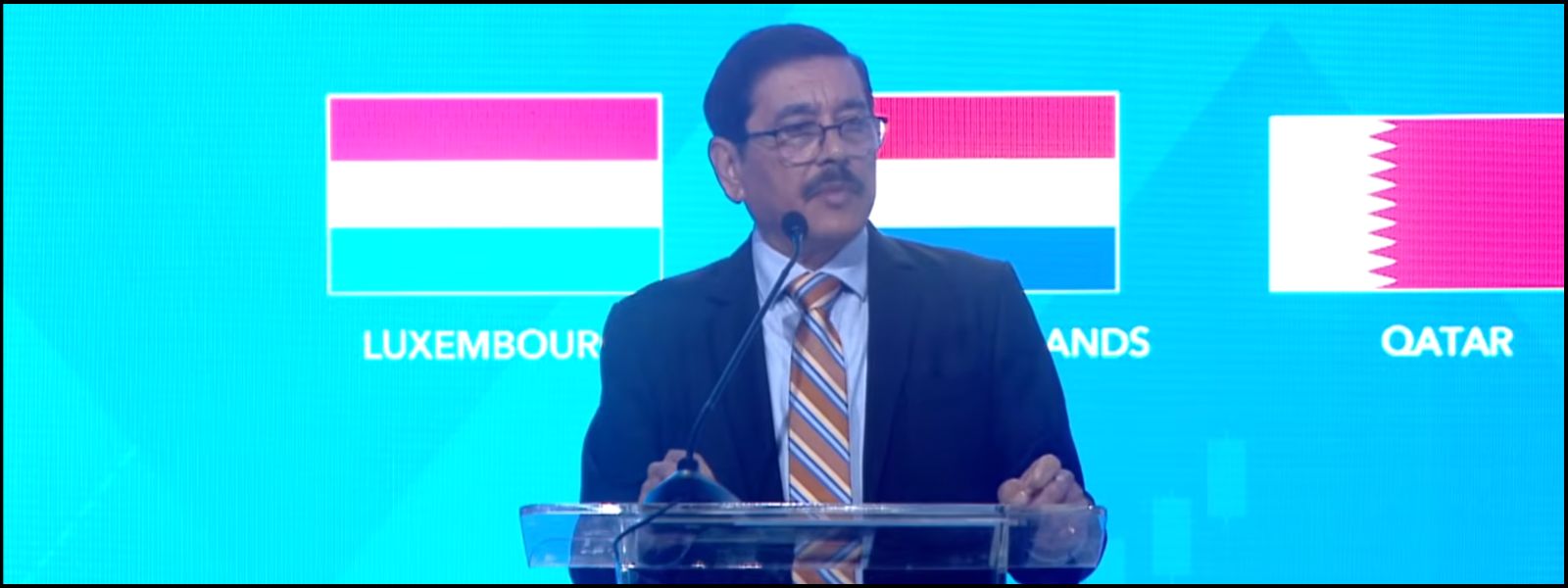
COLOMBO (News 1st); Central Bank Governor Nandalal Weerasinghe says Sri Lanka is confident of avoiding a return to the Financial Action Task Force (FATF) grey list as the country undergoes a critical mutual evaluation aimed at assessing its anti-money laundering and counter-terrorism financing framework.
Speaking at the Anti-Money Laundering and Anti-Corruption Thematic Fund event in Thailand, held on the sidelines of the IMF-World Bank Annual Meetings, Weerasinghe highlighted Sri Lanka's preparations ahead of what he described as a crucial assessment, stressing that authorities have undertaken extensive legal, regulatory and institutional reforms to ensure the country does not face a third grey listing.
The Governor recalled that Sri Lanka was grey-listed twice, first in 2014-2015 and again in 2017. He noted that technical assistance from the International Monetary Fund played a key role in strengthening risk assessment frameworks for licensed banks and finance companies, helping the country successfully exit the grey list by 2019.
However, he stressed that the current evaluation is far more significant, with an on-site assessment by international evaluators commencing in Sri Lanka this week and continuing for two weeks.
Weerasinghe said authorities have spent several years preparing for the assessment with a singular objective: ensuring Sri Lanka is not placed back on the grey list.
A key element of those efforts, he said, was the IMF's Governance Diagnostic Assessment conducted in 2023, which helped identify weaknesses in governance structures and anti-corruption systems. He noted that Sri Lanka became one of the first countries in Asia to publicly release the report, allowing stakeholders to clearly understand the reforms required.
The findings of the assessment subsequently formed the foundation for national risk assessments carried out in 2024 and 2025, which have guided the country's preparations for the latest mutual evaluation.
According to the Governor, Sri Lanka has since enacted a series of reforms and legislative changes designed to align the country with international standards on anti-money laundering, counter-terrorism financing, governance and anti-corruption.
Among the key measures introduced were the establishment of a comprehensive asset recovery framework through CLIMAC, the enactment and operationalisation of a new Anti-Corruption Act, the Public Finance Amendment Act, reforms to revenue administration involving Customs and Excise, the National Audit Act, and amendments to the Banking Act aimed at strengthening corporate governance and regulatory oversight.
He also pointed to amendments to the Companies Act that introduced beneficial ownership requirements, bringing Sri Lanka more closely in line with FATF recommendations.
In addition, major amendments were made in 2026 to the Financial Transactions Reporting Act, the Prevention of Money Laundering Act, and the Convention on the Suppression of Terrorist Financing Act to ensure compliance with evolving international standards.
While acknowledging that passing legislation alone is insufficient, Weerasinghe emphasized that the latest evaluation places significant weight on demonstrating the effectiveness of the reforms in practice.
"The challenge now is to show that these laws work and that the framework is effective," he said, adding that authorities are focused on proving tangible implementation across institutions and enforcement agencies.
The Central Bank Governor expressed confidence that the reforms undertaken, together with the support received from domestic institutions and international partners, would enable Sri Lanka to successfully navigate the assessment and avoid being grey-listed for a third time.
With the country's third mutual evaluation now underway, the outcome is expected to be closely watched by international financial institutions, investors and development partners, as Sri Lanka seeks to demonstrate that it has moved beyond the weaknesses that led to previous grey listings and established a more resilient and effective financial governance framework.
Other Articles





.png)


Featured News




News 1st, MTV Channel (Pvt) Ltd, MBC Networks (Pvt) Ltd, 45/3, Braybrooke Street, Colombo-02.
T.P : +94 114 792 700, Fax : +94 114 792 733
T.P : +94 114 792 700, Fax : +94 114 792 733




 |  | .webp) |
|---|---|---|
 |  |  |
 |  |  |
 |
