.webp)


Poverty Nearly Doubled During Sri Lanka's Crisis and Remains Elevated Despite Growth, Says World Bank



.png )
COLOMBO (News 1st) - Sri Lanka's economy is continuing its recovery from the country's worst economic crisis in decades, but the benefits of that recovery have yet to fully reach many households, with poverty levels remaining significantly above pre-crisis levels despite steady growth, according to the World Bank.
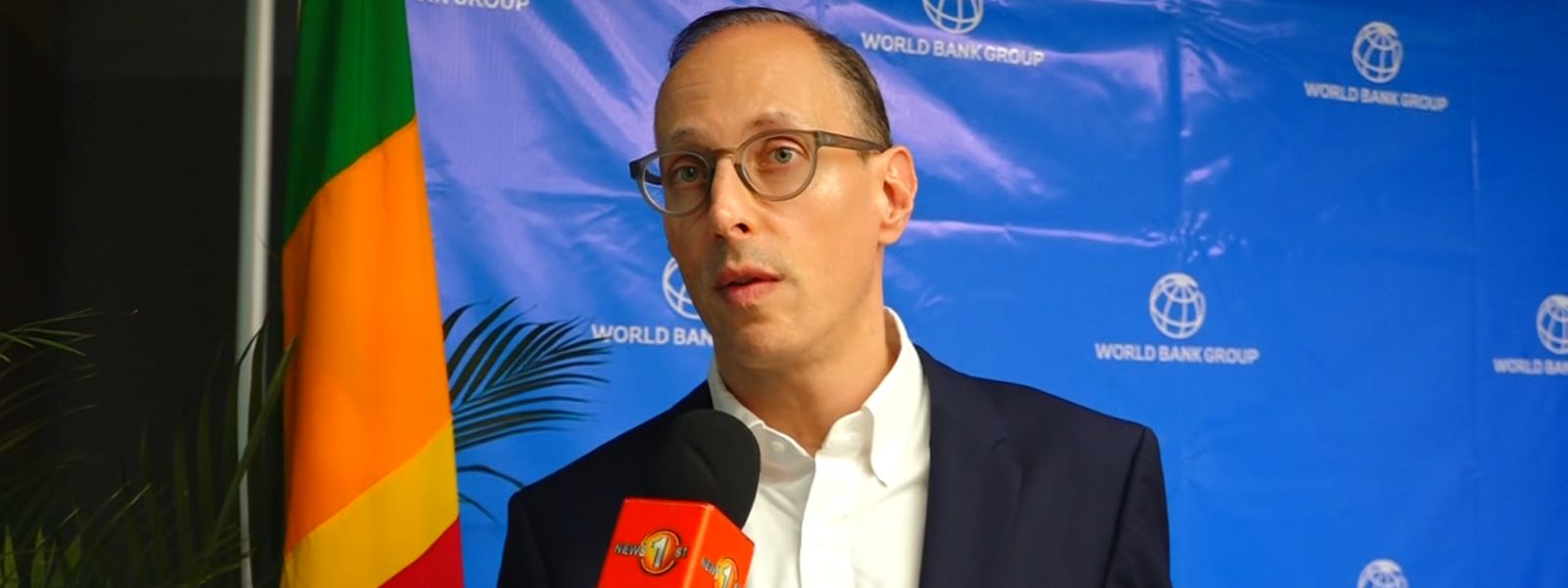
Speaking to News 1st following the release of the latest Sri Lanka Development Update, World Bank Practice Manager Alan Fuchs said the institution's latest estimates show that poverty, while declining, remains one of the country's most pressing economic and social challenges.
Fuchs explained that Sri Lanka's official poverty rate stood at 11.5 percent in 2019, based on the Household Income and Expenditure Survey conducted before the economic crisis.
However, the economic shocks that followed, coupled with external events and the prolonged economic downturn, pushed poverty sharply higher. According to revised World Bank estimates, poverty peaked at 20.7 percent in 2023, meaning the share of Sri Lankans living in poverty had nearly doubled compared to pre-crisis levels, pushing an estimated two million people into poverty.
The World Bank's latest estimates indicate that poverty subsequently declined to 16.9 percent in 2025 and is projected to fall further to around 15.8 percent in 2026 as economic conditions continue to improve.
Despite that progress, Fuchs stressed that poverty remains considerably higher than before the crisis and that the pace of recovery has not been sufficient to restore living standards to where they were prior to 2020.
The World Bank's updated analysis shows that while the economy has recovered, many labour market indicators have not fully followed suit. Employment conditions have improved from crisis lows, but overall employment rates and earnings remain below pre-crisis levels. As a result, many households continue to experience financial strain despite improvements in headline economic indicators.
A particular concern highlighted by the World Bank is the continued weakness in female labour force participation. According to the institution, female participation in the workforce remains among the lowest in the region and has yet to return to levels recorded before the economic crisis, limiting income opportunities for many households.
Fuchs identified social protection as a critical area for reform. While welfare programmes have improved since the crisis, he said further attention is needed to ensure assistance reaches the poorest households while reducing leakages to higher-income groups that do not require support.
Better targeting, stronger data systems, and more efficient delivery mechanisms are among the measures the World Bank believes could help Sri Lanka accelerate poverty reduction while making public spending more effective.
The conversation also turned to Sri Lanka's growth outlook, seeking clarification on the factors behind the World Bank's forecast of growth exceeding four percent.
Fuchs noted that the country's economic recovery has been driven by a combination of improved macroeconomic stability, progress on debt-related issues, and a gradual return of investment confidence.
Sri Lanka's economy is projected to grow by 4.4 percent in 2026 following a stronger-than-expected recovery supported by industry and services. However, the World Bank cautions that sustainable long-term growth will require higher levels of productivity, stronger private investment, and a more export-oriented economic model.
One of the key themes highlighted by the World Bank is the potential of agribusiness to become a major engine of future growth.
According to the institution, Sri Lanka already possesses internationally competitive agricultural sectors, including cinnamon, rubber, tea, coconut products and other export-oriented industries. The report identifies agribusiness as a sector capable of attracting foreign investment, generating export earnings, creating jobs and reducing poverty, particularly in rural communities.
The World Bank estimates that Sri Lanka's broader agrifood system contributes approximately one-sixth of GDP, accounts for more than 40 percent of total employment, and generates nearly 30 percent of merchandise exports, making it a vital pillar of the economy.
For the World Bank, the message is clear: Sri Lanka's recovery is real, but until living standards, employment and poverty indicators return closer to pre-crisis levels, the country's economic transformation remains a work in progress.
Other Articles








.png)


Featured News




News 1st, MTV Channel (Pvt) Ltd, MBC Networks (Pvt) Ltd, 45/3, Braybrooke Street, Colombo-02.
T.P : +94 114 792 700, Fax : +94 114 792 733
T.P : +94 114 792 700, Fax : +94 114 792 733




 |  | .webp) |
|---|---|---|
 |  |  |
 |  |  |
 |
