.webp)


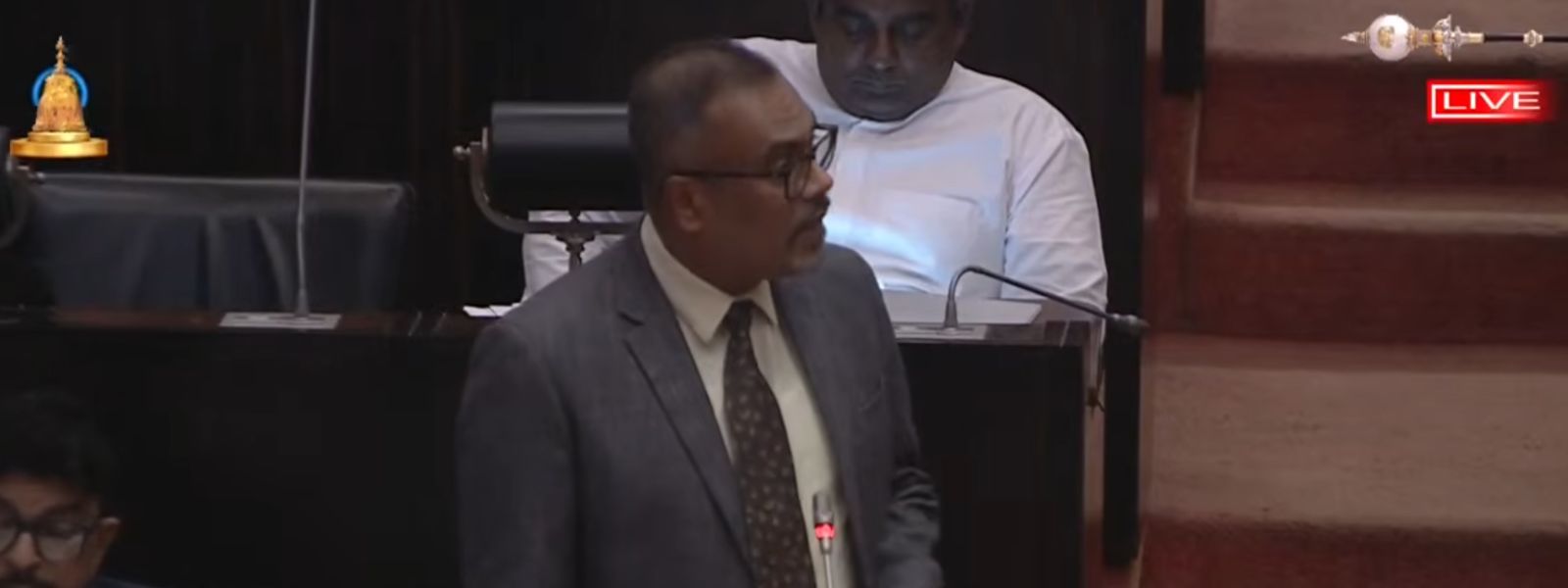
No Risk of Debt Default: Govt Hits Back at Opposition Claims



.png )
COLOMBO (News 1st); Deputy Minister of Finance and Planning Dr. Anil Jayantha has strongly rejected claims that Sri Lanka is facing a risk of being unable to meet its future foreign debt obligations, insisting that the country's economic recovery remains on track and that fears being circulated in the public domain are based on misleading and technically incorrect interpretations of economic data.
Speaking on Sri Lanka's reserve position, Dr. Jayantha said foreign reserves should be viewed as a safety buffer rather than an isolated indicator of economic performance. He noted that a country can build reserves by restricting imports, limiting economic activity and postponing debt repayments, but emphasized that the Government has deliberately chosen a different path by keeping the economy active, attracting investments and building reserves alongside growth.
The Deputy Minister alleged that certain groups associated with the period during which Sri Lanka experienced economic bankruptcy continue to promote misleading narratives by presenting reserve-related data out of context. According to him, these attempts are aimed at creating unnecessary anxiety among the public despite the country's improving economic indicators.
He pointed out that Sri Lanka has successfully maintained foreign reserves of approximately USD 6.5 billion despite facing significant challenges, including the impact of Cyclone Ditwah and increased import expenditure resulting from higher global fuel prices linked to developments in the Middle East. Even with these unexpected costs, he said the country's reserve position has remained strong.
Dr. Jayantha said the Government expects reserves to increase to around USD 8 billion within the next six months, a level he described as more than sufficient to meet debt repayments while supporting future economic activity.
Addressing concerns over future debt obligations, he noted that Sri Lanka's highest annual repayment requirement over the coming years is expected to be approximately USD 3.8 billion in 2028. Debt repayments in 2027 are projected to be slightly above USD 2 billion, while obligations in 2029 and 2030 are expected to remain at similar levels. Based on those projections, he said the current reserve trajectory is adequate to support both debt servicing and import requirements.
Explaining the basis for the Government's confidence, Dr. Jayantha highlighted projected inflows through the country's Balance of Payments. He said the current account alone is expected to generate nearly USD 900 million in inflows over the coming months.
In addition, Sri Lanka's development partners have already agreed to provide policy-based budget financing, including approximately USD 350 million expected from the International Monetary Fund in December. Collectively, those funding arrangements are expected to bring in more than USD 1 billion.
The Deputy Minister further revealed that foreign direct investments expected through the Board of Investment and the Colombo Port City are projected to contribute another USD 1 billion over the next six months.
Taking all these inflows into account, he said achieving the Government's target of USD 8 billion in foreign reserves by the end of 2026 is entirely achievable.
Dr. Jayantha also highlighted the improvement in Sri Lanka's banking sector since the current administration assumed office. He said the banking system recorded negative net foreign assets when the Government came to power, meaning liabilities exceeded assets. However, by June this year, net foreign assets in the banking sector had risen to Rs. 1,265 billion, equivalent to approximately USD 3.8 billion, creating an additional buffer for the economy.
He stressed that there is no basis for public panic, arguing that measures implemented by the Government have strengthened investor confidence and produced positive results.
The Deputy Minister also pointed to international recognition of Sri Lanka's progress in debt transparency and information-sharing with creditors. According to him, the International Institute of Finance has recorded a 6.3-point improvement in Sri Lanka's performance, placing the country fourth among 57 nations for the highest level of improvement.
Maintaining that the Government is pursuing a responsible economic management strategy, Dr. Jayantha said the available data demonstrates that Sri Lanka is successfully building reserves while maintaining economic stability. He argued that claims suggesting otherwise are based on distorted interpretations of technical data.
He further accused sections of the Opposition of attempting to create fear among the public because they are unable to challenge the Government's performance on key economic indicators.
According to Dr. Jayantha, critics cannot credibly argue that economic growth is weakening, inflation has not been brought under control or that public finances are being mismanaged, as official data demonstrates progress in each of those areas. Instead, he said, they rely on complicated and distorted figures that are difficult for ordinary citizens to interpret in order to generate uncertainty and fear.
Emphasizing confidence in the country's economic trajectory, the Deputy Minister urged the public not to be misled by what he described as inaccurate claims and fear-driven narratives, insisting that Sri Lanka remains on a stable path towards stronger reserves, increased investment and sustainable economic recovery.
Other Articles






.png)


Featured News




News 1st, MTV Channel (Pvt) Ltd, MBC Networks (Pvt) Ltd, 45/3, Braybrooke Street, Colombo-02.
T.P : +94 114 792 700, Fax : +94 114 792 733
T.P : +94 114 792 700, Fax : +94 114 792 733




 |  | .webp) |
|---|---|---|
 |  |  |
 |  |  |
 |
