.webp)


G24: Sri Lanka Changed the Global Debt Playbook, But More Reforms Needed



.png )
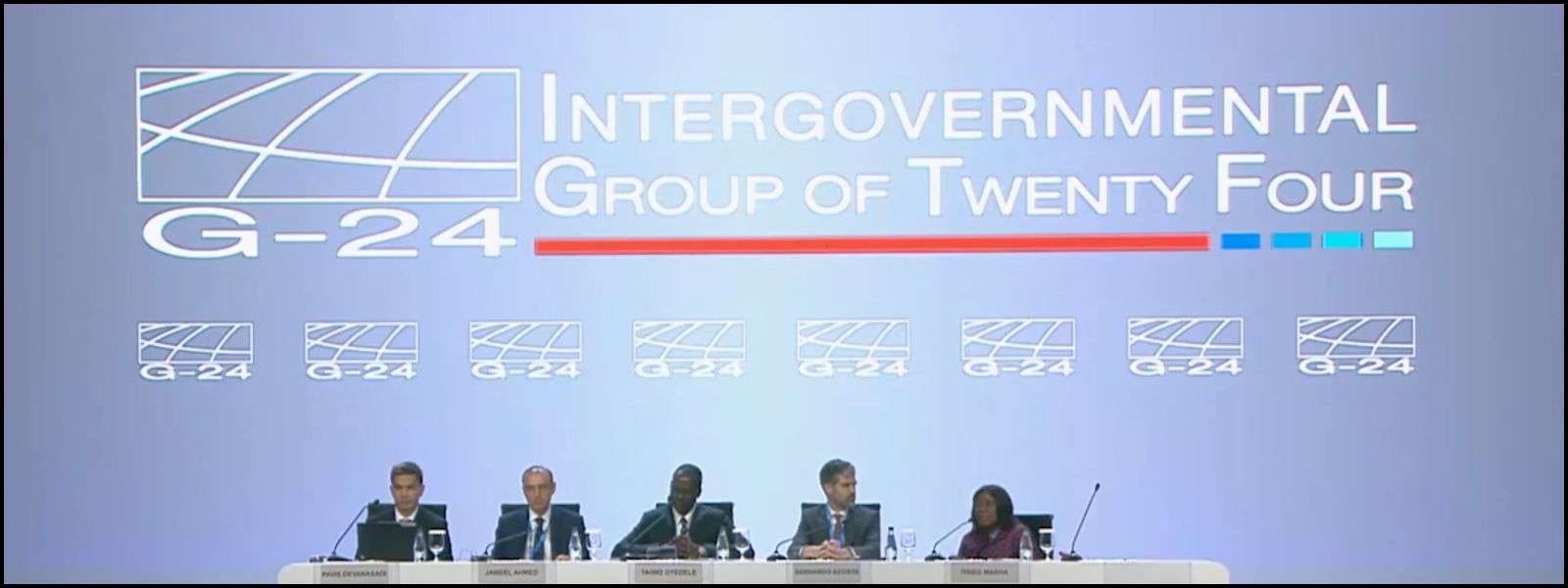
COLOMBO (News 1st); The prolonged debt crisis experienced by Sri Lanka has become a key reference point in ongoing efforts to strengthen the global sovereign debt restructuring system, according to the G24 Secretariat.
Responding to a question from News1st's Zulfick Farzan during a media briefing, G24 Secretariat Director Iyabo Masha said excessive debt levels continue to be a major constraint on economic growth, as heavily indebted nations are often forced to allocate a significant portion of their resources toward servicing debt instead of investing in development and growth.
Masha noted that important reforms have been introduced since Sri Lanka's debt restructuring process, resulting in what she described as a more robust sovereign debt architecture. She said countries facing debt distress are now expected to reach restructuring resolutions more quickly than in the past.
According to Masha, the International Monetary Fund has recently updated its Debt Sustainability Framework, introducing new metrics that allow for a more accurate assessment of a country's debt-carrying capacity. She explained that the updated approach will help governments better evaluate how much debt they can sustainably manage, reducing the risk of future crises.
She also highlighted recent changes to the Global Sovereign Debt Roundtable's restructuring playbook, describing it as the same platform that played a crucial role during Sri Lanka's debt negotiations. The revisions, she said, are expected to accelerate debt resolution processes and improve coordination among creditors and debtors.
Masha added that the Common Framework and other restructuring mechanisms targeting developing countries have also been strengthened, including updates to key memoranda of understanding aimed at streamlining negotiations and enabling faster debt restructuring outcomes.
While welcoming the progress made, the G24 official stressed that further reforms are still required. She called on advanced economies to support changes in the way international credit rating agencies assess developing nations, arguing that current rating practices can sometimes place additional pressure on countries already struggling with debt challenges.
She also pointed to concerns over limited private sector participation in global debt resolution initiatives. Masha noted that countries with significant exposure to private bondholders often face difficulties accessing the full benefits of restructuring mechanisms due to the absence of stronger private sector involvement.
Highlighting another recent development, Masha referred to the launch of the Borrowers' Platform Governing Council, an initiative led by the United Nations Conference on Trade and Development (UNCTAD), with Pakistan assuming the chairmanship.
The platform is expected to provide debtor nations with a stronger collective voice, allowing them to better articulate their concerns, share experiences, and improve understanding of sustainable borrowing practices. It will also help countries make more informed decisions about future debt commitments and strengthen their engagement in international debt discussions.
Reflecting on Sri Lanka's experience, Masha said the international community has made significant progress in improving sovereign debt restructuring mechanisms since the height of the island nation's crisis. However, she cautioned that substantial work remains to be done to ensure debt-distressed countries can achieve timely, fair and sustainable resolutions in the future.
Her remarks come as many developing nations continue to grapple with rising debt burdens, slowing growth, and growing concerns over global financial stability, making reforms to the international debt architecture an increasingly urgent priority.
Other Articles








.png)


Featured News




News 1st, MTV Channel (Pvt) Ltd, MBC Networks (Pvt) Ltd, 45/3, Braybrooke Street, Colombo-02.
T.P : +94 114 792 700, Fax : +94 114 792 733
T.P : +94 114 792 700, Fax : +94 114 792 733




 |  | .webp) |
|---|---|---|
 |  |  |
 |  |  |
 |
