.webp)


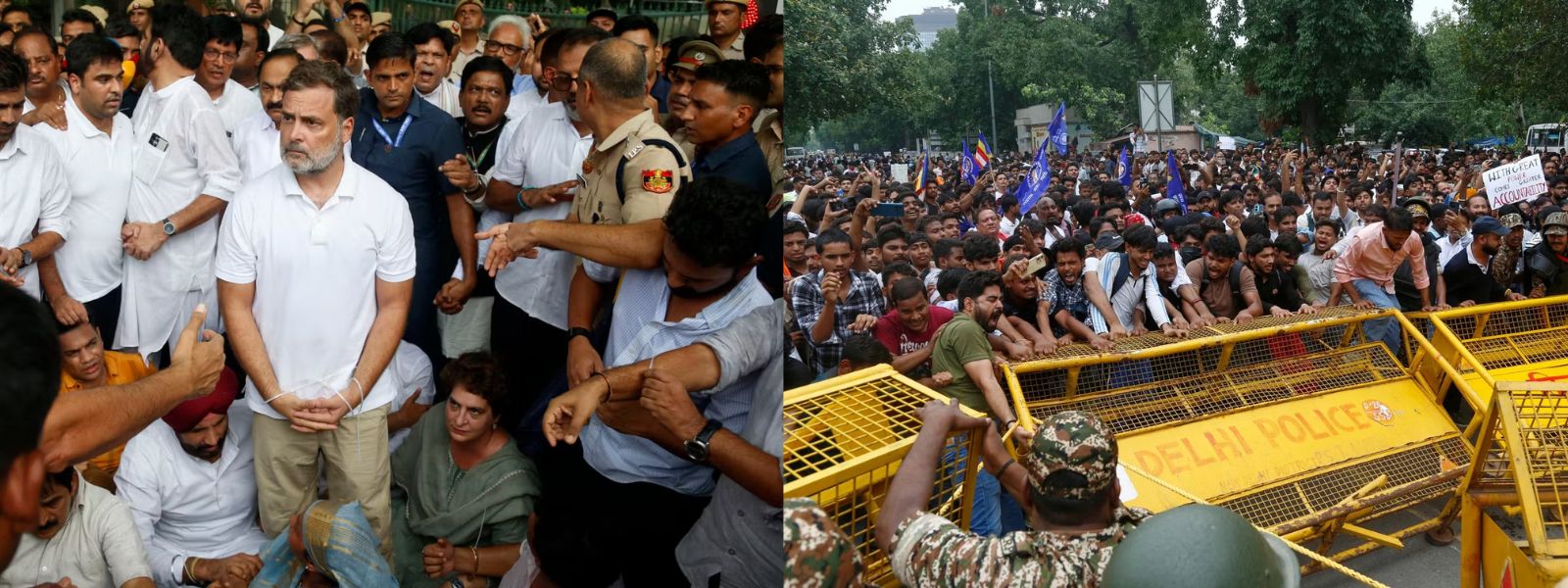
The Latest on CJP Potests in Delhi: Demonstrations Escalate As Rahul Gandhi Joins CJP Stir



.png )
New Delhi is witnessing one of the biggest student-led protests in recent years, as the youth-driven Cockroach Janta Party (CJP) movement intensifies its campaign over alleged failures in India’s examination system, demanding accountability and sweeping education reforms.
The protests, centred around allegations of irregularities linked to major competitive examinations including National Eligibility cum Entrance Test in India (NEET), have now entered the political arena, with India's Leader of the Opposition Rahul Gandhi and other Congress leaders extending support to the protesting students.
Rahul Gandhi Detained During Protest
Rahul Gandhi, along with other opposition leaders, were briefly detained by Delhi Police after joining a demonstration near Prime Minister Narendra Modi’s residence. Gandhi accused the government of ignoring students’ concerns and demanded that their grievances be addressed through Parliament.
While in detention, Rahul Gandhi released a video statement listing five demands from the government:
1. PM Modi Should Apologise To Students
2. Union Education Minister Dharmendra Pradhan and Home Minister Amit Shah Should Resign
3. Hold A Full Discussion In Parliament
4. Justice For Students
5. 5. Education And Exam Reforms At The Earliest.
Gandhi has called for a parliamentary debate on the issue, arguing that students affected by alleged examination failures deserve answers, transparency, and justice. He has also criticised the government’s handling of the protests, accusing authorities of using force instead of engaging with young protesters.
However, while the Congress leader has supported the students’ demands, there has been no formal announcement that Gandhi or the Congress Party has joined the Cockroach Janta Party movement itself.
Political observers say the Congress is attempting to highlight the concerns raised by students while maintaining a separate political identity from the CJP, which emerged as an independent youth-led movement.
Why Are Students Protesting?
The CJP-led demonstrations began after growing anger among students over alleged irregularities in national examinations, including concerns over paper leaks and accountability within India’s education system.
The protesters are demanding:
1. The resignation of Union Education Minister Dharmendra Pradhan
2. A transparent investigation into examination-related failures
3. Stronger safeguards against paper leaks
4. Compensation and support for affected students and families
5. Structural reforms in India's competitive examination system
The movement gained further momentum after activist Sonam Wangchuk joined the agitation, including through a hunger strike demanding government action.
Wangchuk was shifted from Safdarjung Hospital to Medanta Hospital in Gurugram last evening, following a Delhi High Court order, while crowds at Jantar Mantar continued to swell in support of the ongoing protest.
A Division Bench comprising Chief Justice Devendra Kumar Upadhyaya and Justice Tejas Karia directed that Wangchuk be shifted to the hospital of his choice after considering medical opinions placed before it.
Government Response: Education Minister Promises Reform
The Indian government has rejected accusations of ignoring students but acknowledged the need for improvements in the examination system.
Union Education Minister Dharmendra Pradhan has promised reforms and greater accountability, stating that steps will be taken to strengthen examination procedures and restore confidence among students.
However, launching a volley against the Congress and Leader of the Opposition Rahul Gandhi for protesting outside PM Modi's residence over the paper leaks issue, Education Minister Dharmendra Pradhan accused them of "exploiting students".
He said they were shamelessly exploiting students as political tools to "manufacture disruption" during the Monsoon Session of Parliament. The protest by the Congress, he said, violated security protocols and caused inconvenience to the public.
Meanwhile, Prime Minister Narendra Modi and senior government leaders have also assured students that action will be taken to ensure fairness and transparency in examinations.
However, the protesters have maintained that assurances alone are insufficient, insisting on concrete measures and accountability from those responsible.
Clashes During Parliament March
Tensions escalated when thousands of protesters attempted to march towards Parliament in New Delhi under the banner of the CJP movement.
Police intervened to stop the march, with protesters alleging excessive force, including baton charges and the use of tear gas. Police officials have denied allegations of misconduct, describing some claims as misinformation.
The confrontation resulted in injuries among protesters and police personnel, further intensifying criticism against the government’s handling of the demonstrations.
Current Situation at 'Janta Mantar'
As of now, the protests continue to draw large crowds in Delhi, with the CJP leadership insisting that demonstrations will continue until their demands are addressed.
The Delhi police yesterday registered four FIRs against unknown individuals for rioting, assault on public servants, damage to public property and other offences during Monday’s Cockroach Janta Party (CJP) protest.
Hundreds of people across the country and abroad ordered food with the location as the Jantar Mantar protest site and instructions to give the food to the protestors.
The involvement of Rahul Gandhi and other opposition figures has transformed what began as a student movement into a wider political confrontation, placing education reforms and government accountability at the centre of debate in India.
With Parliament now facing increasing pressure to debate the issue, the coming days are expected to determine whether the government’s reform promises can calm the protests or whether the movement will expand further across the country.
Other Articles







Featured News
-847152_550x300.jpg)



News 1st, MTV Channel (Pvt) Ltd, MBC Networks (Pvt) Ltd, 45/3, Braybrooke Street, Colombo-02.
T.P : +94 114 792 700, Fax : +94 114 792 733
T.P : +94 114 792 700, Fax : +94 114 792 733




 |  | .webp) |
|---|---|---|
 |  |  |
 |  |  |
 |
