.webp)


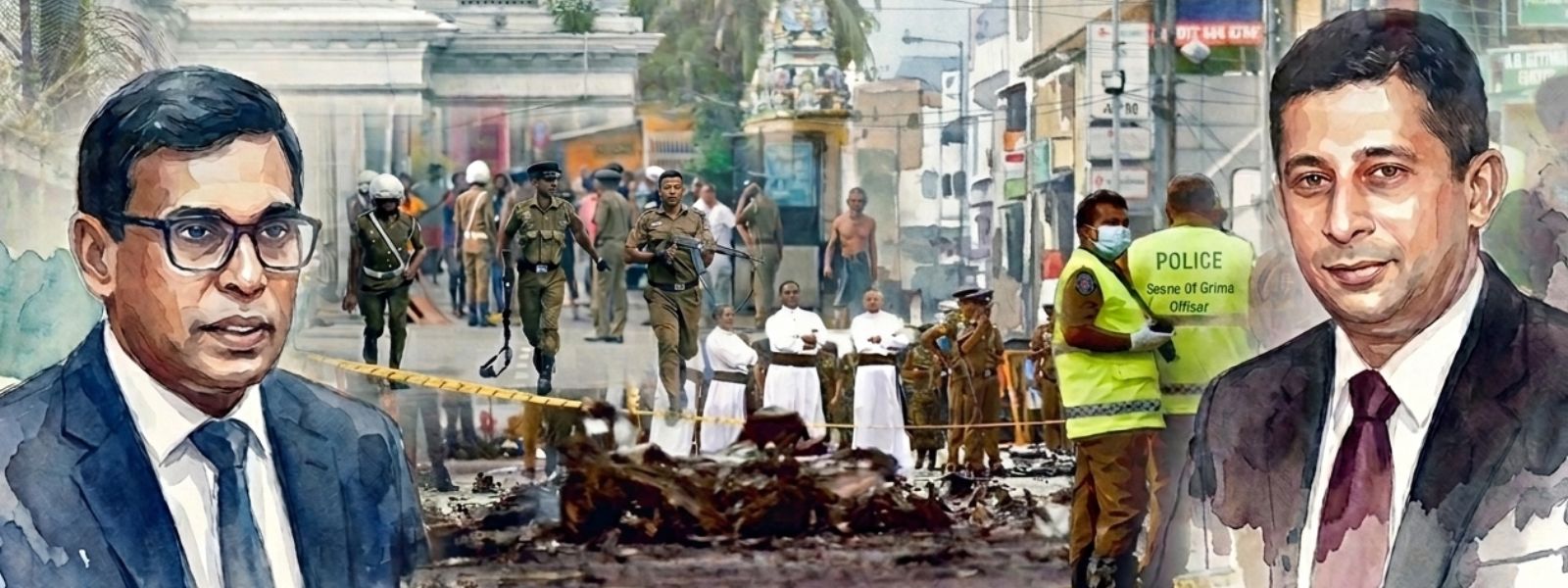
Q&A | Suresh Salley & Conspiracy Claims



.png )
Q: What is the latest development in the Easter Sunday attacks investigation?
A: Sri Lanka’s Minister of Public Security Ananda Wijepala has revealed that investigations into the April 21, 2019 Easter Sunday suicide bombings have uncovered sufficient and credible evidence to reasonably believe that retired Major General Tuan Suresh Salley conspired in facilitating the attacks by strategically directing Islamic extremists.
Q: Who is Tuan Suresh Salley and why is he significant in this case?
A: Tuan Suresh Salley is a former Director of Military Intelligence and later served as the Director of the State Intelligence Service. According to the Minister, he is now alleged to have played a central role in creating the conditions that led to the coordinated terror attacks.
Q: What was the impact of the Easter Sunday attacks?
A: The April 21, 2019 attacks devastated Sri Lanka, killing 278 civilians, injuring 500+, causing massive destruction of property, severely affecting the economy, and damaging inter-religious and inter-ethnic harmony across the country.
Q: What evidence points to activities before the attacks?
A: Investigations have revealed that a covert operation took place approximately three weeks before the attacks. During this period, four Muslim individuals were allegedly deployed under Salley’s direction to gather sensitive intelligence from Catholic churches in the Negombo area.
Q: What kind of intelligence was collected?
A: The intelligence collected included critical details such as the number of worshippers attending religious services and other sensitive information believed to have been essential in planning the scale and targets of the bombings.
Q: Has any individual from this intelligence-gathering operation been identified?
A: Yes. A witness reportedly identified the photograph of the main individual among the four operatives from a database of suspects held by the Criminal Investigation Department. Investigations confirmed that this individual was an ISIS ideologue and remains missing since the Easter Sunday attacks.
Q: Were there advance warnings about the attacks?
A: Yes. Intelligence indicated that Islamic extremists linked to the National Thowheed Jama’ath (NTJ), including its leader Zahran Hashim, were planning an attack. This warning was reportedly provided by an informant residing in Panadura to military intelligence.
Q: What happened to this critical intelligence warning?
A: According to the Minister, the intelligence was ignored within the military intelligence structure, which ultimately enabled the attacks to take place.
Q: What happened to the informant who raised the warning?
A: The informant was allegedly unlawfully arrested and detained after providing the intelligence. He was later released.
Q: Did the informant interact with Salley after his release?
A: Yes. After being released, the informant was reportedly summoned by Salley to the Galadari Hotel in Colombo. They met and discussed the matter in detail, and Salley is said to have apologized to the informant.
Q: Is there external evidence supporting these allegations?
A: Yes. Statements made by Mohamed Milar Mohamed Hanseer, also known as Azad Maulana, which were aired on a British Channel 4 program, support the findings. According to the Minister, these disclosures confirm that a structured and deliberate background had been created to facilitate the Easter attacks.
Q: What do investigators now believe about Salley’s involvement?
A: Authorities suspect that Salley had prior knowledge of the plot and may have actively participated in a conspiracy that involved enabling the attacks and preventing the disclosure of critical information before and after the incident.
Q: What laws could apply to these alleged actions?
A: The Minister stated that such actions fall under offences outlined in the Prevention of Terrorism Act No. 48 of 1979, including providing direct and indirect support to terrorist activities and concealing individuals, groups, or networks responsible.
Q: Were there attempts to suppress information about the attacks?
A: Yes. Investigations indicate that deliberate efforts were made before and after the attacks to prevent the exposure of key facts, contributing to the controversy surrounding the incident.
Q: Were proper procedures followed during the suspect’s arrest?
A: According to the Minister, all legal and human rights safeguards were followed. The suspect was provided with fundamental rights, including access to legal counsel and the ability to communicate with his lawyer.
Q: What steps were taken at the time of arrest?
A: Investigators escorted the suspect to his residence, informed his wife and family members of the arrest, explained the reasons for it, and issued an official arrest receipt to his wife.
Q: Were authorities notified about the arrest?
A: Yes. The Criminal Investigation Department informed the Human Rights Commission of Sri Lanka in writing and presented the suspect before the Colombo Judicial Medical Officer.
Q: What detention measures have been taken?
A: A 72-hour detention order was first obtained under the Prevention of Terrorism Act. This was later extended under Section 9 of the Act, allowing detention and interrogation for up to 90 days.
Q: Were the suspect’s family and authorities informed about his detention?
A: Yes. The Human Rights Commission was notified in writing, and the suspect’s close relatives were also informed.
Q: What facilities have been provided to the suspect during detention?
A: The suspect has been granted access to legal and personal rights, including the ability to meet his lawyer every Wednesday, communicate via telephone with his wife, mother, and relatives every Friday, and receive in-person visits every Saturday.
Q: Are family members allowed to provide necessities?
A: Yes. During visits, family members are permitted to bring food, clothing, beverages, and other personal items such as oil.
Q: Has the suspect’s detention been independently monitored?
A: Yes. Under the amended Prevention of Terrorism Act No. 12 of 2022, the Colombo Fort Magistrate has visited the CID detention facility multiple times to observe the suspect’s condition.
Q: Has the suspect complained of mistreatment or torture?
A: No. During these inspections, the suspect has not made any complaints regarding inhumane treatment or torture.
Q: Have any complaints been made against investigators?
A: No. The Minister confirmed that no complaints have been lodged against investigation officers either before the Magistrate or any other authority.
Q: What is the current status of the investigation?
A: Investigations remain ongoing, with authorities continuing to pursue all leads to uncover the full extent of the alleged conspiracy behind the Easter Sunday attacks, one of the deadliest and most traumatic events in Sri Lanka’s modern history.
Other Articles




-842611_550x300.jpg)
-842605_550x300.jpg)


Featured News

-835300_550x300.jpg)

News 1st, MTV Channel (Pvt) Ltd, MBC Networks (Pvt) Ltd, 45/3, Braybrooke Street, Colombo-02.
T.P : +94 114 792 700, Fax : +94 114 792 733
T.P : +94 114 792 700, Fax : +94 114 792 733




 |  | .webp) |
|---|---|---|
 |  |  |
 |  |  |
 |
