.webp)


Electricity Tariff Hikes Must Protect the Poor, Says IMF



.png )
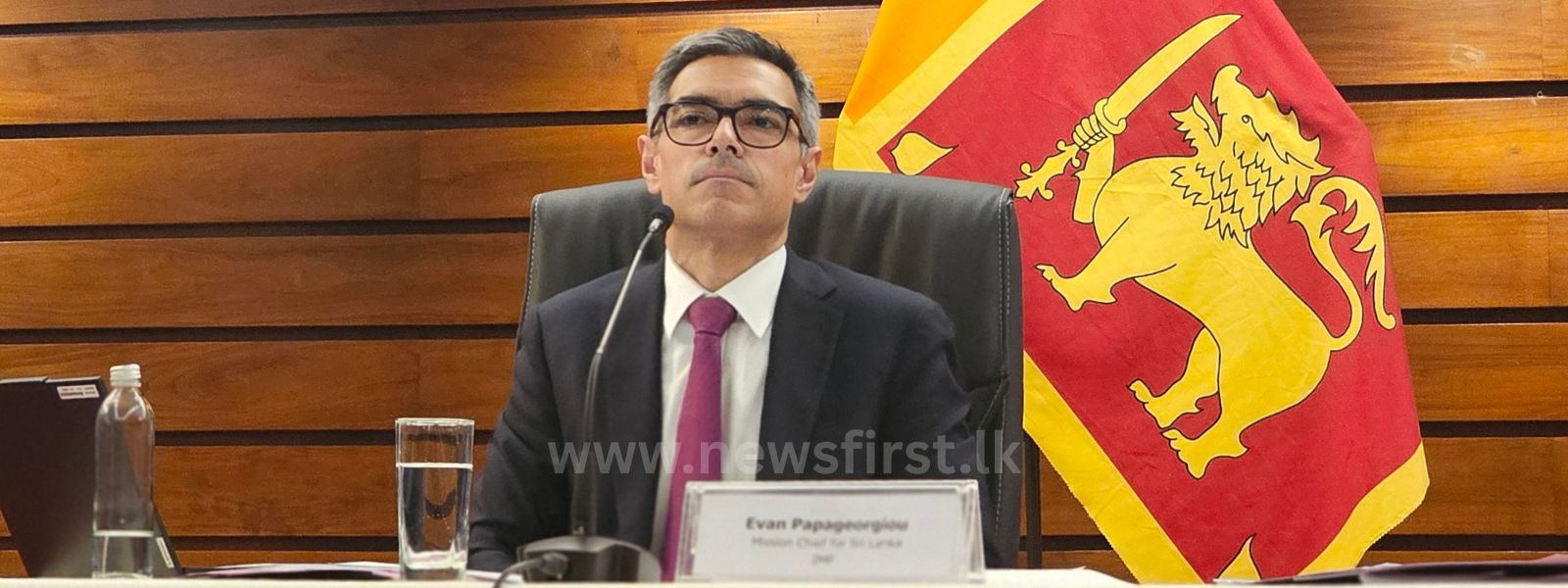
COLOMBO (News 1st); Electricity tariff increases must be balanced with targeted protection for poor and vulnerable households as Sri Lanka navigates a major external shock stemming from the Middle East conflict, International Monetary Fund Mission Chief for Sri Lanka Evan Papageorgiou said, outlining discussions held with Sri Lankan authorities on managing the impact of rising prices.
Responding to a question by News First journalist Zulfick Farzan on how tariff and price hikes would avoid falling disproportionately on marginalized groups, Papageorgiou acknowledged that electricity prices have risen, with the Public Utilities Commission of Sri Lanka announcing an average tariff increase of 11 percent on March 31. He also noted that a new submission seeking an additional tariff increase has since been made by the National System Operator.
Papageorgiou stressed that ensuring electricity tariffs reflect the true cost of supply is essential to maintaining fiscal sustainability and preventing the electricity utility, now operating under the National System Operator or the restructured Ceylon Electricity Board, from accumulating losses that could ultimately become a burden on the government’s finances.
He said cost recovery in the electricity sector helps reduce the need for costly government interventions in the future, avoids adverse feedback loops across the economy, and supports better investment planning and predictability in infrastructure, leading to improved quality of services.
At the same time, he emphasized that adjustments must be accompanied by measures to protect those least able to absorb higher costs. Papageorgiou said the IMF has discussed with the authorities the importance of safeguarding vulnerable groups during this period of adjustment.
He noted that the government has assessed the effects of tariff increases and committed to providing targeted and temporary support to low-income households, particularly those consuming electricity at lifeline levels.
According to the IMF, this approach helps ensure that tariff hikes do not fall disproportionately on poorer households while offering short-term relief to those most affected.
Explaining the technical process behind tariff determination, Papageorgiou said electricity cost recovery is assessed on a forward-looking basis and depends on multiple assumptions, including forecasts and the need to recover past losses incurred by the electricity utility. He said the March 31 tariff determination took into account some losses sustained during the first quarter, a period during which tariffs were not adjusted due to technical and administrative constraints, resulting in the utility operating at old tariff levels and incurring losses.
Papageorgiou added that the tariff submission for the second quarter was made before the escalation of the Middle East conflict and therefore did not fully reflect updated oil price assumptions. As a result, a new submission is needed to incorporate revised fuel price assumptions as well as changes to the electricity generation mix and fuel dispatch policy. He said the IMF would evaluate all these components once a new announcement is made to assess whether electricity cost recovery conditions are adequately met.
Beyond electricity, Papageorgiou described the Middle East conflict as a very significant external shock for Sri Lanka, one whose scale and duration could have serious implications for economic growth, exports, remittances, connectivity and other key sectors.
He said the IMF considers this one of the most severe shocks Sri Lanka has faced since its economic crisis and is monitoring developments closely.
While acknowledging that higher fuel and electricity prices affect everyone, Papageorgiou said the impact is felt most acutely by those who can afford it the least. He noted that existing tariff structures already differentiate based on household consumption, with lifeline consumers and households using up to around 90 kilowatt-hours per month facing smaller increases, while higher-consuming households, industries and other users absorb a larger share of the adjustment.
Papageorgiou also referred to discussions with authorities on the Rs. 100 billion relief package announced by President Anura Kumara Dissanayake, noting that the same principles of targeted support would apply. He said the package includes fertilizer subsidies for small farmers, assistance for the fisheries sector affected by elevated fuel prices, and a top-up to the Aswesuma social support program, measures the IMF has encouraged and agrees with.
He said the overarching objective is to ensure that while Sri Lanka restores fiscal sustainability and adjusts to global shocks, the burden of higher prices is cushioned for the poor and vulnerable through targeted, temporary and well-designed support mechanisms.
Other Articles

-855570_550x300.jpg)
-855564_550x300.jpg)




.png)


Featured News




News 1st, MTV Channel (Pvt) Ltd, MBC Networks (Pvt) Ltd, 45/3, Braybrooke Street, Colombo-02.
T.P : +94 114 792 700, Fax : +94 114 792 733
T.P : +94 114 792 700, Fax : +94 114 792 733




 |  | .webp) |
|---|---|---|
 |  |  |
 |  |  |
 |
