.webp)


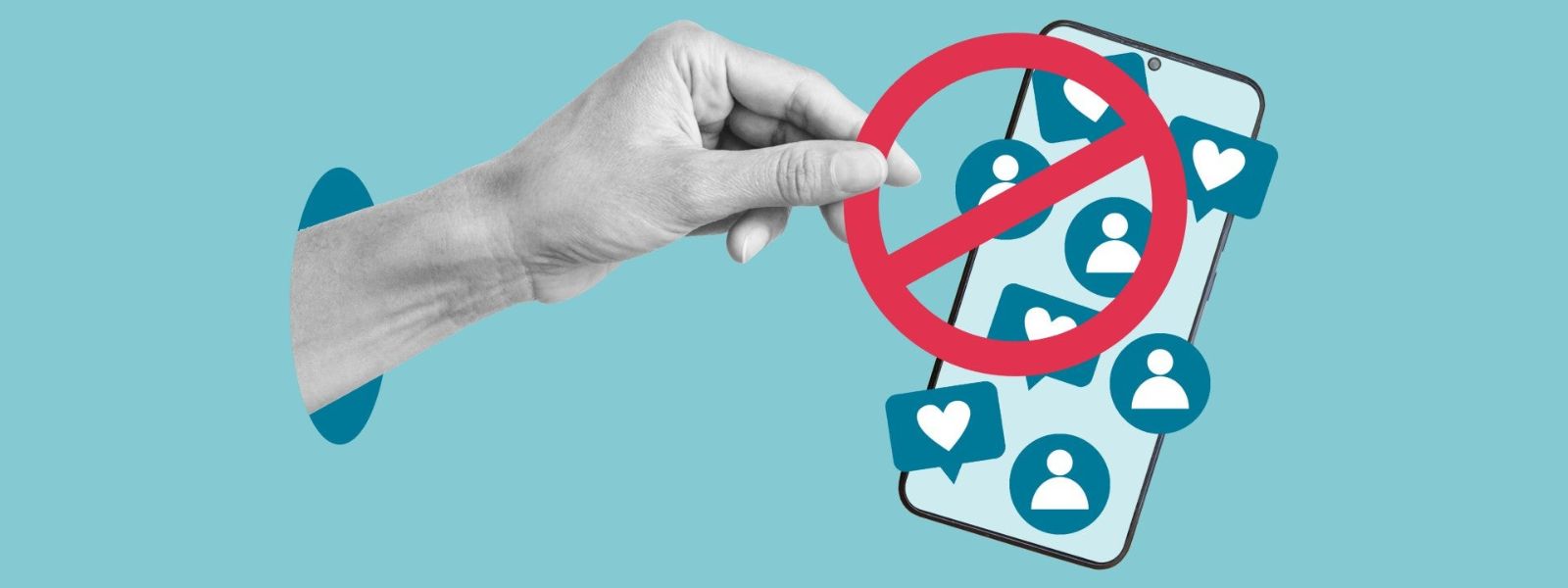
Sri Lanka Weighs Social Media Restrictions for Under-16s



.png )
COLOMBO (News 1st); The National Child Protection Authority (NCPA) says multiple stakeholders have now shared their views on the proposal to restrict social media access for children under the age of 16.
Speaking to News First, Attorney-at-Law Sajeevani Abeykoon, Director of the NCPA’s Law Enforcement Unit, said a special task force appointed to study the matter recently met under the leadership of the Prime Minister. She noted that several institutions, including the Ministry of Women and Child Affairs, participated in the discussions.
Abeykoon explained that many countries, including Australia, Denmark, and France, have already implemented restrictions on social media access for children under 16. She emphasized that, based on complaints received by the NCPA, similar measures may be appropriate for Sri Lanka.
According to her, the intention is not to prevent children from using devices altogether, but to consider ways of limiting social media use to safeguard their wellbeing.
She pointed to extensive global research showing increasing mental stress among children, a rise in peer violence, and negative impacts from exposure to school-related conflicts. Prolonged engagement with social media, she said, has also been linked to health issues, reduced attention spans, and heightened psychological pressure. These concerns have prompted countries worldwide to intensify focus on child safety online.
Abeykoon further noted that many of the complaints received by the NCPA come from parents who say their children are becoming excessively attached to social media platforms and are seeking guidance on how to manage it.
She said this reflects a broader national problem that requires proper regulation.
Given the issues highlighted through complaints and research, she stressed that some form of control is necessary to protect children and address the growing challenges posed by unrestricted social media exposure.
Across the world, governments are moving swiftly to restrict or ban social media access for children, amid rising concerns over mental health, online safety, and platform accountability.
From Australia’s trailblazing legislation to emerging regulations in Europe, Asia, and beyond, a global debate is rapidly unfolding over how best to protect young users in the digital age.
Australia became the first country in the world to enforce a nationwide ban on social media for children under 16, with the law taking effect in December 2025.
Under the ban, platforms including Facebook, Instagram, Snapchat, TikTok, X, YouTube, Reddit, Twitch, and Kick must now block under‑16 users, or face penalties of up to AUD 49.5 million. Age‑verification checks are mandatory, and platforms cannot rely on simple self‑declared ages.
Denmark is following closely: the government has moved forward with a plan to ban social media for children under 15, with legislation expected to become law as early as mid‑2026.
The proposal also includes the rollout of a digital age‑verification app.
Spain is the latest European country to announce a sweeping ban. Beginning next week, Spain will block all users under 16 from accessing major platforms, mirroring Australia’s strict enforcement model.
Other Articles
-827557_550x300.jpg)

-827538_550x300.jpg)






Featured News

-822734_550x300.jpg)
News 1st, MTV Channel (Pvt) Ltd, MBC Networks (Pvt) Ltd, 45/3, Braybrooke Street, Colombo-02.
T.P : +94 114 792 700, Fax : +94 114 792 733
T.P : +94 114 792 700, Fax : +94 114 792 733




 |  | .webp) |
|---|---|---|
 |  |  |
 |  |  |
 |
