.webp)


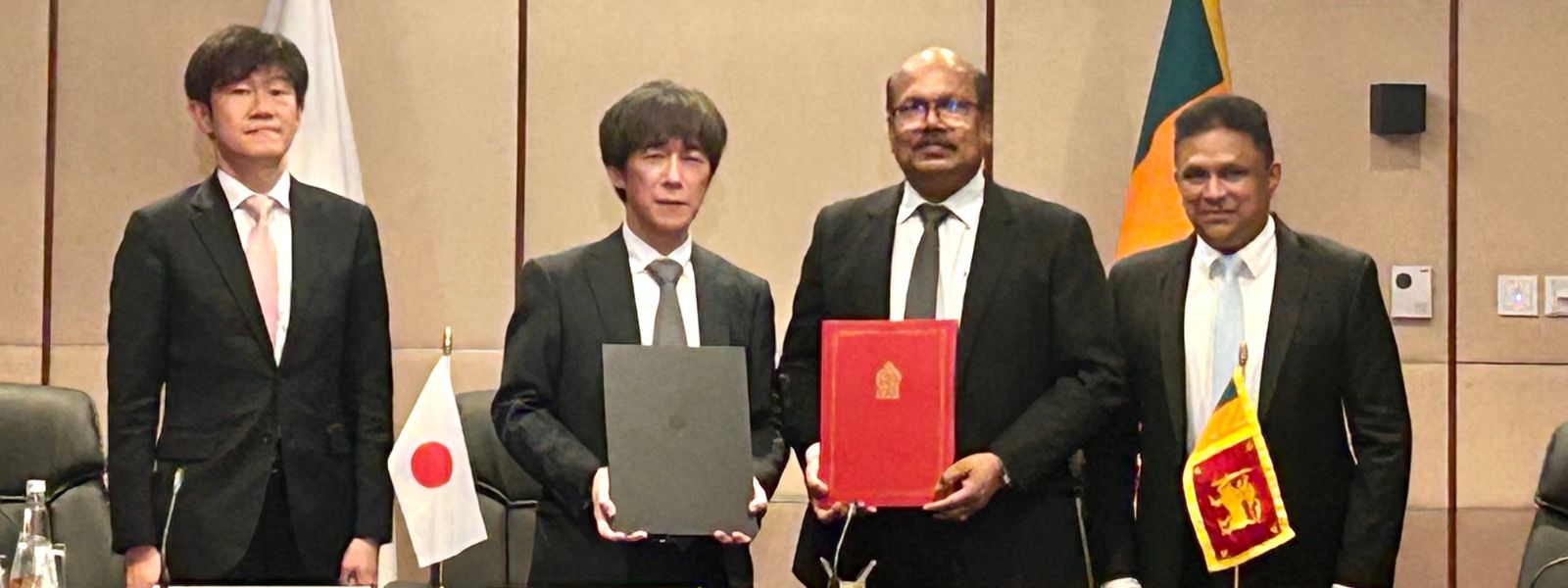
Japan–Sri Lanka Economic Dialogue Revived After 10 Years



.png )
COLOMBO (News 1st); The Intergovernmental Economic Policy Dialogue between Japan and Sri Lanka reconvened on 16 February, marking the first meeting of its kind in a decade since it last took place in July 2016.
The session was co‑chaired by Takehiko Matsuo, Vice‑Minister for International Affairs of Japan’s Ministry of Economy, Trade and Industry (METI), and K. A. Vimalenthirarajah, Secretary to Sri Lanka’s Ministry of Trade, Commerce, Food Security and Co‑operative Development.
A high-level Japanese business delegation of around 40 corporate leaders also attended, led by Fumihiko Kobayashi, Chairman of the Japan–Sri Lanka Business Co‑operation Committee and Executive Vice President and Chief Administrative Officer of ITOCHU Corporation.
The resumption of the Dialogue followed the Japan–Sri Lanka Joint Statement issued during President Anura Kumara Dissanayake’s official visit to Japan in September last year, with the stated objective of jointly exploring new pathways for Sri Lanka’s industrial development and economic growth. Ahead of the talks, both sides signed a new Memorandum of Cooperation establishing the framework for the renewed Dialogue.
In his opening remarks, Vice‑Minister Matsuo outlined three key priorities to deepen Japan–Sri Lanka economic cooperation.
First, he highlighted Sri Lanka’s development potential, pointing to the “Conceptual Roadmap on Building an Export-Oriented Industrial Corridor,” proposed by METI and JETRO during President Dissanayake’s visit. He stressed the importance of promoting intra‑regional trade within South Asia and supporting Sri Lanka’s integration into global supply chains.
Second, he underscored the need to strengthen economic resilience, cautioning against overreliance on sectors such as tourism, migrant remittances and tea exports. He called for broader diversification to better prepare for future crises.
Third, Matsuo emphasized the importance of promoting positive success stories. He noted that improving the business environment, particularly by addressing challenges faced by Japanese companies operating in Sri Lanka, is essential to attracting investment.
Japan’s Ambassador to Sri Lanka, Mizukoshi Hideaki Isomata, also addressed the Dialogue, acknowledging the cooperation extended by Sri Lanka’s Board of Investment and other agencies in establishing the Japan–Sri Lanka Committee on Business Environment last August. He highlighted three essential pillars of a stable business climate: transparency, predictability and non‑discriminatory treatment.
The Ambassador expressed Japan’s interest in the early implementation of a single-window investment approval system and called for clear industrial promotion roadmaps to guide potential investors.
Other Articles



-832645_550x300.jpg)


Featured News


News 1st, MTV Channel (Pvt) Ltd, MBC Networks (Pvt) Ltd, 45/3, Braybrooke Street, Colombo-02.
T.P : +94 114 792 700, Fax : +94 114 792 733
T.P : +94 114 792 700, Fax : +94 114 792 733




 |  | .webp) |
|---|---|---|
 |  |  |
 |  |  |
 |
