


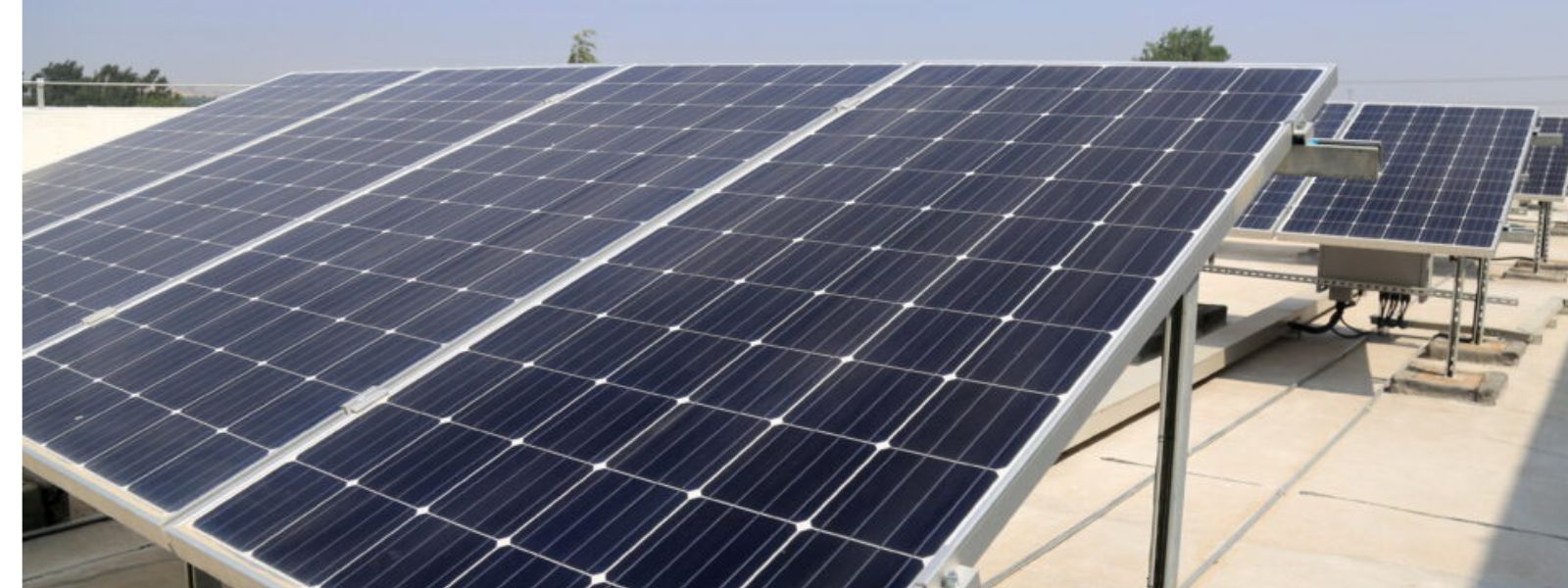
Net Metering Out, Net Plus In: Government Explains Major Solar Power Shift



.png )
COLOMBO (News 1st); Minister of Energy Anura Karunatilaka has defended the government's decision to introduce the "Net Plus" system for rooftop solar power users, arguing that the new model is designed to protect both solar investors and ordinary electricity consumers from unfair costs.
The issue sparked a lively exchange in Parliament after ITAK MP Rasamanickam Shanakkiyan questioned whether Sri Lanka could realistically achieve its ambitious renewable energy targets following changes to the existing net metering and net accounting systems.
Karunatilaka said the government remains firmly committed to expanding renewable energy capacity and outlined plans to add hundreds of megawatts of solar and wind power to the national grid over the coming years. According to the Energy Minister, Sri Lanka aims to add 642 megawatts of solar power and 50 megawatts of wind power in 2027, followed by 300 megawatts of solar and 160 megawatts of wind power in 2028. Another 450 megawatts of solar capacity and 160 megawatts of wind energy are expected to be added in 2029.
However, Shanakkiyan warned that the policy changes could discourage households and businesses from investing in rooftop solar systems. He argued that many companies involved in the solar industry have already become disillusioned, with some reportedly facing severe business uncertainty following the end of the previous net metering arrangements.
The MP contended that the move could make it more difficult for the country to achieve the renewable energy goals repeatedly highlighted by the government, while also creating an unfair situation for ordinary consumers who invested heavily in rooftop solar installations.
Responding to the criticism, Karunatilaka said the government had extensively discussed the shortcomings of the net metering and net accounting systems. He explained that electricity generated by solar panels during the daytime is produced at a relatively low cost, while electricity supplied to those same customers at night often comes from costlier sources of generation.
According to the Minister, maintaining the previous arrangement would effectively shift those additional costs onto consumers who do not own solar panels.
He said the Net Plus mechanism was introduced as a middle ground, enabling solar power producers to earn a fair return on their investment while ensuring other electricity consumers are not unfairly burdened.
Karunatilaka also revealed that the government is exploring an additional model that would allow solar users to offset electricity consumed during the day against the electricity they supply to the grid during the same period, with payments made only on excess units exported. Such a system, he said, would eliminate concerns over daytime power use while addressing the cost differences associated with electricity generation during nighttime hours.
Other Articles







Featured News




News 1st, MTV Channel (Pvt) Ltd, MBC Networks (Pvt) Ltd, 45/3, Braybrooke Street, Colombo-02.
T.P : +94 114 792 700, Fax : +94 114 792 733
T.P : +94 114 792 700, Fax : +94 114 792 733




 |  |  |
|---|---|---|
 |  |  |
 |  |  |
 |
