.webp)


Too Much Debt, Too Many Wars: IMF



.png )
COLOMBO (News 1st); International Monetary Fund Managing Director Kristalina Georgieva has warned that the global economy is being driven by powerful and competing forces, with wars, rising debt burdens, artificial intelligence and climate-related disruptions shaping growth prospects across the world.
Georgieva said countries affected by conflict have suffered significant downgrades to their growth outlook, while economies linked to the artificial intelligence value chain, including the United States, China, India and several Asian nations, have benefited from stronger growth prospects.
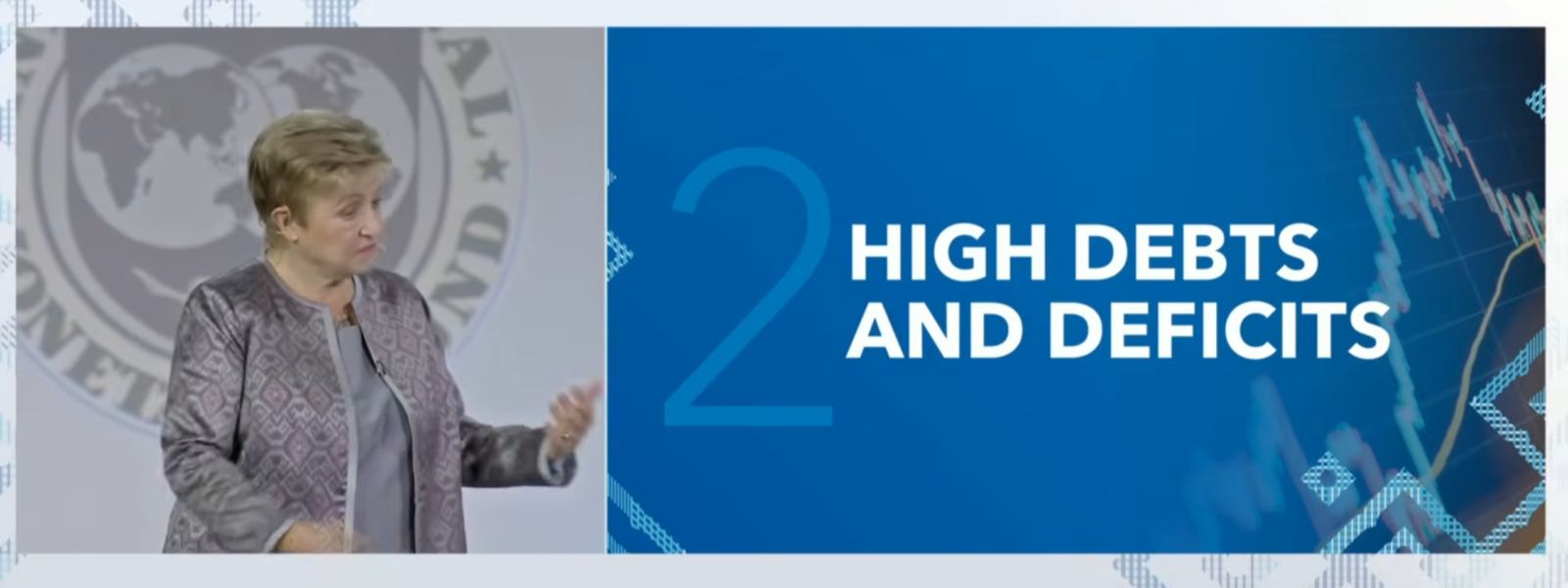
She noted that excessive public debt remains a major concern globally. According to Georgieva, advanced economies continue to carry the largest debt burdens, while debt levels are also increasing across emerging markets. Although many low-income countries maintain comparatively lower debt-to-GDP ratios, they face growing interest payment obligations that are limiting their ability to invest in development.
The IMF chief warned that declining levels of official development assistance are further intensifying pressures on poorer nations by reducing resources available for critical public investment and development programmes.
Georgieva said the economic consequences of these developments are becoming increasingly evident. Supply disruptions linked to global conflicts have pushed energy prices higher, contributing to rising inflation while slowing economic growth. Shipping routes remain vulnerable, refinery capacity and natural gas supplies continue to face pressure, and countries in the Northern Hemisphere are rebuilding fuel reserves ahead of winter.
She also cautioned that high debt levels and persistent budget deficits are reducing the ability of governments to respond to economic shocks. While stronger growth can help, Georgieva stressed that economic expansion alone will not reverse rising debt trends without credible fiscal reforms and spending discipline.
On artificial intelligence, she said the technology is driving economic growth and investment, but is also contributing to short-term inflation pressures. Massive investments in data centres, computing infrastructure and related technologies are increasingly being financed through borrowing, adding new pressures to public and private balance sheets.
Georgieva further warned that the current super El Niño event could add to inflation by driving up food prices and causing weather-related disruptions. She noted that rising food costs disproportionately affect vulnerable and low-income households.
Against this backdrop, the IMF Managing Director stressed that preserving economic stability will require fiscal consolidation in many highly indebted countries. She called on governments to implement credible medium-term fiscal plans and, where necessary, take early measures to place public finances on a sustainable path.
Georgieva said the call for fiscal restraint is particularly important for major advanced economies with high levels of debt and deficits, noting that policy decisions taken by these countries can have significant spillover effects on the rest of the world.
Other Articles







.png)


Featured News




News 1st, MTV Channel (Pvt) Ltd, MBC Networks (Pvt) Ltd, 45/3, Braybrooke Street, Colombo-02.
T.P : +94 114 792 700, Fax : +94 114 792 733
T.P : +94 114 792 700, Fax : +94 114 792 733




 |  | .webp) |
|---|---|---|
 |  |  |
 |  |  |
 |
