.webp)


AI Must Work for People, Not Leave Them Behind, Says World Bank



.png )
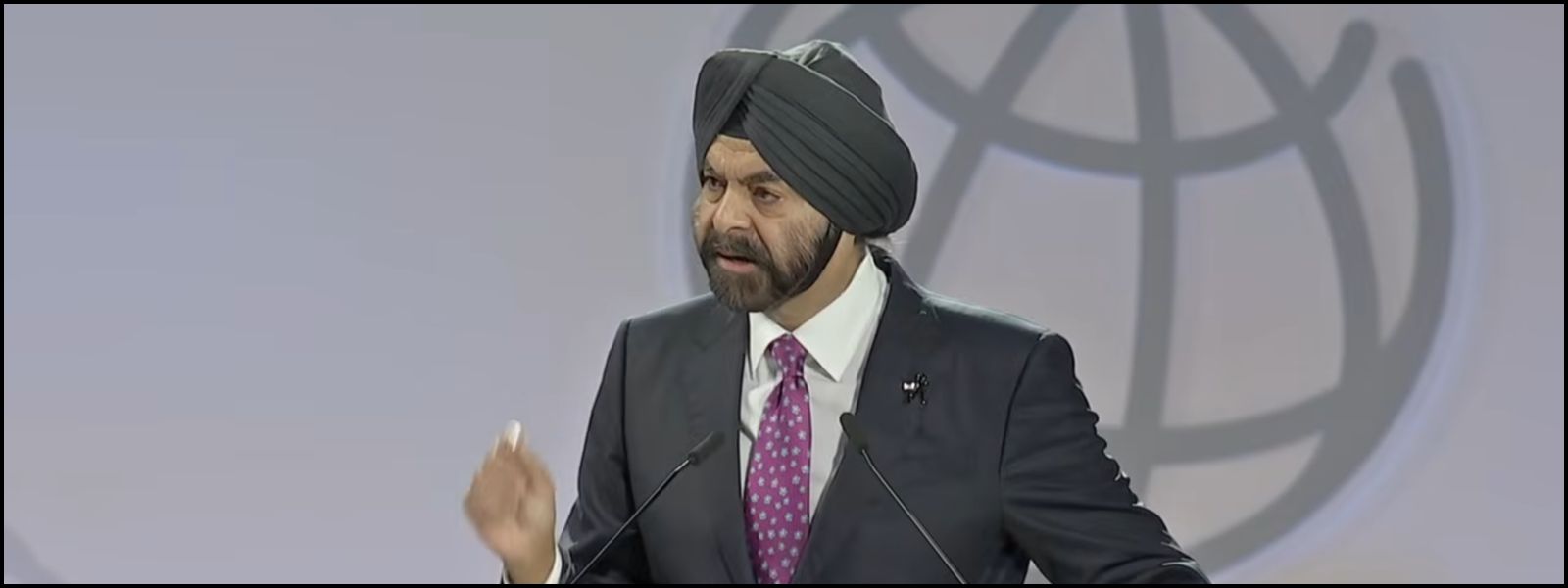
COLOMBO (News 1st); World Bank Group President Ajay Banga has warned that the global economy faces a major employment challenge over the next decade, with 1.2 billion young people expected to enter the labour market while only around 400 million jobs are projected to be created.
Speaking on the future of development and economic growth, Banga said the next generation will play a decisive role in shaping the world's future, making it essential for governments, development institutions and the private sector to expand economic opportunities and create sustainable employment.
He stressed that the future of development will depend on bringing together public finance, private investment, philanthropy and technology in ways that respond to the needs of individual countries.
According to Banga, public and concessional financing will remain critical in countries facing the greatest challenges and risks, while private investment and greater access to markets should play a larger role as economies become stronger and more resilient.
The World Bank President also highlighted the growing importance of artificial intelligence, noting that advanced AI systems require major investments in computing power, energy, data infrastructure and specialized skills, putting them beyond the immediate reach of many developing countries.
However, he said practical applications of AI have the potential to transform everyday lives, helping farmers improve crop yields, teachers provide more personalized learning, healthcare workers make better-informed decisions and entrepreneurs connect with new customers and markets.
Banga said the World Bank is working with countries to strengthen electricity networks, internet connectivity, access to digital devices and regulatory safeguards to ensure people can benefit from AI-powered technologies.
He emphasized that skills development must remain a central component of this effort, with education and training systems more closely aligned to the jobs and industries countries are seeking to build.
The World Bank is also placing significant emphasis on supporting micro, small and medium-sized enterprises (MSMEs), which are widely regarded as the backbone of many developing economies.
Banga said the institution's MSME strategy is aimed at helping smaller businesses become more visible, better connected and easier to finance. This includes using digital records to improve access to credit, connecting small businesses to larger markets and simplifying regulations that support business growth.
Other Articles







.png)


Featured News




News 1st, MTV Channel (Pvt) Ltd, MBC Networks (Pvt) Ltd, 45/3, Braybrooke Street, Colombo-02.
T.P : +94 114 792 700, Fax : +94 114 792 733
T.P : +94 114 792 700, Fax : +94 114 792 733




 |  | .webp) |
|---|---|---|
 |  |  |
 |  |  |
 |
