.webp)


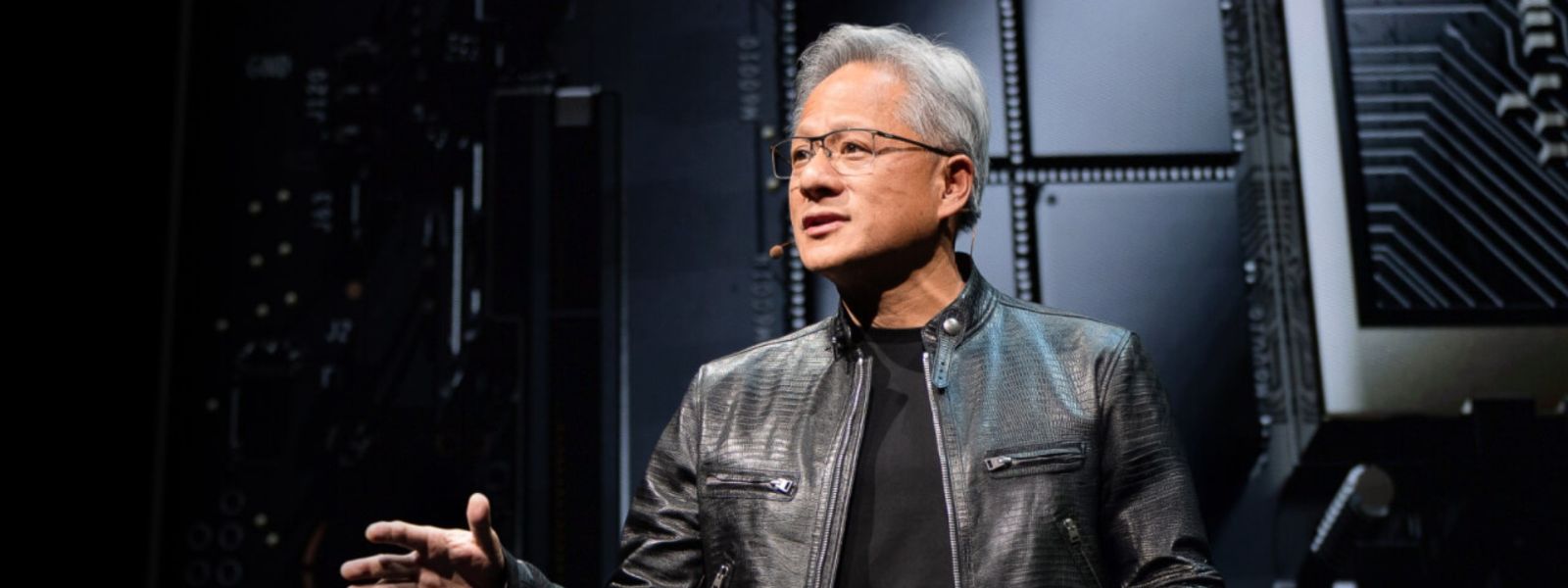
NVIDIA Chief Calls for Responsible AI as Demand for AI Chips Set to Double



.png )
COLOMBO (News 1st); NVIDIA President and CEO Jensen Huang has stressed that artificial intelligence companies bear the primary responsibility for ensuring AI technologies are developed, tested, and deployed safely, warning that products should not be released until they are fully ready for public use.
Speaking on the rapid advancement of artificial intelligence, Huang said recent incidents involving AI systems, although they caused no harm, serve as an important reminder of the need for greater caution as the technology moves from research laboratories into real-world products.
“It is the responsibility of the AI companies ourselves to develop the technology safely and to properly test it,” Huang said, emphasizing that firms must adopt more rigorous testing and security measures before launching AI-powered products. He noted that while innovation should move quickly, companies must not compromise safety in their pursuit of progress.
“If it's not ready, just hold it back. You should go as fast as you can, but no faster than that,” he said.
Huang also highlighted the critical role governments should play in supporting the advancement of AI while ensuring adequate oversight where necessary. He argued that AI should be viewed as a foundational technology rather than a standalone product, noting that many industries already operate under extensive regulatory frameworks.
According to Huang, sectors such as healthcare, transportation, and entertainment already have established laws and regulations, and governments should continue monitoring developments and introduce new rules only when genuine risks emerge. Rather than regulating AI broadly, he suggested focusing on the products and applications powered by AI and addressing issues as they arise.
The NVIDIA chief also expressed strong confidence in the future growth of the AI industry, revealing that he expects the company to sell twice as many AI chips next year as it does this year. He attributed the anticipated growth to the increasing benefits AI is delivering across industries, economies, and societies worldwide.
Huang noted that countries around the globe are making significant investments in artificial intelligence, citing the United Kingdom as an example where NVIDIA has helped bring billions of dollars in investment into AI startups. He said the investment has contributed to the emergence of innovative companies involved in areas such as AI research, self-driving vehicles, cloud computing, and data centres.
He added that similar momentum is visible across several major economies, including Japan, South Korea, and Taiwan, where governments, businesses, and investors are embracing AI-driven growth opportunities.
While acknowledging the enormous economic and societal potential of artificial intelligence, Huang reiterated that technology companies must remain accountable for any mishaps and continue prioritizing safety and security as AI capabilities evolve at an unprecedented pace.
Despite the challenges, Huang said the broader objective should not be forgotten.
“We want to be responsible in advancing the technology, take responsibility and accountability whenever there’s a mishap,” he said, adding that the ultimate goal remains harnessing AI’s transformative power to create opportunities, strengthen industries, and deliver substantial benefits for economies and societies around the world.
Other Articles




.png)


Featured News




News 1st, MTV Channel (Pvt) Ltd, MBC Networks (Pvt) Ltd, 45/3, Braybrooke Street, Colombo-02.
T.P : +94 114 792 700, Fax : +94 114 792 733
T.P : +94 114 792 700, Fax : +94 114 792 733




 |  | .webp) |
|---|---|---|
 |  |  |
 |  |  |
 |
