.webp)


-855036.jpg)
Developing Nations Need Stronger Financial Safety Nets



.png )
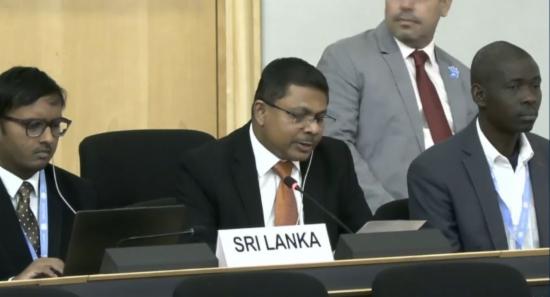
COLOMBO (News 1st) Developing countries require stronger financial safety nets and greater access to affordable, predictable, long-term financing if they are to overcome mounting economic and debt challenges, according to Penelope Hawkins, Head of the Debt and Development Finance Branch at the United Nations Trade and Development (UNCTAD).
Speaking on the challenges facing developing economies, Hawkins stressed that addressing debt vulnerabilities and development financing gaps requires cooperation at the national, regional, and international levels.
"It is clear that developing countries require stronger financial safety nets and they also need greater access to concessional and predictable long-term finance," she said.
Hawkins noted that development banks operating at different levels have a crucial role to play in supporting countries facing financial pressures.
She explained that national development banks, regional development banks, and international financial systems must work together in a coordinated manner to provide sustained support for developing economies.
According to Hawkins, responsibility for addressing these challenges lies both with national governments and the international community.
She pointed out that while countries can shift from reliance on foreign financing to domestic financing, doing so often comes at a significant cost.
"We know that countries can shift from foreign finance to domestic finance, but we do know that that comes at an additional cost," she said.
Hawkins referred to this additional burden as a "sovereignty premium," explaining that governments borrowing from domestic markets often pay interest rates two to three percentage points higher than they would through external financing sources.
"Why is that? Because the international determinants of risk pricing also influence domestic markets," she explained.
Hawkins encouraged developing countries to participate in international borrower platforms that facilitate cooperation and knowledge-sharing among nations facing similar debt management challenges.
Drawing on a recent peer-learning initiative held in the Maldives, she said countries discovered that many of the difficulties they face in debt management and domestic resource mobilization are shared across developing economies.
She cited examples where some governments continue to access domestic banking markets on a daily basis to raise funds, often at borrowing costs exceeding 20 percent.
However, she noted that peer learning had enabled countries to explore alternative financing strategies, including raising funds over longer maturities ranging from three months to ten years, helping reduce borrowing pressures and improve financial planning.
Hawkins said such approaches can empower developing nations to strengthen their financial management capabilities and build more sustainable financing frameworks.
Other Articles






.png)


Featured News




News 1st, MTV Channel (Pvt) Ltd, MBC Networks (Pvt) Ltd, 45/3, Braybrooke Street, Colombo-02.
T.P : +94 114 792 700, Fax : +94 114 792 733
T.P : +94 114 792 700, Fax : +94 114 792 733




 |  | .webp) |
|---|---|---|
 |  |  |
 |  |  |
 |
