.webp)


Early Action Can Save Lives, Even As A Powerful El Niño Develops, says WMO



.png )
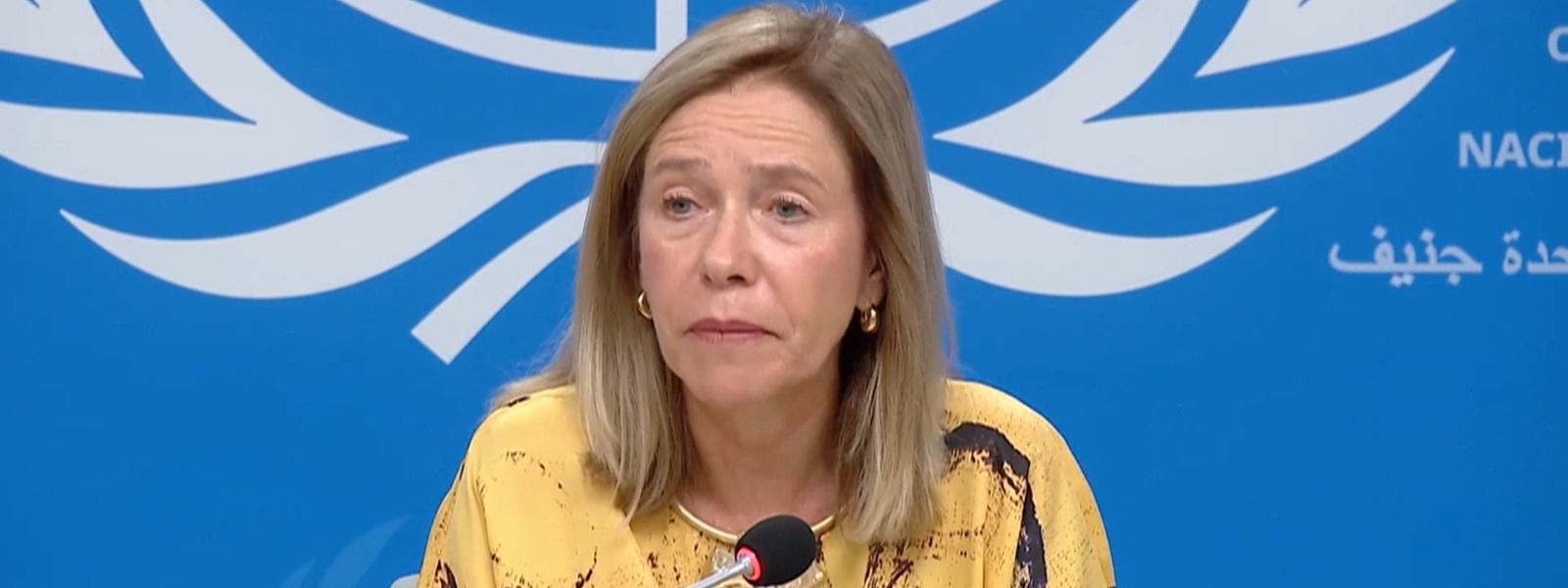
COLOMBO (News 1st); The World Meteorological Organization (WMO) has issued a strong warning over the growing strength of El Niño, saying the climate phenomenon is likely to have significant consequences for communities, economies, and supply chains around the world while increasing the risk of extreme weather events.
WMO Secretary-General Celeste Saulo said the impacts of El Niño will extend across multiple sectors, including agriculture, trade, fisheries, health, energy, transport, water resources, and disaster management, as countries grapple with the effects of droughts, floods, and other extreme weather conditions.
She emphasized that early warnings and advance planning can help governments, industries, and communities make informed decisions to reduce risks and strengthen resilience.
"How do you prepare? Well, you make different decisions in terms of what seeds you will plant. You will plant seeds that are capable of supporting less rain. And these are the type of decisions to take in advance. And when you have hydropower and depend on hydropower, you will use your reservoirs to manage your availability of energy. So, this is the type of impacts and decision-making associated with having this information in advance," she explained.
Despite the risks, Saulo stressed that El Niño does not necessarily have to result in catastrophe if countries act on the available scientific information.
"El Niño does not have to be a recipe for disaster. We have the focus, the foresight to save lives and protect livelihoods," she said.
According to the WMO Secretary-General, El Niño is now firmly established in the tropical Pacific, with sea surface temperatures already significantly above average and continuing to increase.
"El Niño is firmly established in the tropical Pacific. Sea surface temperatures in the region are already well above average and are continuing to rise," she said.
Saulo added that temperatures beneath the ocean surface are also exceptionally high, with some areas recording levels more than eight degrees Celsius above normal during July and early August, creating conditions that are likely to further strengthen the phenomenon.
"Sub-surface ocean temperatures are also exceptionally high, and in some areas, more than eight degrees Celsius above normal during July and early August. This means that there is a huge pool of very warm ocean waters that will fuel the intensity of El Niño," she said.
The WMO expects El Niño to reach its peak toward the end of 2026, but warned that its influence on global temperatures and weather patterns will likely continue well beyond that period.
"El Niño will peak towards the end of 2026, but its impacts will be felt long after that, including on global temperatures. The powerful 2023-2024 El Niño contributed to 2024 being the warmest year on record. We should not be surprised if this record is broken," Saulo said.
Other Articles









Featured News




News 1st, MTV Channel (Pvt) Ltd, MBC Networks (Pvt) Ltd, 45/3, Braybrooke Street, Colombo-02.
T.P : +94 114 792 700, Fax : +94 114 792 733
T.P : +94 114 792 700, Fax : +94 114 792 733




 |  | .webp) |
|---|---|---|
 |  |  |
 |  |  |
 |
