.webp)


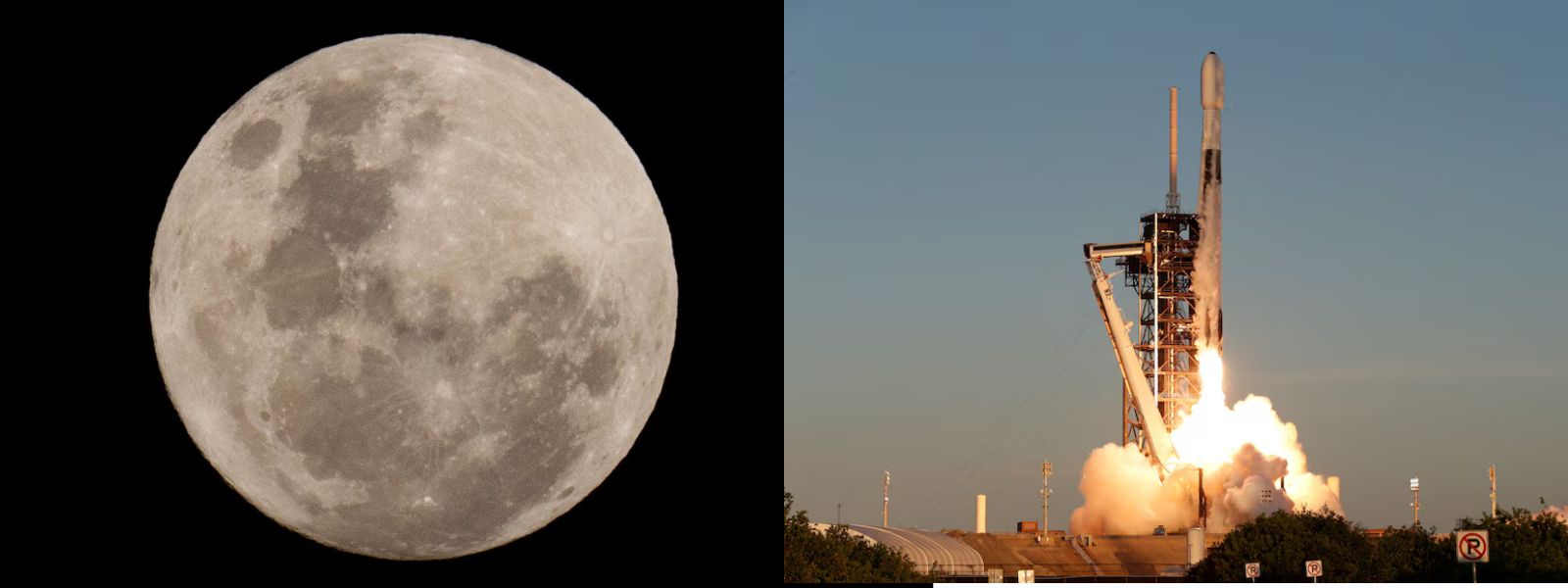
Moon Hit by 4-Tonne SpaceX Rocket | No Threat To Earth, Says NASA



.png )
COLOMBO (News 1st); A wayward SpaceX rocket stage has collided with the Moon after drifting through space for months, ending an unintended journey that scientists had been tracking closely.
According to international media reports, the approximately 4,000-kilogram rocket component struck the lunar surface with a force equivalent to around three tons of TNT, kicking up a cloud of lunar dust and creating a new crater.
Astronomy teams around the world monitored the event in anticipation of a possible visible flash. Although scientists had suggested a faint flash might be observable from Earth, amateur astronomers and astrophotographers monitoring the Moon through telescopes reported no visible signs of the collision.
Ground-based observatories in the United States also tracked the event, while images of the impact site are expected to be captured and transmitted by spacecraft currently orbiting the Moon in the coming days.
The object involved was reportedly part of a Falcon 9 rocket launched in January 2025 during a mission to deliver a lunar lander to the Moon. Unlike many SpaceX missions where upper rocket stages re-enter Earth's atmosphere and burn up or fall into the ocean, the lunar mission required additional thrust, leaving the upper stage stranded in deep space after completing its task.
SpaceX had not intended for the rocket to collide with the Moon. However, astronomers earlier this year identified that the discarded stage was on a trajectory toward the lunar surface. Having exhausted its fuel supply, the rocket was unable to perform any corrective manoeuvres to avoid the impact.
Despite the dramatic nature of the collision, scientists have stressed that the incident poses no danger to Earth. NASA officials have assured that the impact was confined entirely to the Moon and presents no threat to the planet or its inhabitants.
Researchers say the event nevertheless provides a rare scientific opportunity to study the effects of debris impacts on the lunar surface and better understand potential hazards that future astronauts may face during long-term missions to the Moon.
The collision has also renewed attention on the growing challenge of space debris. Experts note that Earth's orbital environment is becoming increasingly crowded, with millions of pieces of debris ranging from large discarded rocket components to tiny fragments travelling at extremely high speeds.
Other Articles









Featured News

-849213_550x300.jpg)

-848028_550x300.jpg)
News 1st, MTV Channel (Pvt) Ltd, MBC Networks (Pvt) Ltd, 45/3, Braybrooke Street, Colombo-02.
T.P : +94 114 792 700, Fax : +94 114 792 733
T.P : +94 114 792 700, Fax : +94 114 792 733




 |  | .webp) |
|---|---|---|
 |  |  |
 |  |  |
 |
