.webp)


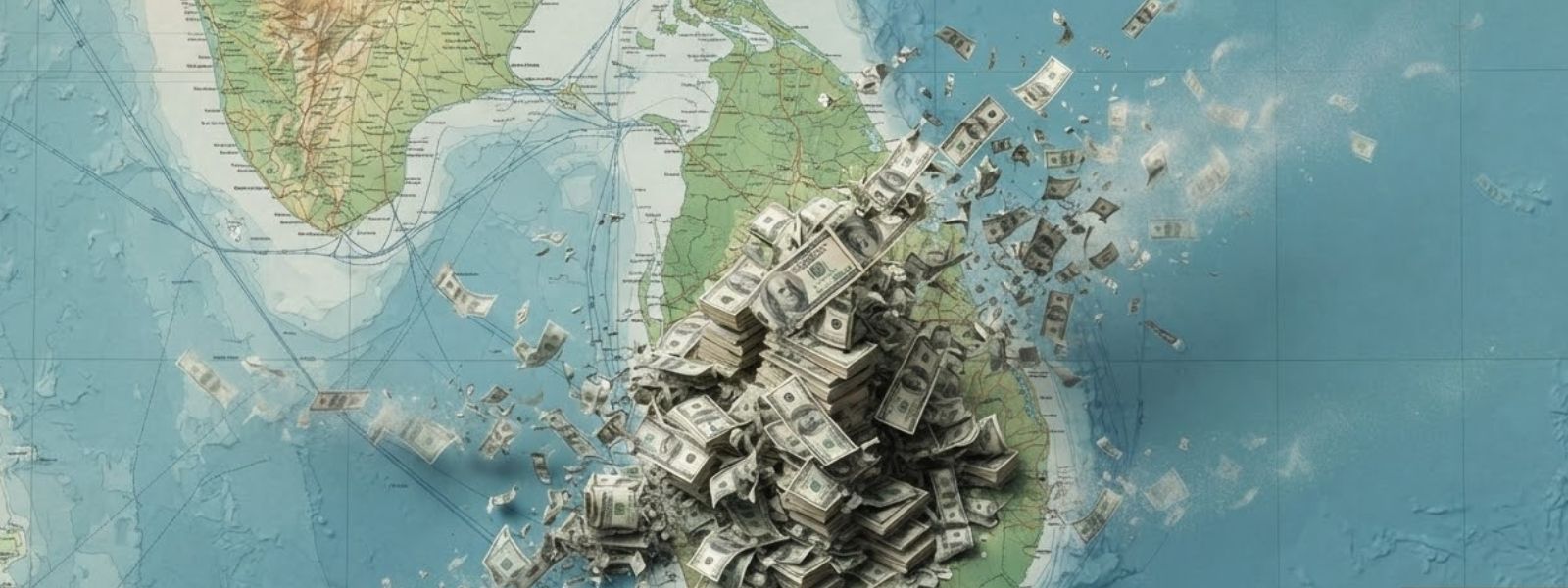
How $715 Million Quietly Left Sri Lanka | Billion-Rupee Scheme Investigators Say Fooled The System



.png )
COLOMBO (News 1st); Sri Lanka's Criminal Investigation Department (CID) has launched an extensive investigation into a suspected large-scale financial crime operation involving the transfer of approximately US$715 million out of the country under the guise of importing goods, Parliament's Committee on Public Finance was told.
Revealing the findings before the committee, Senior Deputy Inspector General of Police Asanga Karawita said Sri Lanka Customs had submitted three reports to the Inspector General of Police on January 20, February 23 and March 6 this year regarding funds remitted overseas for purported imports where no goods had ultimately been brought into the country.
According to the reports, 89 companies were initially identified on January 20, followed by four more companies in the February report and a further 12 in the March report. Altogether, 105 companies were found to be involved in the transactions.
Investigations revealed that the companies had collectively transferred approximately Rs. 214.7 billion, equivalent to around US$715 million, overseas through telegraphic transfers (TTs) between January 1, 2023 and March 2026. Authorities said no evidence had been found to show that goods corresponding to those payments had been imported into Sri Lanka.
Based on the Customs findings, the Financial Crimes Investigation Division (FCID) of the CID commenced an inquiry into the transactions.
Karawita told the committee that investigators examined the directors and company secretaries linked to the 105 companies and discovered that only 55 individuals were connected to all of them. The investigation also found that 227 bank accounts had been used to facilitate the transfers, with nearly 24,300 telegraphic transfers executed during the relevant period.
The senior police officer further disclosed that 13 major banks in Sri Lanka, including both state-owned and private institutions, were involved in processing the transactions currently under investigation.
As inquiries progressed, investigators identified one key individual connected to a company involved in the alleged scheme. The suspect has been arrested, legal proceedings have commenced and he is currently being held in remand custody.
According to investigators, the individual is linked to 43 companies and is listed as the owner of those entities. Investigations found that those companies alone had transferred approximately US$43 million overseas through telegraphic transfers during the period under review.
The CID alleges that the suspect collected funds from brokers in Sri Lanka and used forged documents supplied by them to support the transfers. Investigators found that fraudulent invoices had been created using computers located in premises used by the brokers before being submitted to banks as supporting documentation.
Karawita further stated that some of the transactions had allegedly been facilitated with the assistance of certain bank officials.
The investigation also uncovered alleged links to an international narcotics network. According to the CID, funds belonging to a major drug trafficker operating from Dubai had been transferred to the United Arab Emirates using the same mechanism.
Two of the three principal suspects based in Dubai have since been brought back to Sri Lanka with the assistance of Interpol and remanded in custody. Investigators say information provided by the suspects indicates that money linked to major narcotics traffickers was channelled through another individual based in Dubai, with funds collected in Sri Lanka being routed through brokers before ultimately being transferred overseas.
Authorities believe the suspect at the centre of the operation accumulated funds, retained a commission and facilitated the transfers, regardless of whether he had full knowledge of the origins of the money.
Further searches of offices and associated premises uncovered what investigators described as numerous forged customs documents submitted to banks. The CID said that in several instances, banks had requested supporting customs documentation, but the records provided were fabricated.
The committee was also informed of another investigation originating from the discovery of Rs. 30 million in cash inside a three-wheeler inspected by police in the Kelaniya Division. Subsequent inquiries revealed that the money was allegedly being transported for deposit into the accounts of another company involved in similar transactions.
Investigators said the individuals connected to that case were linked to narcotics abuse and drug trafficking activities. A separate investigation into the company subsequently revealed that nearly US$40 million had been transferred overseas through one leading state bank and two private banks using a similar method.
Karawita said extensive investigations into both cases are continuing under the CID's Financial Crimes Investigation Division and the Proceeds of Crime Investigation Division.
Other Articles


-860312_550x300.jpg)
-860306_550x300.jpg)
-860300_550x300.jpg)


Featured News




News 1st, MTV Channel (Pvt) Ltd, MBC Networks (Pvt) Ltd, 45/3, Braybrooke Street, Colombo-02.
T.P : +94 114 792 700, Fax : +94 114 792 733
T.P : +94 114 792 700, Fax : +94 114 792 733




 |  | .webp) |
|---|---|---|
 |  |  |
 |  |  |
 |
