.webp)


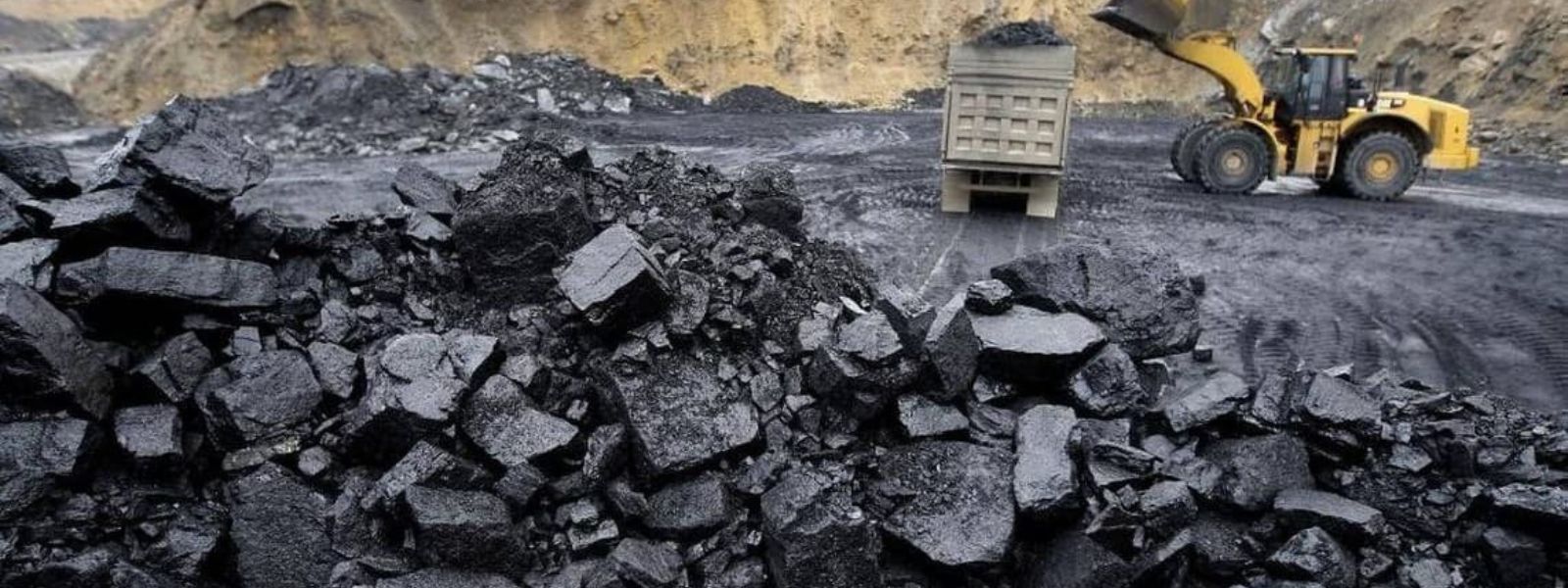
Coal Probe Exposes Absence of Long-Term Purchase Records



.png )
COLOMBO (News 1st): A Special Presidential Commission of Inquiry investigating coal transactions has heard that emergency procurement has been the primary method used for coal purchases in Sri Lanka since 2015.
The revelation was made before the Commission by Shashipraba Pathirage, Director of the Department of Public Finance at the Treasury.
Testifying before the Commission, she stated that coal procurement in Sri Lanka had mainly been carried out through the emergency purchasing mechanism in accordance with a Cabinet memorandum presented in 2015.
Patali Champika Ranawaka was serving as the Minister of Power and Energy at the time.
Pathirage also explained to the Commission the committees that have been appointed since 2015 under the powers vested in the Department of Public Finance.
She said that Standing Procurement Committees, Technical Evaluation Committees and Bid Evaluation Committees had been appointed in relation to coal imports.
During the proceedings, the Commission's judicial panel questioned the Treasury official on whether documentary evidence was available regarding long-term procurement committees linked to coal imports.
In response, she stated that there were no documents available to confirm that coal imports had been carried out under a long-term procurement framework.
The Commission was also informed that, under Sri Lanka’s Government Procurement Guidelines, several procurement methods are available for coal purchases apart from emergency procurement through the Standing Procurement Committee.
One of the principal alternatives is the long-term procurement method.
Under that system, contracts are entered into for continuous supply periods ranging from one to three years or longer, with prices determined according to a pre-agreed pricing formula or fixed rate, regardless of fluctuations in global market prices.
The Director further explained the role played by the Department of Public Finance in coal imports, noting that the institution primarily functions as the regulatory, supervisory and legal framework provider in the procurement process.
Accordingly, responsibilities of the Department include appointing procurement committees and granting them authority, issuing procurement guidelines and circulars, and determining financial limits and delegated powers.
On the fifth day of hearings yesterday, the Commission also summoned Prabath Indika Prasanna, Head of the Policy Division of the National Procurement Commission, to provide further evidence.
He told the Commission that in large-scale state procurements such as coal imports, the National Procurement Commission does not directly evaluate bids or approve tenders. Instead, its role is to formulate, regulate and oversee the policy and legal framework under which procurement activities are conducted.
The Head of the Policy Division further stated that after the disputed coal shipment was imported into the country, several communications had been sent to the Secretary of the Ministry of Energy with recommendations aimed at preventing a recurrence of similar incidents in the future.
He also briefed the Commission on the implementation of National Procurement Commission guidelines and the manner in which those guidelines are updated over time.
Other Articles
-847824_550x300.jpg)
-847818_550x300.jpg)





Featured News
-847152_550x300.jpg)



News 1st, MTV Channel (Pvt) Ltd, MBC Networks (Pvt) Ltd, 45/3, Braybrooke Street, Colombo-02.
T.P : +94 114 792 700, Fax : +94 114 792 733
T.P : +94 114 792 700, Fax : +94 114 792 733




 |  | .webp) |
|---|---|---|
 |  |  |
 |  |  |
 |
