.webp)


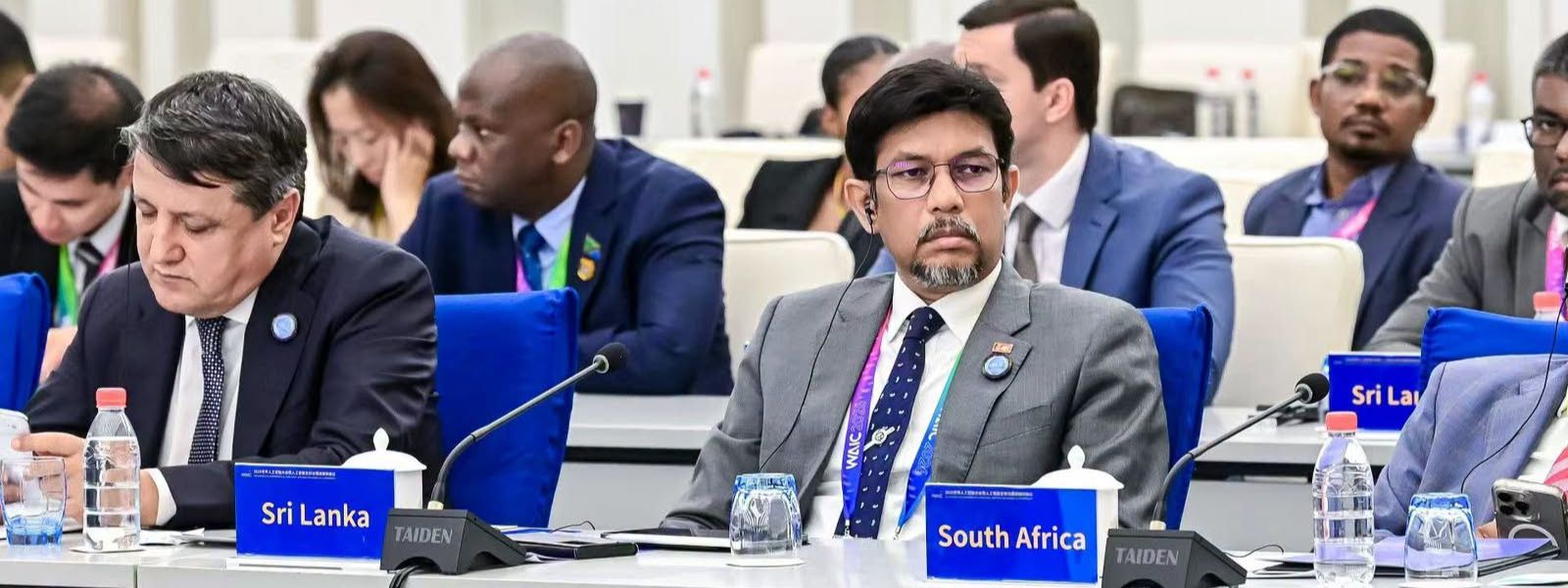
Global AI Rules Must Include Developing Nations, Says Sri Lanka



.png )
COLOMBO (News 1st); Sri Lanka has called for developing nations to be given an equal voice in shaping global artificial intelligence governance, with Deputy Minister of Digital Economy Eng. Eranga Weeraratne warning that countries in the Global South cannot remain on the sidelines as the rules governing AI are being written.
Delivering a keynote address at the diplomatic-level forum held alongside the 2026 World Artificial Intelligence Conference (WAIC) in Shanghai, China, the Deputy Minister emphasized that countries like Sri Lanka deserve a seat at the table where decisions on the future of artificial intelligence are made.
Held under the theme “AI Partnership for a Brighter Future,” the forum brought together digital ministers, policymakers and leading experts from around the world to discuss digital infrastructure, artificial intelligence development and the growing importance of international cooperation in the rapidly evolving technology sector.
Addressing delegates, Weeraratne noted that artificial intelligence is already reshaping governments, economies and societies across the globe. However, he stressed that the critical question confronting the international community is no longer whether AI will transform the world, but whether the benefits of that transformation will be shared equitably or whether it will widen the divide between countries that create the rules and those expected to follow them.
He said Sri Lanka’s position is clear: global AI governance frameworks must be developed with developing nations actively participating in decision-making from the beginning, rather than being informed of policies after key decisions have already been made.
The Deputy Minister further argued that artificial intelligence can only become a genuine global partnership if the principles governing the technology are co-created through inclusive international collaboration.
Highlighting Sri Lanka’s own digital transformation efforts, Weeraratne said the country has spent the past two years building a strong digital foundation and sovereign digital infrastructure under the DIGIECON 2030 National Digital Economy initiative, creating the conditions necessary for the responsible development and deployment of AI technologies.
He pointed to the establishment of the Sri Lanka Unique Digital Identity (SLUDI) platform as a key milestone, describing it as the foundation for secure AI-enabled services across the country. He also revealed that the Government plans to establish a National AI Institute in the near future to strengthen domestic capacity in artificial intelligence research, ethics and policymaking.
Weeraratne said one of the core principles guiding Sri Lanka’s approach to global AI governance is the belief that every nation should retain sovereignty over its own data and digital infrastructure while maintaining interoperability with AI systems worldwide.
He also stressed that international AI safety regulations would only be truly effective if developing countries are provided with the technical expertise, resources and capacity required to implement them successfully.
The Deputy Minister said the ultimate measure of success for any artificial intelligence system should not be technological sophistication alone, but its ability to improve the lives of ordinary people and deliver meaningful social and economic benefits.
Other Articles
-855570_550x300.jpg)
-855564_550x300.jpg)






.png)


Featured News




News 1st, MTV Channel (Pvt) Ltd, MBC Networks (Pvt) Ltd, 45/3, Braybrooke Street, Colombo-02.
T.P : +94 114 792 700, Fax : +94 114 792 733
T.P : +94 114 792 700, Fax : +94 114 792 733




 |  | .webp) |
|---|---|---|
 |  |  |
 |  |  |
 |
