.webp)


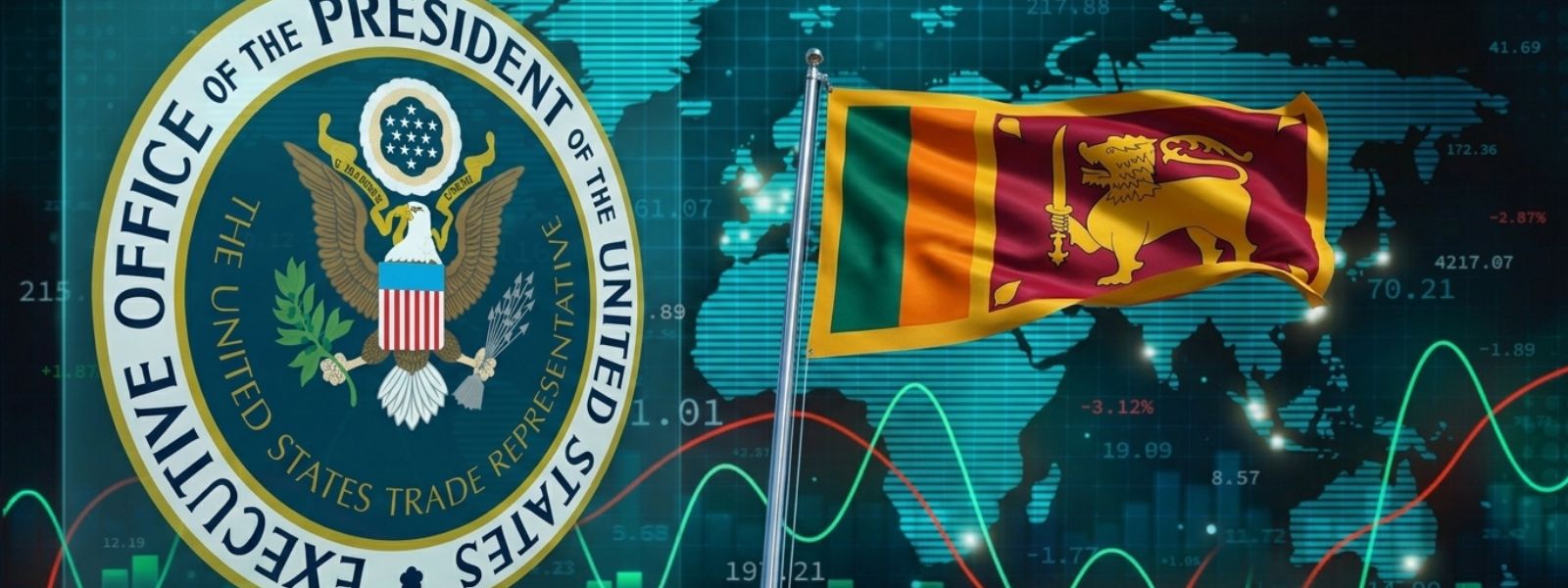
US Lists Sri Lanka in Global Forced Labor Trade Inquiry; USTR Proposes Additional 12.5% Duty



.png )
COLOMBO (News 1st); Sri Lanka has been named among a group of 60 economies identified by the United States Trade Representative (USTR) in a major global trade determination concerning the failure to prevent imports linked to forced labor.
The announcement follows an investigation conducted under Section 301 of the US Trade Act of 1974, a powerful legal tool used to address what the US considers unfair trade practices.
According to the USTR’s findings, Sri Lanka, along with 53 other economies, has failed to effectively impose and enforce prohibitions on the importation of goods produced using forced labor.
The report titled "Acts, Policies, and Practices of Various Economies Related to the Failure to Impose and Effectively Enforce a Prohibition on the Importation of Goods Produced with Forced Labor" mentioned the following on Sri Lanka:
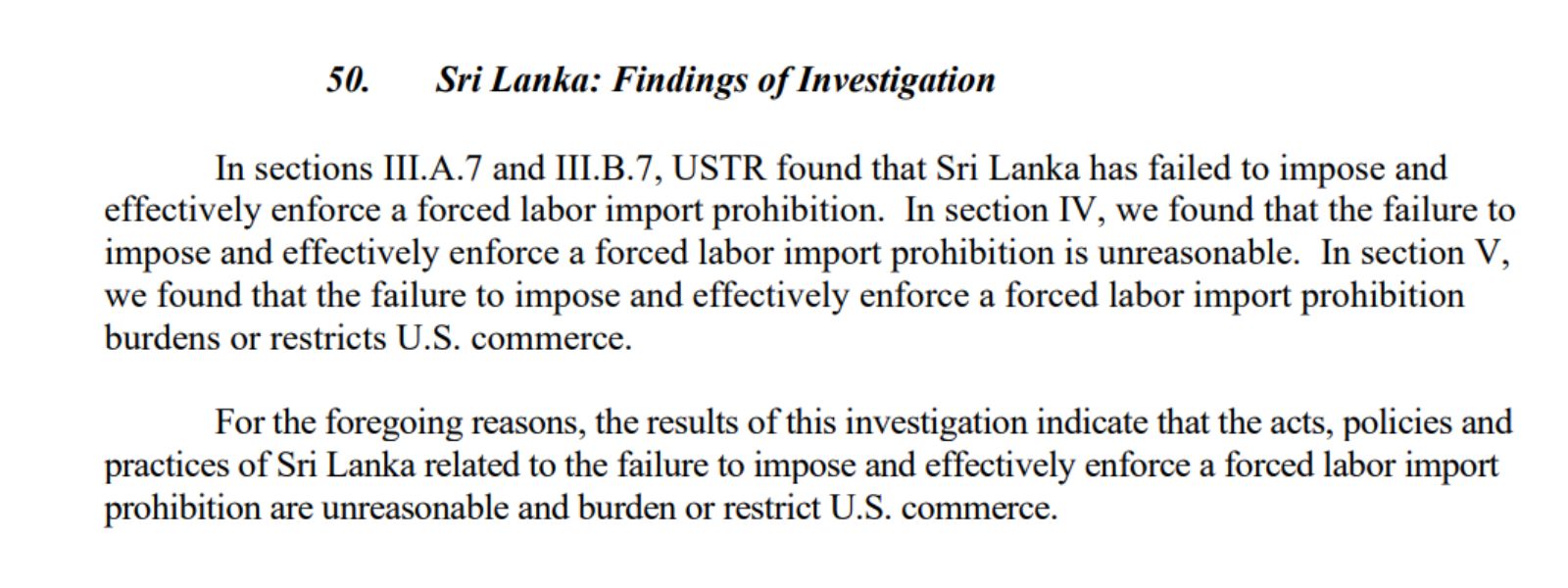
The following 54 economies have failed to impose and effectively enforce a prohibition on the importation of goods produced with forced labor:
Algeria; Angola; Argentina; Australia; the Bahamas; Bahrain; Bangladesh; Brazil; Cambodia; Chile; China, People’s Republic of; Colombia; Costa Rica; Dominican Republic; Egypt; El Salvador; Guatemala; Guyana; Honduras; Hong Kong, China; India; Iraq; Israel; Japan; Jordan; Kazakhstan; Kuwait; Libya; Malaysia; Morocco; New Zealand; Nicaragua; Nigeria; Norway; Oman; Peru; the Philippines; Qatar; Russia; Saudi Arabia; Singapore; South Africa; South Korea; Sri Lanka; Switzerland; Taiwan; Thailand; Trinidad and Tobago; Türkiye; United Arab Emirates; United Kingdom; Uruguay; Venezuela; and Vietnam.
The determination means that Sri Lanka is now subject to potential trade action by the United States, with the USTR proposing additional duties of up to 12.5% on imports from countries that do not have sufficient measures in place to combat forced labor.
For economies that have taken partial or initial steps toward enforcement, a slightly lower tariff rate of 10% has been proposed.
Sri Lanka was specifically listed among countries, including major economies such as China, India, Japan, the United Kingdom, and others, that have not fully implemented or enforced comprehensive bans on goods produced through forced labor practices.
US Trade Representative Ambassador Jamieson Greer emphasized the seriousness of the issue, stating that the failure of the most important trading partners to address the importation of goods made with forced labor is unacceptable, and "This creates a dynamic where American workers are forced to compete globally on an unlevel playing field".
He warned that the US would no longer tolerate trade conditions that allow goods produced under unethical conditions to enter international markets without consequence.
The USTR report outlines several reasons behind the determination, noting that the absence of strict enforcement enables companies using forced labor to produce goods at lower costs, thereby undercutting fair competition.
It also contributes to the weakening of global efforts to eliminate forced labor and allows such practices to continue unchecked in supply chains.
The USTR has opened the proposed actions for public consultation, inviting written comments until July 6, 2026, while hearings are scheduled to take place on July 7, 2026.
Stakeholders, including governments, industry representatives, and trade experts, are expected to present their views and arguments during this period.
The investigation itself began on March 12, 2026, when the USTR launched 60 separate probes into various economies over concerns about forced labor practices and enforcement gaps.
Six economies, including Canada, the European Union, Indonesia, Mexico, Pakistan, and Ecuador, were cited for enforcement failures despite having regulations in place.
Other Articles







Featured News

-835300_550x300.jpg)

News 1st, MTV Channel (Pvt) Ltd, MBC Networks (Pvt) Ltd, 45/3, Braybrooke Street, Colombo-02.
T.P : +94 114 792 700, Fax : +94 114 792 733
T.P : +94 114 792 700, Fax : +94 114 792 733




 |  | .webp) |
|---|---|---|
 |  |  |
 |  |  |
 |
