.webp)


'Question, Verify, Act' - Digital Banking Boom Fuels Scam Surge; Governor Calls for Urgent Vigilance



.png )
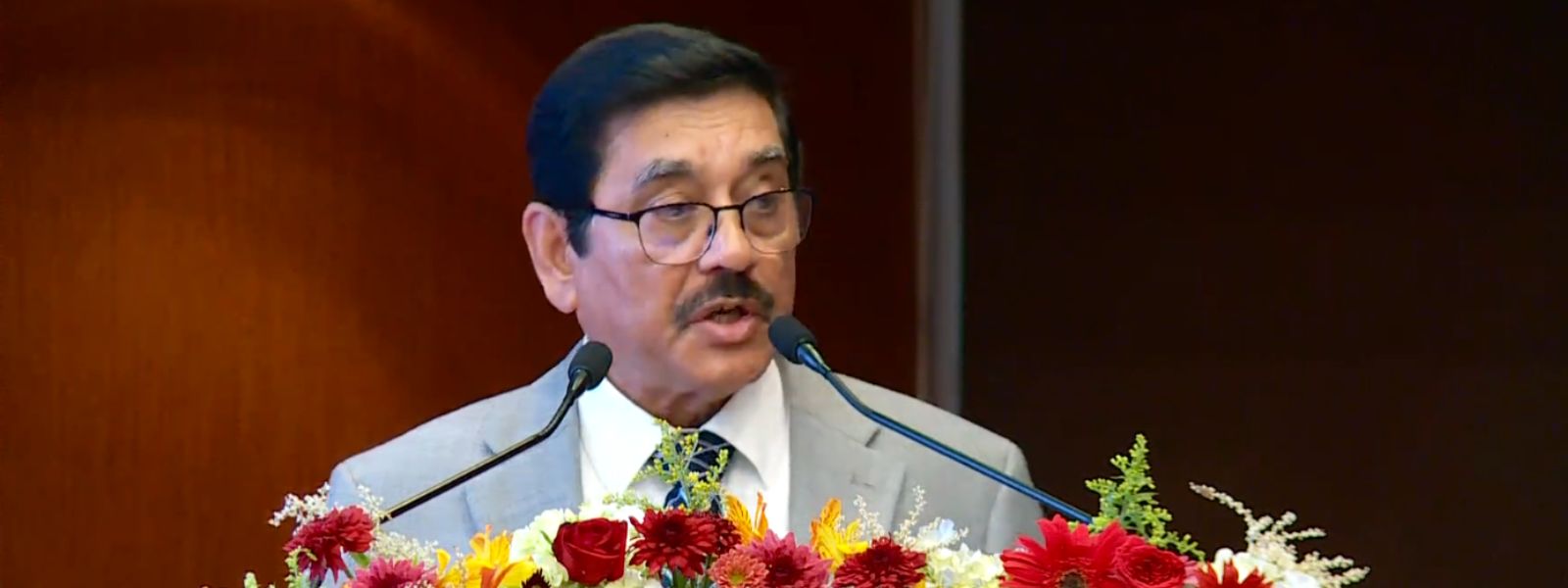
COLOMBO (News 1st); Sri Lanka’s Central Bank Governor Dr. Nandalal Weerasinghe has issued a strong and urgent warning over the growing threat of financial fraud, calling on the public to remain vigilant as rapid digital transformation reshapes the financial landscape.
On Tuesday (2), the Central Bank of Sri Lanka launched a nationwide movement aimed at protecting financial consumers from fraud and theft, marking the commencement of Financial Consumer Protection Month 2026 under the theme “Be Scam Proof.”
Speaking on the evolving risks facing consumers, the Governor highlighted how modern technology has fundamentally changed the way people interact with financial services, placing unprecedented power, and vulnerability, in the hands of individuals.
“We live in extraordinary times for financial services. Digital banking, thus expanding rapidly, has placed the power of an entire branch into the palm of every citizen's hand,” he said, noting that social media and digital platforms now expose users to a vast range of financial products, both legitimate and fraudulent.
However, he emphasized that financial fraud in Sri Lanka is driven by more than just technological advancement. According to the Governor, deeper systemic challenges continue to create conditions for scams to thrive.
“Financial fraud today is the result of deeper, more persistent challenges, such as the uneven flow of reliable financial information, limited awareness beyond urban centres, and the fact that many people remain unaware of what is legal, regulated, or outright fraudulent,” he explained.
Dr. Weerasinghe warned that this gap between regulatory frameworks and public awareness has become a breeding ground for fraudsters, who actively exploit both access to technology and the lack of financial literacy.
“It is in this void between legal boundaries set by regulators and the lack of public awareness that fraudsters continue to operate. They use this gap in knowledge to their advantage,” he said.
He pointed out that Sri Lanka is witnessing two concerning extremes, those who lack basic financial awareness and those who are digitally savvy but still fall victim to scams.
“We see populations who cannot distinguish licensed finance companies from illegal schemes, while at the same time highly internet-savvy individuals are clicking on fraudulent links and sharing sensitive information such as OTPs,” he noted.
The Governor stressed that these risks are not unique to Sri Lanka, but part of a broader global challenge confronting regulators worldwide.
According to Dr. Weerasinghe, financial fraud not only causes individual hardship but also undermines economic stability and public trust.
“Financial fraud and consumer abuse erode household wealth, weaken trust in the financial system, and undermine economic recovery and resilience,” he said.
He further warned that the impact is especially severe in developing economies, where those with limited financial resilience are the hardest hit.
“In developing economies, the damage is asymmetric. It falls disproportionately on those with fewer resources to absorb it,” he added.
Highlighting the broader social consequences, the Governor noted that fraudulent schemes such as pyramid scams, deceptive investment offers, and illegal deposit-taking operations can devastate entire communities.
“These schemes do not merely cause individual loss. They destroy the accumulated strength of communities and set back poverty reduction by years. People who fall into these scams take a long time to recover,” he said.
In light of these growing risks, Dr. Weerasinghe issued a clear call to action for the public to take greater responsibility in safeguarding their finances.
“Question suspicious promises. Verify before you trust and act responsibly. This is essential to strengthening both individual security and public confidence in the system as a whole,” he urged.
He emphasized that tackling financial fraud requires not only regulatory action but also sustained public awareness and participation.
“The way forward is to sustain commitment and collective action,” he said.
Note: News 1st's Viyara Weerakoon contributed to this report.
Other Articles
-855570_550x300.jpg)
-855564_550x300.jpg)






.png)


Featured News




News 1st, MTV Channel (Pvt) Ltd, MBC Networks (Pvt) Ltd, 45/3, Braybrooke Street, Colombo-02.
T.P : +94 114 792 700, Fax : +94 114 792 733
T.P : +94 114 792 700, Fax : +94 114 792 733




 |  | .webp) |
|---|---|---|
 |  |  |
 |  |  |
 |
