.webp)


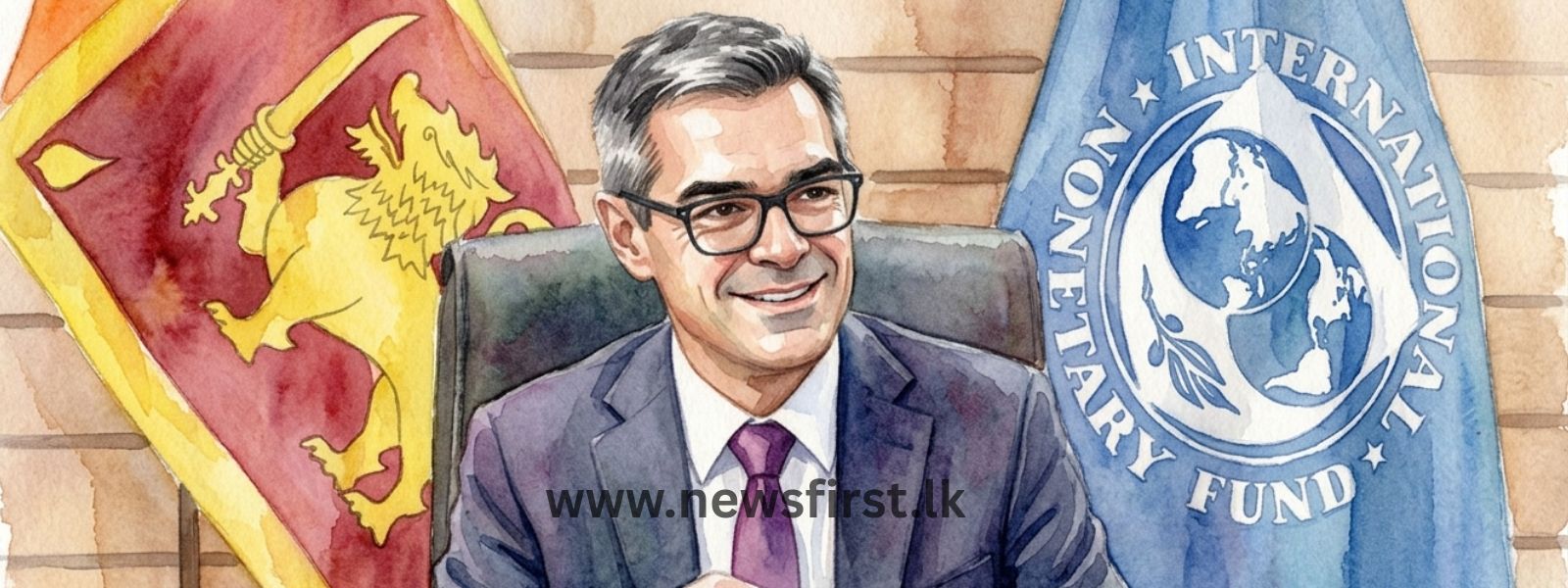
Sri Lanka Debt Risks Remain but Outlook Stabilising with Growth and Fiscal Discipline



.png )
COLOMBO (News 1st); Sri Lanka’s debt sustainability remains fragile but is steadily improving under ongoing economic reforms, according to Evan Papageorgiou, the International Monetary Fund’s Mission Chief for Sri Lanka, who pointed out that while risks persist, the overall trajectory of debt is moving in a positive direction.
Speaking on the country’s financial outlook, Papageorgiou noted that Sri Lanka entered its IMF-supported program burdened with exceptionally high levels of debt, a challenge that has defined economic policy discussions for years. However, he highlighted that substantial reforms undertaken by the government, most notably a comprehensive debt restructuring process that is now nearing completion, have significantly altered the outlook.
“Debt had been quite high in Sri Lanka from the beginning of the program,” Papageorgiou said, acknowledging that concerns over sustainability have been a recurring issue. Despite this, he stressed that the country has made meaningful progress in stabilizing its fiscal position and placing its debt on a declining path.
According to the IMF’s assessment, debt sustainability risks remain elevated, a reality reflected in its latest staff report. However, these risks are not new and have been consistently factored into reviews of Sri Lanka’s economic program. The key shift lies in the direction of change: the overall debt burden is trending downward under current policy assumptions.
Papageorgiou pointed out that the IMF’s baseline projections show a continued decline in Sri Lanka’s debt levels, supported by a combination of fiscal discipline, economic growth, and controlled inflation. Central to this trajectory is the government’s commitment to maintaining a primary fiscal surplus, an essential condition for reducing the debt burden over time.
He emphasized that strong macroeconomic management will be critical to sustaining this progress. “Maintaining good economic growth over the medium to long term and keeping inflation under control” are vital components of the strategy, he said, adding that consistent policy implementation will determine whether Sri Lanka can solidify these gains.
While acknowledging that debt risks remain part of the economic landscape, as they do in many countries, Papageorgiou expressed confidence that under reasonable assumptions, these risks are manageable.
The IMF believes that continued adherence to reform measures and prudent fiscal policies will keep debt under control and gradually ease concerns.
Importantly, Papageorgiou suggested that as Sri Lanka’s debt continues to decline, the country could eventually experience a structural shift in its economic prospects. Lower debt levels would create space for more productive borrowing and investment.
Other Articles


-855570_550x300.jpg)
-855564_550x300.jpg)



.png)


Featured News




News 1st, MTV Channel (Pvt) Ltd, MBC Networks (Pvt) Ltd, 45/3, Braybrooke Street, Colombo-02.
T.P : +94 114 792 700, Fax : +94 114 792 733
T.P : +94 114 792 700, Fax : +94 114 792 733




 |  | .webp) |
|---|---|---|
 |  |  |
 |  |  |
 |
