.webp)


'No Return to Import Restrictions' : IMF



.png )
COLOMBO (News 1st); The International Monetary Fund (IMF) has advised Sri Lanka against reintroducing broad import restrictions, even as the country grapples with mounting external pressures from global conflicts and rising commodity prices.
Evan Papageorgiou, the IMF’s Mission Chief for Sri Lanka, said that while the country continues to face significant economic challenges stemming from the Middle East conflict and global price volatility, resorting to import bans would not provide a sustainable solution.
“It is important to note that the adjustment that has happened in the currency is well understood and has reacted to economic fundamentals,” Papageorgiou said, stressing that Sri Lanka’s macroeconomic corrections should be allowed to continue without distortion.
He said that import restrictions should not play a major role in the country’s long-term economic strategy, noting that economies must adjust naturally to underlying macroeconomic conditions rather than relying on trade barriers.
“In general, we advise against broad-based import restrictions for stabilizing the economy,” he said, reiterating the IMF’s consistent position on maintaining open trade policies.
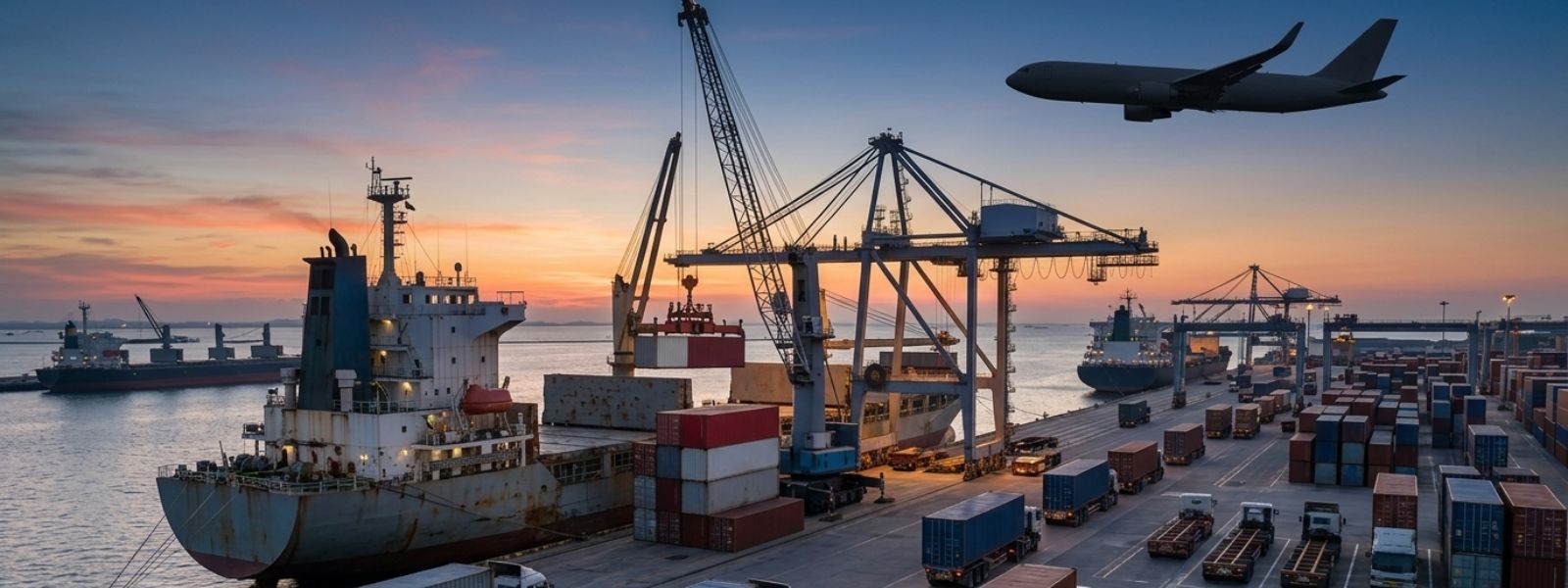
Sri Lanka had imposed sweeping import controls during the height of its economic crisis in 2022 to manage dwindling foreign reserves and curb demand for foreign currency. However, the IMF noted that the government has since taken steps in the right direction by gradually dismantling those measures as stability returned.
Papageorgiou pointed to the lifting of the vehicle import ban last year as a key example of successful policy reversal. The move helped trigger a rebound in economic activity while also boosting government revenue significantly.
“That was an important step, and since then, other import controls have been eased,” he said, highlighting that such measures have contributed positively to the recovery process.
The IMF has encouraged Sri Lankan authorities to continue along this path, avoiding any reintroduction of new import bans or sweeping restrictions that could undermine investor confidence and disrupt economic momentum.
The warning comes at a time when Sri Lanka is facing renewed economic strain due to external shocks. The ongoing conflict in the Middle East has driven up global commodity prices, particularly oil, placing added pressure on the country’s already fragile external sector.
Papageorgiou acknowledged the severity of these challenges, noting that global price hikes and geopolitical tensions are significantly impacting Sri Lanka’s economic outlook. However, he maintained that policy responses should remain consistent with long-term reform objectives.
“We recognize the severe shock from the Middle East conflict and the pressure from global commodity price increases,” he said, adding that the IMF is actively engaged with Sri Lankan authorities to address these evolving challenges.
Other Articles

-855570_550x300.jpg)
-855564_550x300.jpg)




.png)


Featured News




News 1st, MTV Channel (Pvt) Ltd, MBC Networks (Pvt) Ltd, 45/3, Braybrooke Street, Colombo-02.
T.P : +94 114 792 700, Fax : +94 114 792 733
T.P : +94 114 792 700, Fax : +94 114 792 733




 |  | .webp) |
|---|---|---|
 |  |  |
 |  |  |
 |
