.webp)


Sri Lanka Marks 17 Years Since End of Decades-Long Conflict



.png )
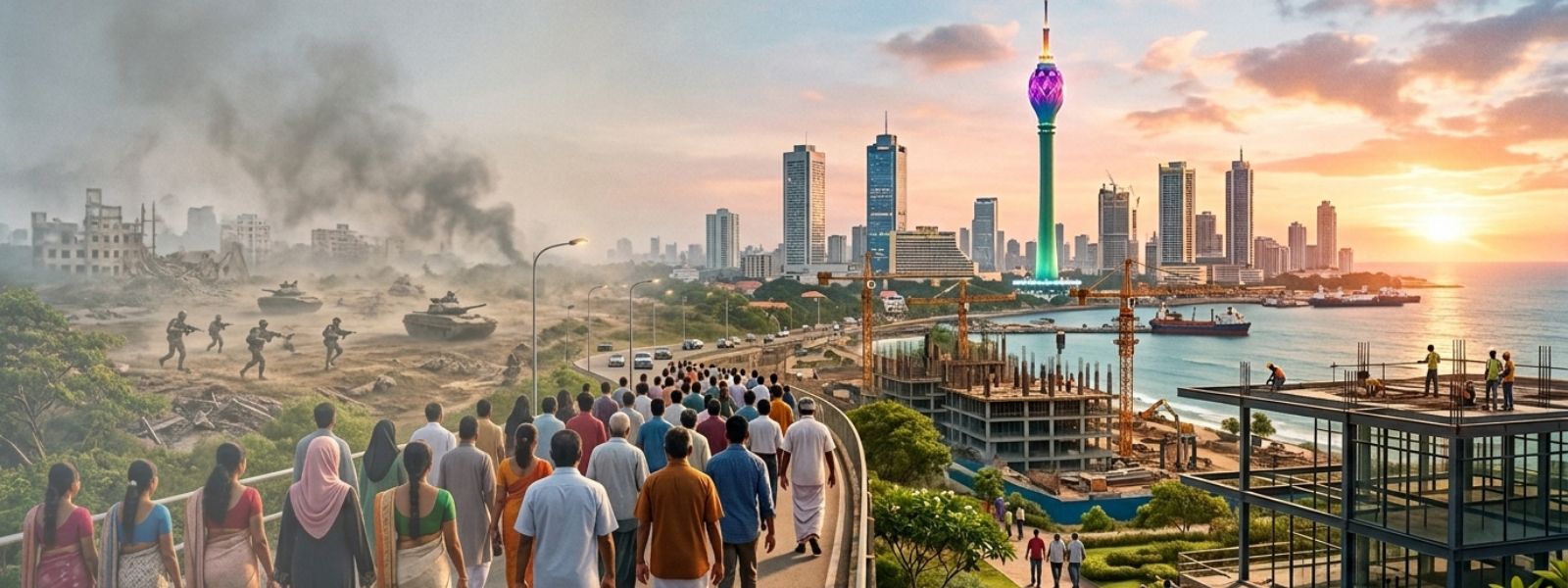
COLOMBO (News 1st); Sri Lanka marks 17 years since the defeat of decades-long terrorism that gripped the country for over thirty years.
On this day, the nation also remembers the large-scale humanitarian operation that led to the rescue of thousands of civilians who had been held hostage under terrorist control, with credit attributed to the country’s security forces.
Tributes were paid to the war heroes who sacrificed their lives to restore the right to life for the nation, with their efforts recognized as a defining moment in the country’s history.
The conflict, which escalated into a prolonged war, is traced back to July 27, 1975, with the assassination of Jaffna Mayor Alfred Duraiappah. The ensuing violence resulted in the loss of hundreds of thousands of innocent lives.
The war left behind severe consequences, including international criticism, loss of investments, economic decline, setbacks in development, destruction of national resources, uncertainty in daily life, and deep-rooted mistrust among communities.
The period was also marked by the use of suicide bombers, child soldiers, and armed youth, contributing to a grim global image of the country. Security checkpoints became widespread, and restrictions were imposed on civilian life across the island.
However, on May 19, 2009, the war came to an end in the Nandikadal lagoon, bringing an end to decades of violence.
Following the conclusion of the conflict, security checkpoints were removed, normalcy began to return, and transportation links such as the Yal Devi train resumed services to the north. Development and increased freedom gradually extended to previously affected areas.
The end of the war paved the way for peace, allowing citizens to rebuild their lives.
The present moment is a time to responsibly safeguard the hard-earned peace.
Rebuilding the economy, which faced setbacks due to historical and other factors, and maintaining lasting peace requires a renewed mindset and a united Sri Lankan community committed to shared progress.
Other Articles


-856887_550x300.jpg)




.png)


Featured News




News 1st, MTV Channel (Pvt) Ltd, MBC Networks (Pvt) Ltd, 45/3, Braybrooke Street, Colombo-02.
T.P : +94 114 792 700, Fax : +94 114 792 733
T.P : +94 114 792 700, Fax : +94 114 792 733




 |  | .webp) |
|---|---|---|
 |  |  |
 |  |  |
 |
