.webp)


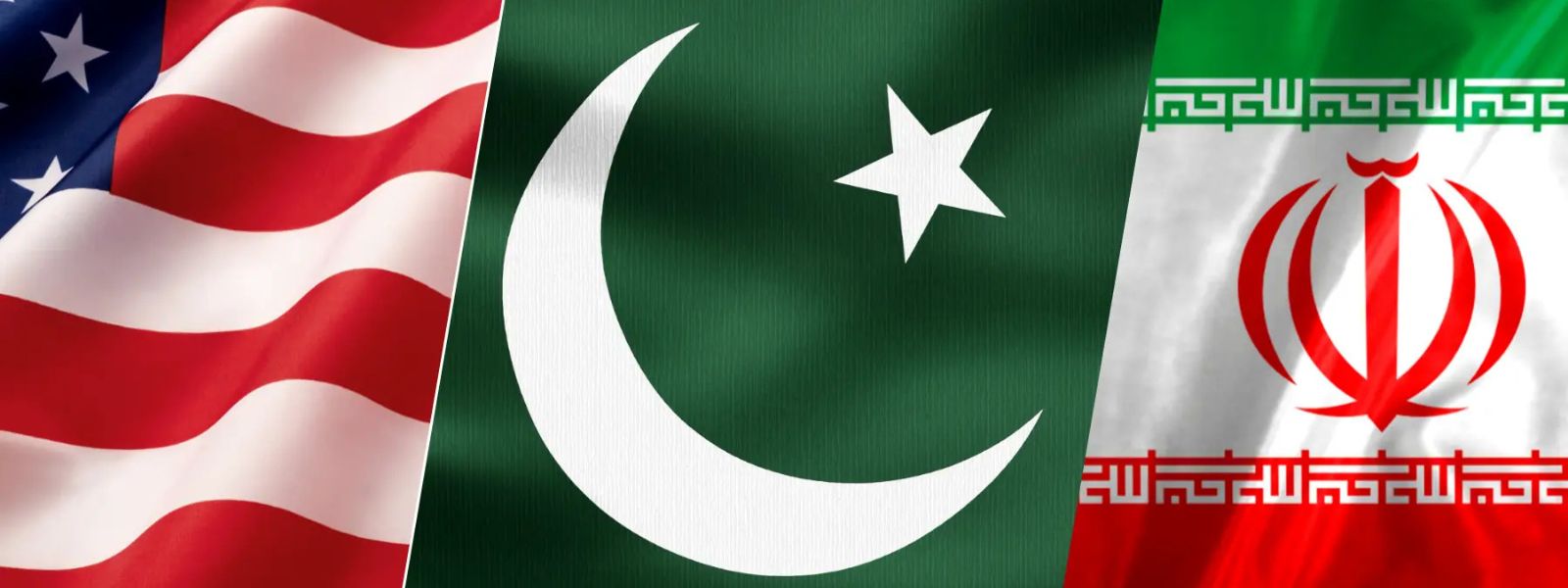
Pakistan’s Dialogue-First Diplomacy Gains Global Recognition



.png )
COLOMBO (News 1st); Pakistan has emerged as a central diplomatic broker in efforts to ease tensions in the Middle East, with its mediatory role between the United States and Iran increasingly recognised by global leaders and diplomatic circles.
Addressing the ongoing peace process, Pakistan’s Ministry of Foreign Affairs Spokesperson Tahir Andrabi said Islamabad has been acknowledged for its constructive and sustained diplomatic engagement aimed at supporting de-escalation, ceasefire efforts, and long-term stability between Washington and Tehran.
Through continuous and discreet interaction with both sides, Pakistan sought to encourage dialogue, facilitate the exchange of messages, and help create the political and diplomatic space necessary for meaningful negotiations.
Andrabi said Pakistan’s approach reflects a long-standing commitment to principled, dialogue-oriented diplomacy as the preferred means of addressing complex geopolitical disputes.
Under the leadership of Prime Minister Muhammad Shehbaz Sharif, with the active involvement of Deputy Prime Minister and Foreign Minister Senator Mohammad Ishaq Dar and Chief of Army Staff Field Marshal Syed Asim Munir, Pakistan maintained open and trusted channels with all concerned parties, reinforcing its role as a facilitator rather than a partisan actor.
As part of these efforts, the Prime Minister embarked on visits to key regional countries, while the Chief of Army Staff arrived in Tehran, underscoring Pakistan’s hands-on diplomatic engagement. These steps, Andrabi said, collectively demonstrated Pakistan’s belief that peace is best pursued through cooperation, dialogue, and persistence. an approach increasingly acknowledged internationally.
In the lead-up to the Islamabad peace talks, Prime Minister Shehbaz Sharif carried out extensive diplomatic outreach with world leaders. On April 9, he held telephone conversations with Austria’s Chancellor Christian Stocker, Qatar’s Amir Sheikh Tamim bin Hamad Al Thani, Germany’s Chancellor Friedrich Merz, and Italy’s Prime Minister Giorgia Meloni.
The diplomatic momentum continued on April 10 with a call from UK Prime Minister Keir Starmer, who praised Pakistan for hosting the peace negotiations. On April 13, Japanese Prime Minister Sanae Takaichi and Canadian Prime Minister Mark Carney separately congratulated Prime Minister Sharif, highlighting the relevance of the ceasefire to regional stability and global energy security.
The peace talks themselves were held in Islamabad from April 11 to 12, with the delegations led by US Vice President JD Vance and Iranian Parliament Speaker Mohammad Baqer Qalibaf. Prior to the talks, both delegations met Prime Minister Sharif.
The negotiations involved over 21 hours of direct talks, extending to more than 30 hours when including consultations and breaks.
Throughout the process, the Deputy Prime Minister and Chief of Army Staff played key roles in mediating intense and constructive exchanges.
At the conclusion of the talks, Senator Ishaq Dar expressed optimism that the positive momentum would continue, stressing the importance of upholding the ceasefire and reaffirming Pakistan’s readiness to facilitate further engagement between the two sides.
These commitments are now being translated into action. The Chief of Army Staff’s visit to Iran and the Prime Minister’s ongoing tour of Saudi Arabia, Qatar, and Türkiye reflect sustained regional outreach. In Jeddah, Prime Minister Sharif met Crown Prince Mohammed bin Salman, expressing solidarity amid regional tensions and updating him on Pakistan’s peace efforts. The Crown Prince commended Pakistan’s constructive role and reiterated support for its economic stability.
Parallel to these efforts, Pakistan’s diplomatic machinery has remained fully engaged. Over a two-week period, the Deputy Prime Minister held an extensive series of calls with foreign ministers and senior officials from Europe, the Middle East, Asia, and multilateral institutions, including the EU, UN Secretary-General António Guterres, and counterparts from China, Canada, Saudi Arabia, Türkiye, and Egypt.
Beyond mediation, Pakistan continued to voice firm positions on regional developments. It condemned the storming of Al-Aqsa Mosque on April 7 and Israeli aggression against Lebanon on April 9, warning that such actions undermine international peace efforts.
Taken together, these developments highlight Pakistan’s expanding role as a trusted mediator and stabilising force, leveraging diplomacy, regional relationships, and sustained engagement to help steer one of the world’s most volatile conflicts toward dialogue, and, potentially, durable peace.
Other Articles

-835312_550x300.jpg)

-835300_550x300.jpg)



Featured News



News 1st, MTV Channel (Pvt) Ltd, MBC Networks (Pvt) Ltd, 45/3, Braybrooke Street, Colombo-02.
T.P : +94 114 792 700, Fax : +94 114 792 733
T.P : +94 114 792 700, Fax : +94 114 792 733




 |  | .webp) |
|---|---|---|
 |  |  |
 |  |  |
 |
