


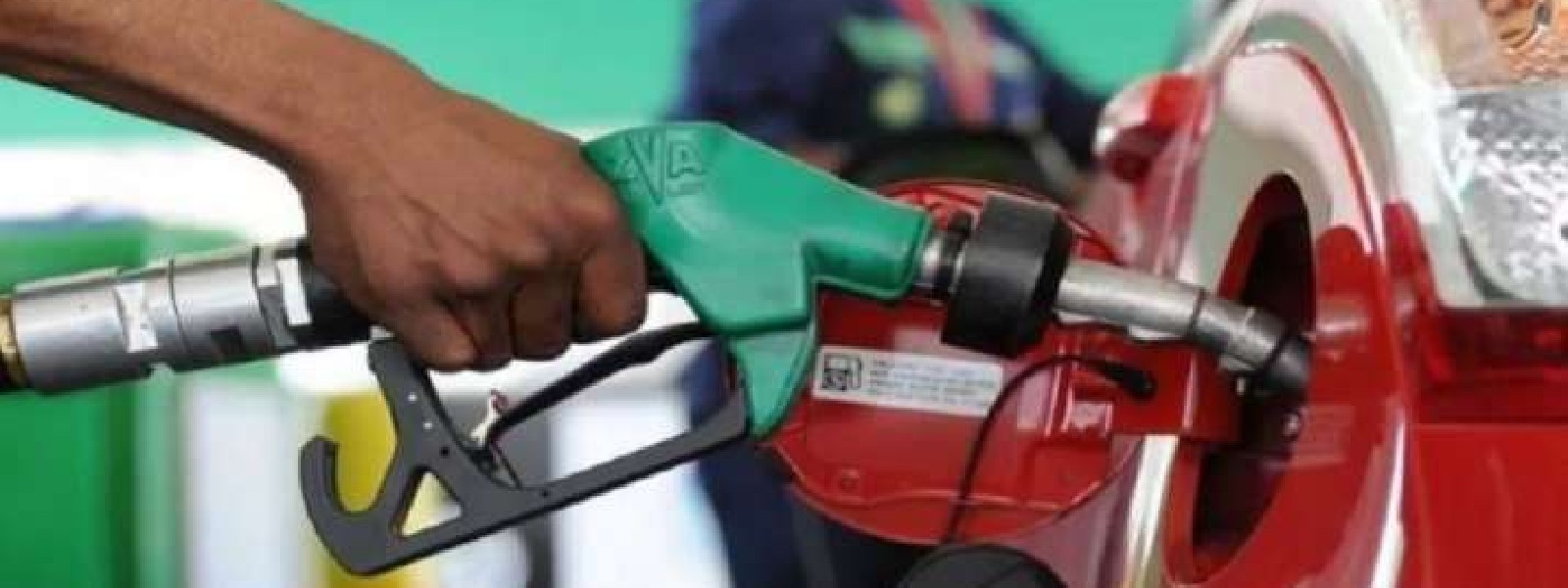
Fuel Price Puzzle: Consumers Waiting for Relief



.png )
COLOMBO (News 1st); Just when motorists hoped lower fuel costs were on the horizon, a fresh question has emerged: if the government has already stepped in with relief measures, why are some fuel prices still going up?
The debate has grown after private fuel suppliers continued pressing for higher fuel prices, arguing that existing market conditions were becoming increasingly difficult to sustain.
In response to those concerns, the government introduced a fuel subsidy aimed at easing some of the pressure faced by suppliers.
However, despite that support, private operators moved to increase the prices of Octane 95 petrol and Super Diesel, prompting criticism and renewed concerns about whether the benefits of government interventions are reaching consumers.
Energy Ministry Secretary G.M.R.D. Aponsu said private fuel companies had repeatedly informed authorities that they were unable to absorb losses during periods of sharp price fluctuations in the global fuel market.
According to Aponsu, the government has already provided private suppliers with a pricing framework that allows them a degree of flexibility when adjusting prices.
"When fuel prices experience significant fluctuations, the three operators other than CPC tell us they cannot absorb the losses. We have therefore given them a pricing formula. Under that formula, they are allowed to increase prices within a prescribed limit. That is why they have increased the prices of Octane 95 petrol and Super Diesel. They have that freedom within the framework provided to them," he said.
He noted that fuel distributors are also required to maintain minimum stock levels and continue releasing fuel to the market in line with existing regulations.
Aponsu further pointed out that the challenges facing the fuel market are not new and originate from structural issues dating back to the introduction of private sector participation in the industry.
"This is not an arrangement that came into effect yesterday. These agreements have been in operation for years. There was a problem from the very beginning. The market was not created on equal terms for all companies. It was not designed as a truly competitive marketplace. What existed under CPC was essentially distributed among the other companies, creating distortions from the outset," he explained.
While policymakers continue to speak of building a competitive fuel market, Aponsu said the supporting infrastructure required for genuine competition has yet to be fully developed.
As part of efforts to address the imbalance, he revealed that the government intends to establish 72 new fuel stations under the Ceylon Petroleum Corporation.
According to the Energy Ministry, expanding the CPC network is currently viewed as the government's primary response to improving market competition and ensuring a more stable fuel supply system in the years ahead.
Other Articles






Featured News




News 1st, MTV Channel (Pvt) Ltd, MBC Networks (Pvt) Ltd, 45/3, Braybrooke Street, Colombo-02.
T.P : +94 114 792 700, Fax : +94 114 792 733
T.P : +94 114 792 700, Fax : +94 114 792 733




 |  |  |
|---|---|---|
 |  |  |
 |  |  |
 |
