


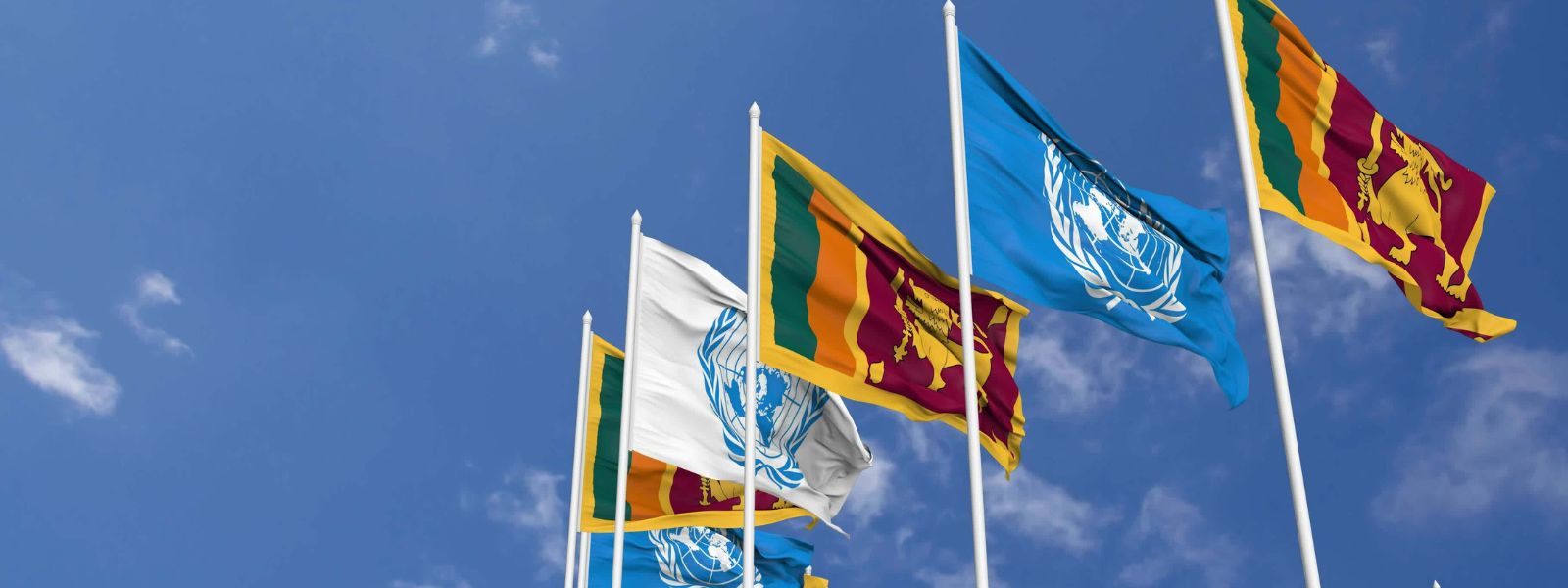
Sri Lanka Presented a Much-Improved Draft of PSTA, Says UN Expert Group



.png )
COLOMBO (News 1st); Sri Lanka's proposed new anti-terrorism legislation has earned cautious praise from United Nations human rights experts, who say the latest draft represents a significant improvement over previous versions, while warning that several critical human rights concerns must still be addressed before the law is enacted.
In a statement issued on Monday (9), a group of UN Special Rapporteurs and independent human rights experts welcomed the Government's decision to substantially revise the proposed Protection of the State from Terrorism Act (PSTA), describing the latest version as a "much-improved" draft that reflects recommendations and concerns raised during earlier consultations.
However, while acknowledging progress, the experts stressed that important safeguards remain missing and urged Sri Lanka to make further amendments to ensure the legislation complies with international human rights standards.
The experts also welcomed the planned repeal of the controversial Prevention of Terrorism Act (PTA) of 1979, a law that has long attracted criticism from rights groups both within Sri Lanka and internationally.
"We welcome the proposed repeal of the Prevention of Terrorism Act of 1979, which enabled many serious human rights violations, including torture and enforced disappearances, committed before, during and since the horrific 26-year civil war in Sri Lanka, including abuse against minorities, human rights defenders, journalists and civil society," the experts said.
A significant concern raised by the UN experts relates to detention powers under the proposed legislation. They argued that detention orders should be subject to prompt and meaningful judicial oversight to determine whether such detention is lawful, necessary and proportionate.
"The Independent Review Committee that hears detention appeals must be genuinely independent, and its decisions binding," they said.
The experts further insisted that detainees must be guaranteed access to legal representation, interpreters, medical examinations, legal aid, family members and visits from the Human Rights Commission of Sri Lanka.
"Detainees must be guaranteed access to legal counsel, interpretation, independent medical examination, legal aid, family contact and prompt visits by the Human Rights Commission of Sri Lanka. Transfers from detention must be recorded and reported to prevent enforced disappearances and incommunicado detention."
Another key recommendation centres on the definition of terrorism itself.
The experts argued that terrorism should be restricted to acts intentionally causing death or serious physical injury and should not extend to offences involving only property damage.
"Expression-related offences must involve a likelihood of causing terrorist violence," they said.
The UN experts also called for the removal of powers allowing members of the armed forces to arrest, question and search individuals, warning that such powers could create opportunities for abuse, particularly given Sri Lanka's past experience with allegations of military-related human rights violations.
They further recommended tighter judicial supervision over powers granted to prevent terrorism-related offences, while calling for clearer and stricter criteria for banning organisations and imposing restriction orders.
Additional concerns were raised regarding procedural protections built into the proposed law.
The experts said evidence obtained through torture, ill-treatment or any other unlawful means should never be admissible in court proceedings, and that stronger protections should be provided for journalistic sources, lawyer-client communications, professional confidentiality and human rights monitoring activities.
They also argued that presidential authority over the implementation of the legislation should be restricted and said the existing PTA should not continue operating once the new law takes effect.
"The Government must strengthen oversight, accountability and prompt and effective remedies for violations of human rights and of legal authority under the PSTA. This includes ensuring release from detention, exclusion of evidence, disciplinary or criminal liability of officials, and reparation for victims, such as compensation, rehabilitation, apology and guarantees of non-repetition."
"It is unacceptable that the PSTA would confer immunities on officials for wrongful acts."
Despite their concerns, the experts acknowledged that Sri Lanka's latest draft marks a significant step forward compared to earlier versions and welcomed the Government's willingness to engage with international feedback.
The experts, who have previously raised concerns about earlier drafts of the legislation and other proposed laws relating to organised crime and NGO regulation, also offered technical assistance to help authorities further strengthen the bill.
Their message to lawmakers was clear.
"Countering terrorism is only effective if human rights are respected."
The experts:
Ben Saul, Special Rapporteur on the promotion and protection of human rights and fundamental freedoms while countering terrorism
Morris Tidball-Binz, Special Rapporteur on extrajudicial, summary or arbitrary executions
Leopoldo Maldonado Gutiérrez, Special Rapporteur on the promotion and protection of the right to freedom of opinion and expression
Andrea Bolaños Vargas, Special Rapporteur on the situation of human rights defenders
Matthew Gillett, Ethan Hee-Seok Shin (Vice-Chair on Follow Up) and Nicolás Laino Working Group on Arbitrary Detention
Grayna Baranowska (Chair-Rapporteur), Ana Lorena Delgadillo Pérez (Vice-Chair), Gabriella Citroni, Mohammed Al-Obaidi and Anjli Parrin, Working Group on Enforced or Involuntary Disappearances
Pau Pérez Sales, Special Rapporteur on torture and other cruel, inhuman or degrading treatment or punishment
Margaret Satterthwaite, Special Rapporteur on the independence of judges and lawyers
Other Articles





Featured News




News 1st, MTV Channel (Pvt) Ltd, MBC Networks (Pvt) Ltd, 45/3, Braybrooke Street, Colombo-02.
T.P : +94 114 792 700, Fax : +94 114 792 733
T.P : +94 114 792 700, Fax : +94 114 792 733




 |  |  |
|---|---|---|
 |  |  |
 |  |  |
 |
