


Create the Right Conditions and Skilled Sri Lankans Will Return, Says World Bank



.png )
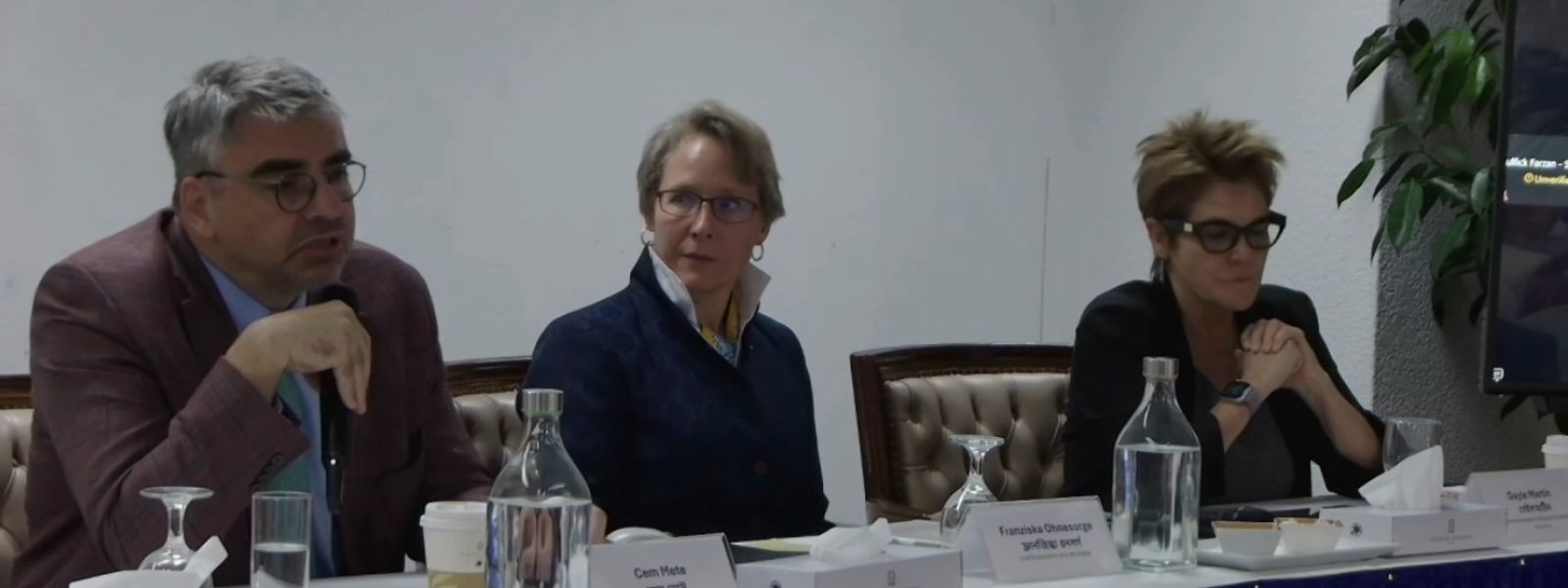
COLOMBO (News 1st); The World Bank says countries such as Sri Lanka should focus on creating opportunities and incentives for skilled workers rather than trying to prevent migration, arguing that outward migration should not be viewed solely through the lens of "brain drain."
Responding to a question from News First on the impact of brain drain on Sri Lanka and other South Asian nations recovering from economic crises and climate-related challenges, Cem Mete, World Bank South Asia Regional Director for People, said the institution has not carried out significant work specifically focused on brain drain in the region.
Instead, he pointed to the importance of understanding the factors that drive people to leave and addressing those causes through policies and incentives rather than restrictive measures.
Mete noted that following Sri Lanka's economic crisis, the World Bank worked closely with the Government to reform the country's social assistance system, which he said had become largely static over the years and had stopped effectively updating its beneficiary base.
He explained that the system was redesigned to introduce a more dynamic process for identifying eligible recipients, allowing people to enter and leave programmes as their circumstances change. Additional economic empowerment initiatives were also introduced as part of the reforms.
According to Mete, while economic crises can have devastating consequences, they can also expose weaknesses within existing systems and create opportunities for meaningful reforms.
Addressing concerns about the migration of skilled workers, he said it is neither easy nor necessarily wise to prevent individuals from making decisions they believe are best for themselves and their families.
Instead, he argued that governments should focus on creating favourable conditions that encourage talented citizens to remain connected to their home countries and eventually return.
Mete said migrants can make significant contributions even while living abroad, not only through remittances but also through knowledge transfer, investments, professional networks and other forms of engagement that can benefit their countries of origin.
He added that if the right economic and social conditions are created, many expatriates may choose to return and play an important role in revitalising their home economies.
Referring to countries across South Asia, Mete described the region as a place people remain deeply connected to and often wish to return to when opportunities arise.
As a result, he said migration should be viewed as a complex issue with both advantages and disadvantages rather than being seen solely as a loss of talent.
"There is a point there, but I would look at it much more as a pros and cons type of situation," Mete said, stressing that policies should focus on maximising the benefits of migration while addressing its challenges.
Other Articles



Featured News




News 1st, MTV Channel (Pvt) Ltd, MBC Networks (Pvt) Ltd, 45/3, Braybrooke Street, Colombo-02.
T.P : +94 114 792 700, Fax : +94 114 792 733
T.P : +94 114 792 700, Fax : +94 114 792 733




 |  |  |
|---|---|---|
 |  |  |
 |  |  |
 |
