


Mosquito Breeding on the Rise as Rainy Weather Persists



.png )
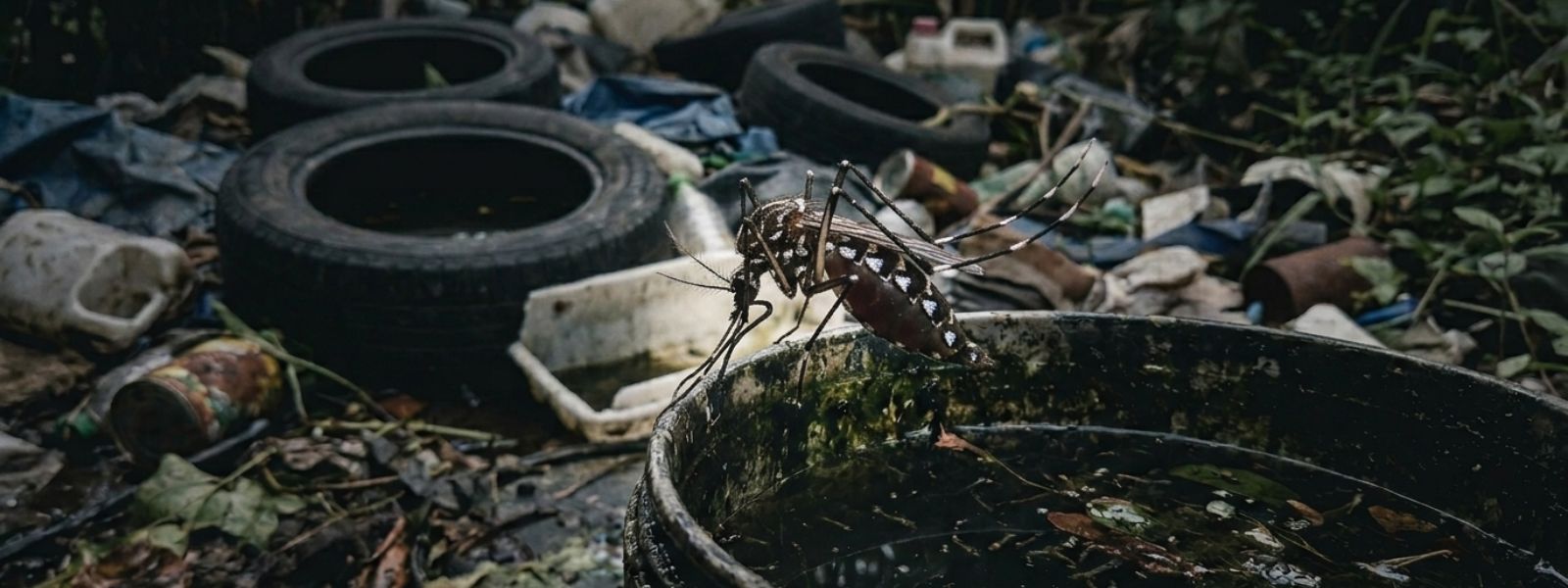
COLOMBO (News 1st); Heavy rainfall across Sri Lanka has once again led to a rise in mosquito breeding density, health authorities have warned.
Acting Director of the National Dengue Control Unit, Dr. Kapila Kannangara, said the mosquito breeding index has increased to 130.
He added that special dengue control programmes will be carried out from November 9 to 14 in response to the growing risk.
National Dengue Control Unit Acting Director Dr. Kapila Kannangara stated that the increase in rainfall has created favourable conditions for the spread of dengue, as the Aedes aegypti mosquito, which transmits the disease, typically lays its eggs in clean water and completes its life cycle in stagnant water.
He said surveys conducted by the unit had identified increased mosquito breeding indicators in around 130 Medical Officer of Health (MOH) divisions across the country.
Dr. Kannangara noted that the rise in mosquito density has prompted authorities to launch another special mosquito control programme. He explained that the campaign was initially scheduled to be conducted from November 2 to 7, but due to the prevailing weather conditions and the large number of locations where water has accumulated, it has been rescheduled to take place from November 9 to 14.
He further emphasized that dengue largely spreads due to human behaviour and attitudes, pointing out that people often become complacent and forget the importance of eliminating mosquito breeding sites.
Dr. Kannangara said health authorities have repeatedly had to remind the public about dengue prevention and stressed that proactive clean-up efforts are needed before the number of dengue patients begins to rise.
He urged the public to inspect their homes, workplaces, schools and surrounding environments and remove or cover any locations where rainwater can collect and become breeding grounds for mosquitoes.
According to Dr. Kannangara, eliminating potential breeding sites remains one of the most effective ways for people to protect themselves and their families from dengue.
Other Articles


-860647_550x300.jpg)

Featured News




News 1st, MTV Channel (Pvt) Ltd, MBC Networks (Pvt) Ltd, 45/3, Braybrooke Street, Colombo-02.
T.P : +94 114 792 700, Fax : +94 114 792 733
T.P : +94 114 792 700, Fax : +94 114 792 733




 |  |  |
|---|---|---|
 |  |  |
 |  |  |
 |
