.webp)


Trump Dismisses AI Fears as ‘Hoax’ As Call With NVIDIA CEO Goes Viral



.png )
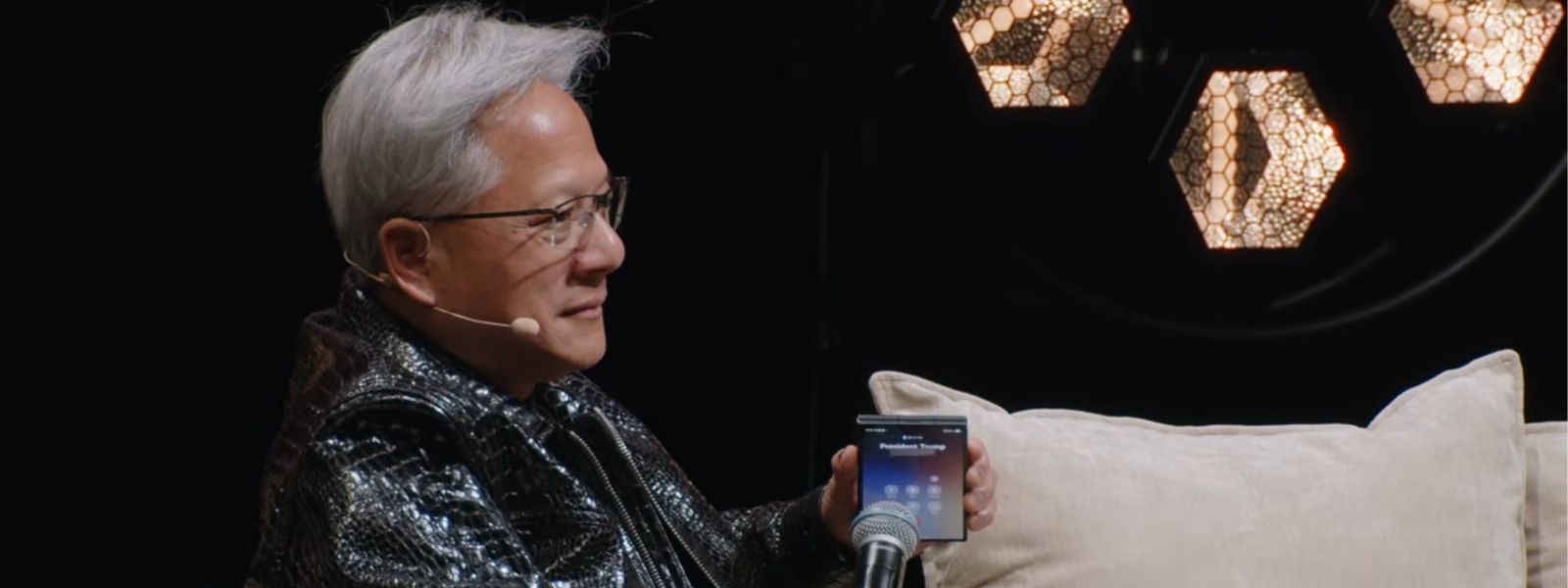
COLOMBO (News 1st); A surprise live exchange between Donald Trump and Jensen Huang, the President and CEO of NVIDIA, has ignited fresh debate over the future of artificial intelligence, with the US President forcefully rejecting warnings about AI risks and declaring that the United States must remain the undisputed leader in the global race for technological dominance.
The conversation took place at the All-In Summit, while Huang was speaking before thousands of attendees alongside prominent technology and business figures. After receiving an unexpected call from the President, Huang told the audience that discussions at the event had already turned to Trump and his administration's approach to AI development.
As the call was connected to the venue's sound system, Trump immediately drew laughter from the crowd by joking that while Huang could design the world's most advanced computer chips, he was still struggling to put the President on speakerphone.
The light-hearted moment quickly evolved into a broader discussion on artificial intelligence, data centers and economic growth. Trump dismissed growing concerns surrounding AI development, describing opposition to expanded AI infrastructure as a "hoax" and suggesting that critics were inadvertently helping geopolitical rivals, particularly China.
The President argued that artificial intelligence represents one of the most transformative economic opportunities of the modern era, comparing its value to a resource boom. He described data centers as engines of prosperity that have revitalized struggling communities and insisted that AI would have a greater long-term impact than the internet itself.
According to Trump, efforts to slow AI development risk undermining American competitiveness at a time when the country is seeking to maintain its technological edge. He pointed to major investment projects and data center developments as evidence of the economic benefits AI infrastructure can bring to states and local communities.
Rejecting fears that artificial intelligence could eventually surpass human control, Trump emphatically dismissed claims that robots or advanced AI systems would take over the world.
"The robots are not going to be taking over the world," Trump said, adding that the notion of AI dominating humanity was exaggerated. While acknowledging that the technology should be developed carefully and prudently, he argued that caution should not be used as a justification to halt innovation or damage a rapidly expanding industry.
Trump reiterated that common sense must accompany technological progress but maintained that the United States cannot afford to retreat from the AI race. "Whoever wins AI, wins," he declared, repeating what has become one of his administration's central messages on emerging technologies.
He argued that AI is "bigger than the internet" and suggested that global leadership in artificial intelligence will ultimately determine future economic and geopolitical power. Trump warned against policies that could slow investment in AI infrastructure, particularly data centers, which he credited with bringing newfound prosperity to previously struggling regions.
Huang echoed the President's optimism, stating that the goal should be to ensure that every American industry, company, state and citizen benefits from the opportunities created by artificial intelligence. He pledged that the technology sector would work to ensure broad economic gains from the AI revolution.
Throughout the exchange, the two men presented a unified vision of AI as a powerful driver of innovation, wealth creation and national competitiveness, standing in contrast to growing calls from some technology leaders, researchers and international organizations for stricter regulation and oversight of advanced AI systems.
Other Articles
-725921-795712_850x460-855206_550x300.jpg)




.png)


Featured News




News 1st, MTV Channel (Pvt) Ltd, MBC Networks (Pvt) Ltd, 45/3, Braybrooke Street, Colombo-02.
T.P : +94 114 792 700, Fax : +94 114 792 733
T.P : +94 114 792 700, Fax : +94 114 792 733




 |  | .webp) |
|---|---|---|
 |  |  |
 |  |  |
 |
