.webp)


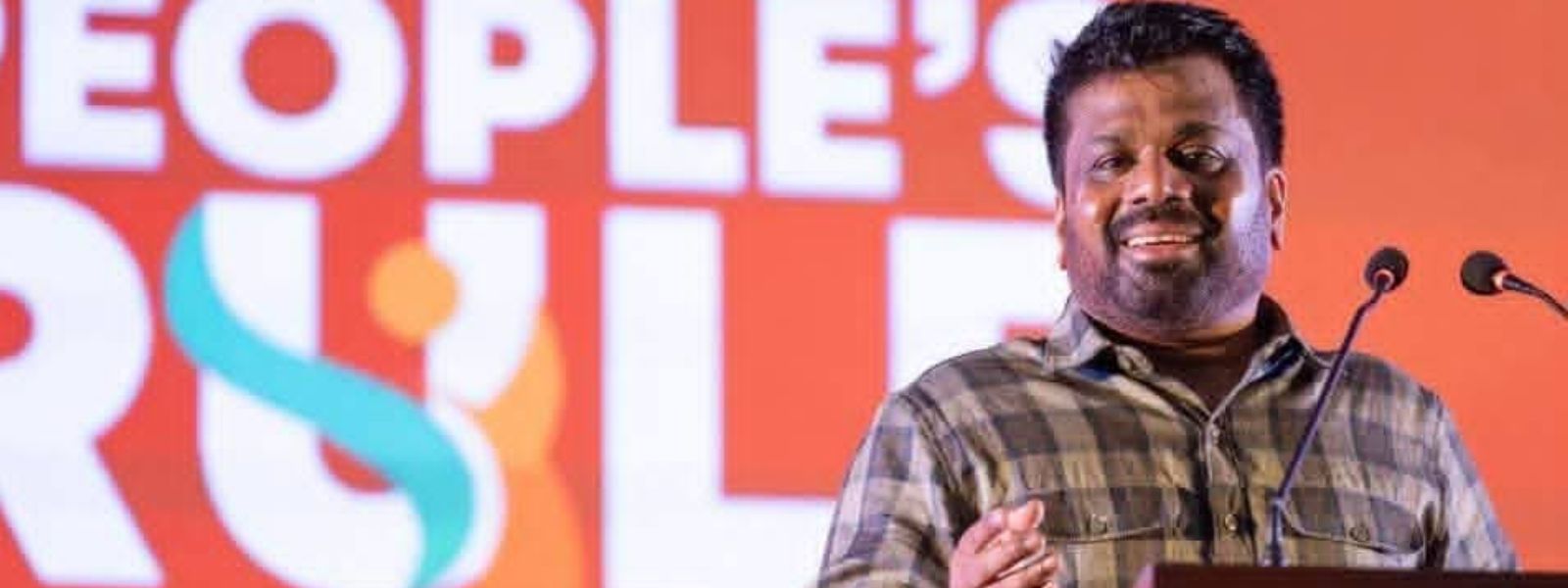
“Cops & Robbers” Game Is Over: AKD's Audacious Fight To End Sri Lanka’s Culture of Impunity



.png )
COLOMBO (News 1st); Sri Lanka’s President Anura Kumara Dissanayake has declared that the country’s long-running “Cops and Robbers” game in politics is finished, promising swift action to clear a massive backlog of corruption and crime cases and to ensure punishments are delivered while evidence is still fresh. He said only his National People’s Power (NPP) government would “cleanse” the system, even as entrenched interests scramble to protect themselves through embassies and international lobbying.
President Dissanayake described decades of Sri Lankan politics as a revolving-door drama in which one administration labels its rivals “robbers,” then becomes the “cops,” only to be branded robbers again when power changes hands. “One government comes… they call the others robbers. Then they become the cops. The next day, when they become the government, the others become robbers and they become the cops,” he said, calling it a “game” that normalised corruption and destroyed accountability.
He argued this cycle created a “black state” within the state, where powerful actors felt safe to steal because they believed they could always return to power and escape consequences. “They never thought another group would become the police… That’s the problem. Now this joke of a game is becoming real. That’s the turmoil,” he said, linking the breakdown directly to the country’s wider crisis.
The President said the justice system has been crippled by a huge backlog of cases, some stretching back 15 to 20 years, which now pile up and overwhelm investigators and courts. He warned that many offences risk falling outside prosecution windows as time passes, noting that after 20 years some matters can be barred by limitation laws, making swift action essential.
He listed multiple causes for the paralysis: staff shortages in courts, political interference, changes and withdrawals of charges by the Attorney General’s Department, files being “requested” from the AG’s office, and the Bribery Commission filing cases improperly. “Because of all this, the law was not implemented,” he said, leaving Sri Lanka with a “huge pile of stalled cases.”
To illustrate the delay, he cited a case filed in 2016 that, by 2026, still had not taken evidence from a single witness, showing how trials drag on until memories fade and public trust evaporates. “What’s important about the law? It’s no use getting punishment someday. At least the case must be heard while the incident is remembered,” he said.
President Dissanayake said his government is moving to make the Criminal Investigation Department (CID) stronger and more effective, and he hinted at a special “allowance” for police officers in January to support this drive. He also highlighted progress at the Government Analyst’s Department, saying that after providing facilities, vehicles and incentives, the lab delivered 9,084 forensic reports in a single month, helping unblock cases that stall without scientific evidence.
On the courts side, he said the government has authorized recruitment to fill staff vacancies and has established new high courts, including seven new High Courts in Colombo alone, to speed up hearings and judgments. He added that necessary constitutional amendments will be brought forward “without fear,” and that once the Supreme Court delivers its determination on the 22nd Amendment, expected within 21 days, the bill will be immediately tabled and passed in Parliament.
“The decisions we make are carefully measured and taken for the people. We will not reverse any decision,” he said, signaling that reforms targeting corruption and impunity will not be diluted under pressure.
The President acknowledged that those who benefited from the old system are now agitated, running to embassies and writing to international organizations to try to slow or stop reforms. “Let them be disturbed,” he said, adding that such reactions were expected as the “black law” that protected certain groups is dismantled.
He framed the crackdown as a moral and national necessity, arguing that corruption and the protection of corrupt networks were central causes of Sri Lanka’s decline. “Remember this: the black fraud and corruption existed in our country. That is why this country was destroyed. We are cleansing it… Only the NPP government will do this work,” he said.
Other Articles


-859908_550x300.jpg)
-859896_550x300.jpg)


Featured News




News 1st, MTV Channel (Pvt) Ltd, MBC Networks (Pvt) Ltd, 45/3, Braybrooke Street, Colombo-02.
T.P : +94 114 792 700, Fax : +94 114 792 733
T.P : +94 114 792 700, Fax : +94 114 792 733




 |  | .webp) |
|---|---|---|
 |  |  |
 |  |  |
 |
