.webp)


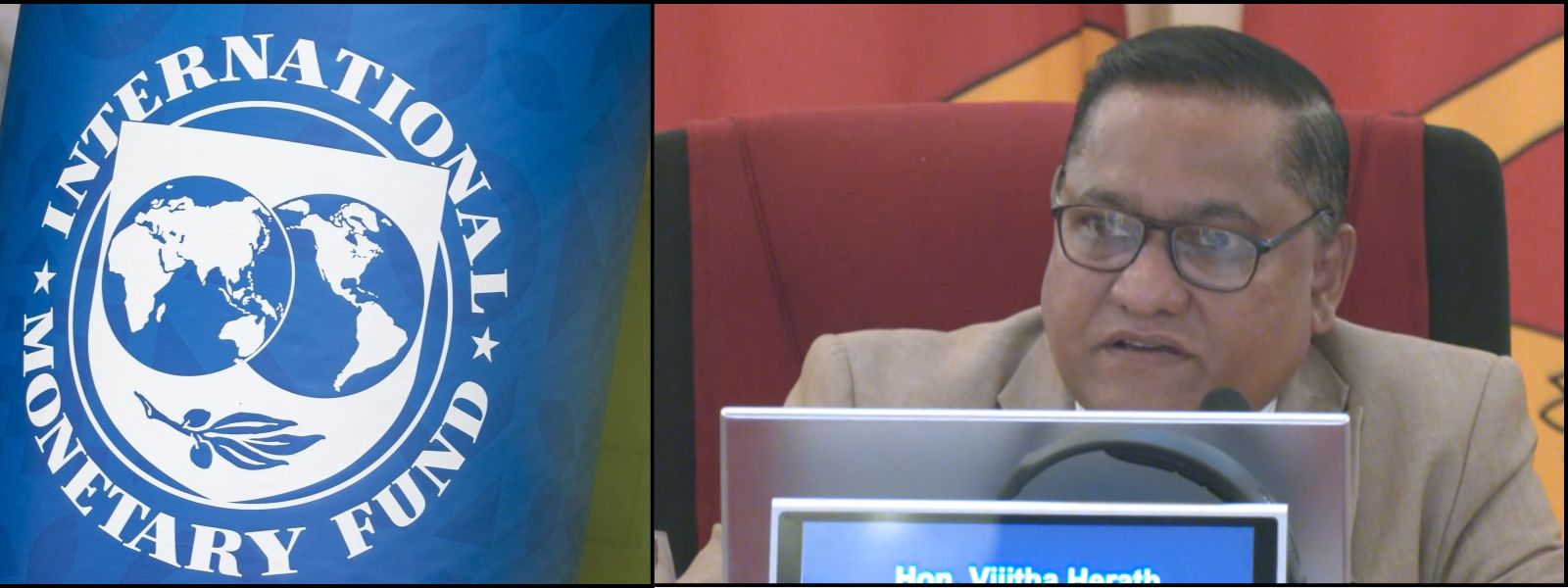
Sri Lanka to Reapply for EU GSP+ by 2028 | Government Confident on Debt Repayments



.png )
COLOMBO (News 1st): Sri Lanka plans to reapply for the European Union's coveted GSP+ trade concession scheme by the end of 2028, as the country seeks to build on its economic recovery, strengthen international partnerships and expand access to global markets.
Foreign Affairs, Foreign Employment and Tourism Minister Vijitha Herath said the government is preparing to seek re-entry into the European Union's Generalised Scheme of Preferences Plus (GSP+) under the EU's revised framework, while expressing confidence that Sri Lanka will be able to address all outstanding requirements within the stipulated timeframe.
The Minister noted that GSP+ is granted based on compliance with a range of international conventions related to human rights, labour rights, good governance and environmental protection.
"We hope to address all outstanding matters and be ready to reapply for GSP+ within the stipulated timeframe. We also look forward to the support of our friends in the European Union in securing this important facility for Sri Lanka once again," he said.
The announcement comes as Sri Lanka seeks to convert its hard-earned economic stability into a new phase of sustained growth following one of the most severe economic crises in the country's history.
Minister Herath said the government remains firmly committed to fulfilling the aspirations of the public and building a just, fair and prosperous society, despite the challenges encountered in recent years.
He pointed to Sri Lanka's resilience in the face of multiple setbacks, including the devastation caused by Cyclone Ditwah, global economic uncertainties and the impact of tensions in the Middle East.
According to the Minister, reconstruction and recovery efforts continue across areas affected by the cyclone, with the government working to restore communities, infrastructure and local economies.
He highlighted the recent signing of a US$200 million loan agreement between Sri Lanka and the Asian Development Bank, which will support reconstruction, infrastructure rehabilitation and livelihood recovery in affected regions.
Minister Herath also expressed appreciation to the international community for its continued assistance during challenging times, noting that development efforts remain focused on poverty alleviation, agriculture, science and technology, digitalisation and the achievement of Sustainable Development Goals.
The Minister said the country has made significant progress in restoring macroeconomic discipline, strengthening public finances, rebuilding foreign exchange reserves, advancing debt restructuring efforts and regaining international confidence.
"The task ahead is to convert this hard-won stability into a new phase of sustainable growth driven by investment, export diversification, tourism, foreign employment, productivity and jobs, while ensuring that the benefits of recovery reach every household," he said.
Highlighting recent economic developments, the Minister noted that the International Monetary Fund Executive Board completed the fifth and sixth reviews of Sri Lanka's Extended Fund Facility programme earlier this year, unlocking a further US$695 million in funding. He added that the programme's seventh review is expected to take place in October.
Minister Herath also expressed confidence that Sri Lanka would be capable of meeting its debt repayment obligations from 2028 onwards, emphasizing that extensive debt restructuring efforts have placed the country on a more sustainable footing.
He pointed to a number of positive international developments which, he said, demonstrate growing global confidence in Sri Lanka's recovery.
Among them was the decision by the United States to reduce the tariff rate applicable to Sri Lankan exports to 10 percent, down from a previously proposed 44 percent, providing a boost to exporters.
The Minister also noted that the World Bank had upgraded Sri Lanka back to upper-middle-income economy status and highlighted the country's improvement of 14 places in the 2026 Global Peace Index.
Tourism, one of Sri Lanka's key foreign exchange earners, has also recorded a significant revival.
According to Minister Herath, tourist arrivals surpassed 1.45 million by mid-August, with the government targeting 2.5 million arrivals in 2026. He urged the international community to continue supporting Sri Lanka's tourism sector by encouraging greater travel to the island.
Alongside economic reforms, the government says it remains committed to strengthening democratic institutions, promoting national reconciliation and ensuring the protection of rights.
Minister Herath revealed that several legal reforms are currently in progress, including plans to repeal the Prevention of Terrorism Act and introduce new counter-terrorism legislation. Amendments to the Online Safety Act are also being finalized.
He further highlighted the government's anti-corruption agenda under the Clean Sri Lanka Programme, stating that measures have been taken to improve transparency, strengthen accountability and create a more investor-friendly business environment.
Among the initiatives cited were efforts to strengthen the Commission to Investigate Allegations of Bribery or Corruption, the implementation of the National Anti-Corruption Action Plan 2025-2029 and the introduction of new public finance and debt-management laws.
The Minister also pointed to progress under the national anti-narcotics programme launched by President Anura Kumara Dissanayake last year, noting that several key figures linked to the drug trade have already been apprehended.
On the international stage, Sri Lanka is preparing to engage with the United Nations Human Rights Council during its 63rd Session beginning in September, while the Foreign Minister will lead the country's delegation to the high-level segment of the 81st United Nations General Assembly.
He also announced that the Cabinet had recently approved the creation of an Inter-Ministerial Standing Committee on Human Rights, which will function as a national mechanism for monitoring, coordinating and reporting on Sri Lanka's international human rights commitments.
Other Articles
-852688_550x300.jpg)

_11zon-852670_550x300.jpg)






Featured News


-849213_550x300.jpg)

News 1st, MTV Channel (Pvt) Ltd, MBC Networks (Pvt) Ltd, 45/3, Braybrooke Street, Colombo-02.
T.P : +94 114 792 700, Fax : +94 114 792 733
T.P : +94 114 792 700, Fax : +94 114 792 733




 |  | .webp) |
|---|---|---|
 |  |  |
 |  |  |
 |
