.webp)


Same Table, Different History: Opposition Meeting Brings Back Old Political Ghosts



.png )
COLOMBO (News 1st); In Sri Lankan politics, few things are as permanent as temporary alliances.
That reality was on full display in Colombo as Opposition Leader Sajith Premadasa convened a high-profile meeting of opposition political leaders at his office following a written request from Sri Lanka Podujana Peramuna (SLPP) MP Namal Rajapaksa, seeking a collective response to proposals relating to the extension of the tenure of judicial officers.
The gathering was notable not only for what was discussed inside the room, but also for who was seated around the table.
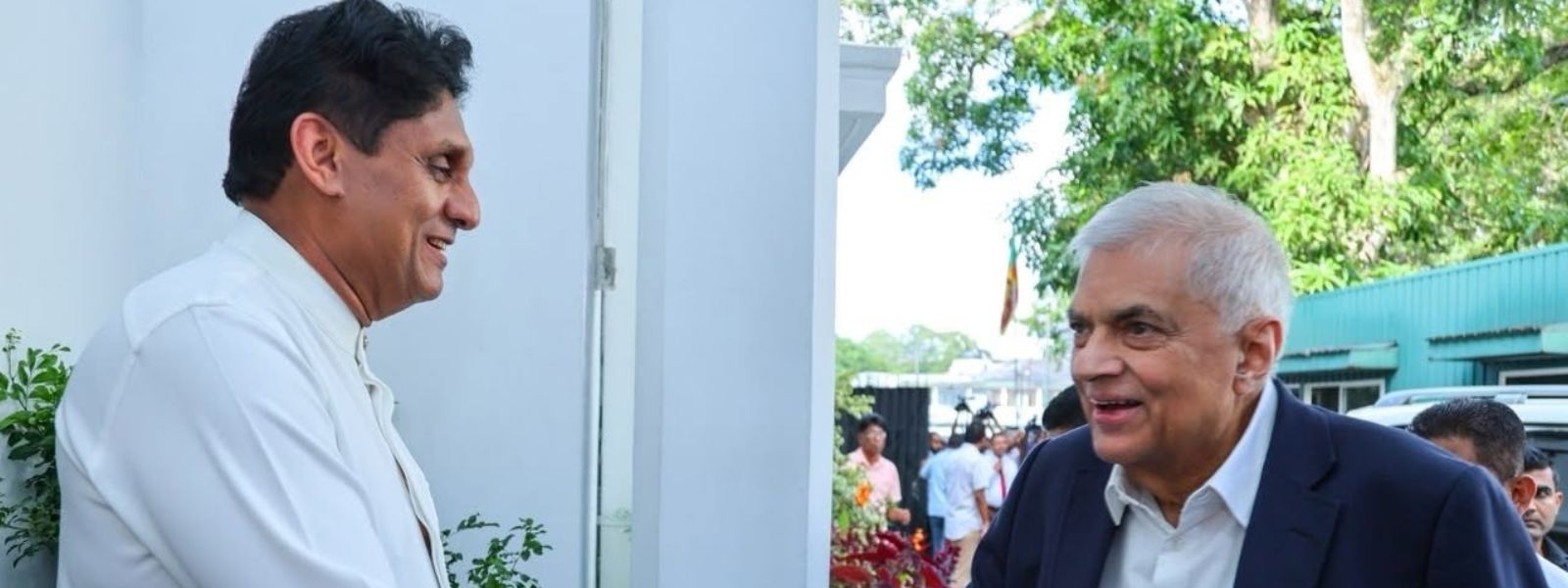
For many observers, especially on social media, the image itself told a story. Premadasa, who broke away from the United National Party (UNP) and went on to establish the Samagi Jana Balavegaya (SJB) amid growing tensions surrounding the Treasury bond controversy that engulfed the UNP, found himself presiding over a meeting attended by none other than former President Ranil Wickremesinghe and senior UNP representatives.
Over the years, Premadasa and Wickremesinghe had often found themselves on opposite sides of some of the most intense political battles within the opposition camp. Yet on Thursday, both men appeared united around a common cause – concerns over judicial independence.
Among the first to arrive was SLPP National Organiser Namal Rajapaksa, who is currently out on bail while facing charges of criminal breach of trust linked to allegations that Rs. 70 million received from India's Krrish Company for the promotion of rugby was misused.
He joined representatives of the UNP, including former President Ranil Wickremesinghe and Sagala Ratnayaka.
Wickremesinghe is currently on bail in relation to allegations surrounding the use of Rs. 16.6 million in public funds for a private visit to the United Kingdom.
Also present were opposition MPs Chamara Sampath Dassanayake, Ravi Karunanayake and Udaya Gammanpila, each of whom is currently involved in court proceedings related to various matters.
Several other political figures, including Patali Champika Ranawaka, Tiran Alles, Wimal Weerawansa, Dilith Jayaweera and Rauff Hakeem, also attended the discussion.
Former President Wickremesinghe, while supporting the need for collective action, called for practical reforms to address the problems facing Sri Lanka's justice system.
Wickremesinghe also proposed that the opposition unite in Parliament and seek the appointment of a Select Committee to address the backlog of court cases.
Before the discussions concluded, Namal Rajapaksa, whose request had prompted the meeting, departed the venue.
Speaking to the media, Rajapaksa said judicial independence was an issue that had united political parties with otherwise differing agendas.
After nearly two hours of discussions, opposition representatives began leaving the Opposition Leader's Office.
Former Minister Wimal Weerawansa argued that the government's actions had inadvertently brought together parties that would not ordinarily be found on the same political platform.
Meanwhile, former President Maithripala Sirisena explained why he was absent from the gathering despite having received an invitation.
"I had an event here today and I could not miss it," Sirisena said.
Responding to a question on whether he had been invited, Sirisena confirmed that he had informed organizers beforehand that he would be unable to attend due to a prior commitment.
While the meeting was officially centred on the judiciary, it also highlighted the changing realities of opposition politics in Sri Lanka.
Political figures who once campaigned against one another, challenged each other's credibility, and represented competing visions for the country's future found themselves occupying the same room.
Whether the moment represents the beginning of a broader political alignment or merely a temporary convergence around a single issue remains to be seen.
What is clear, however, is that the images from the Opposition Leader's Office captured a scene that would have seemed improbable not too many years ago: Sajith Premadasa sitting alongside political actors he had spent years distancing himself from, all in pursuit of what they described as a shared effort to defend judicial independence.
Other Articles


-857388-857423_550x300.jpg)

-857406_550x300.jpg)


.png)


Featured News




News 1st, MTV Channel (Pvt) Ltd, MBC Networks (Pvt) Ltd, 45/3, Braybrooke Street, Colombo-02.
T.P : +94 114 792 700, Fax : +94 114 792 733
T.P : +94 114 792 700, Fax : +94 114 792 733




 |  | .webp) |
|---|---|---|
 |  |  |
 |  |  |
 |
