.webp)


IMF Urges Energy-Saving Measures & Warns of Worsening Supply Disruptions



.png )
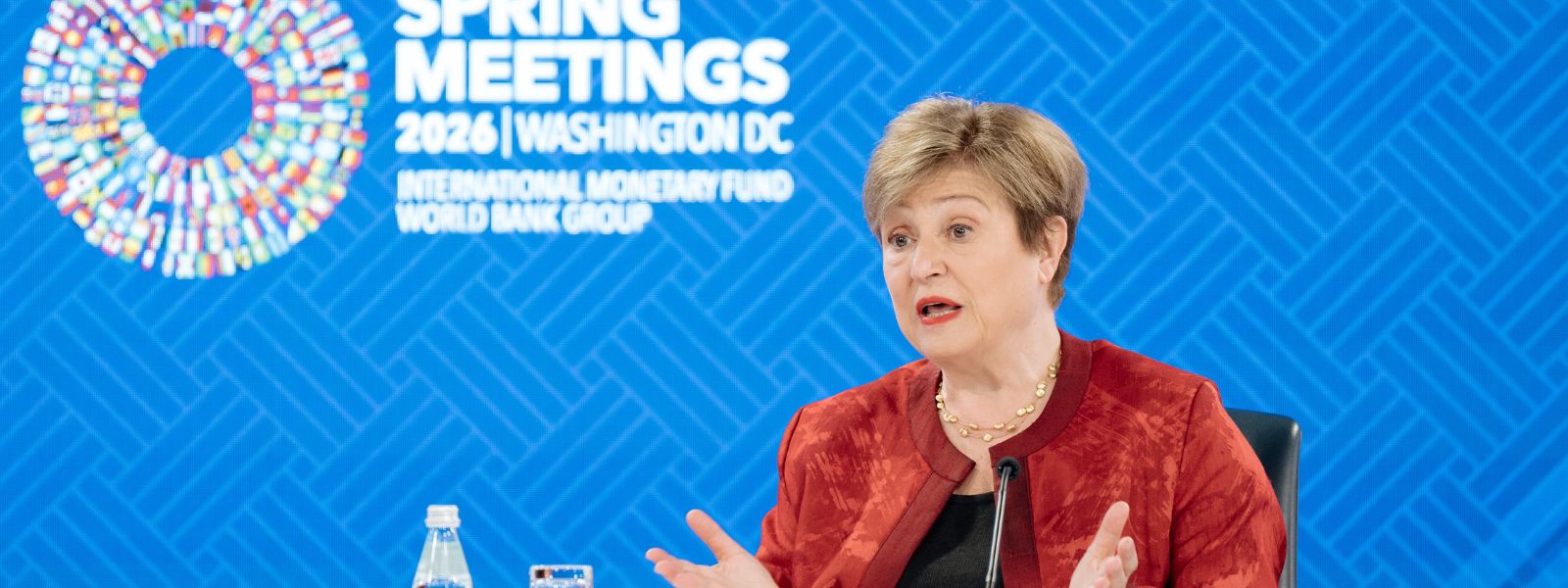
COLOMBO (News 1st); The International Monetary Fund has expressed growing concern over physical supply chain disruptions stemming from developments in the Strait of Hormuz, warning that shortages of critical resources are already emerging and are likely to deepen in the weeks ahead.
Responding to questions on the market impact of events in the Gulf, IMF Managing Director Kristalina Georgieva said the Fund is worried about the breakdown of physical supply chains, particularly in Asia, which is highly dependent on imports from the region.
“Yes, we are concerned about the physical breakdown in supply chains,” Georgieva said. She noted that shortages are already being seen in several countries, not only of oil and gas, but also of naphtha (NAFTA) and helium, creating supply disruptions across industries.
Georgieva stressed that these challenges will not disappear quickly, even if the conflict were to end immediately.
She pointed out that global shipping dynamics mean recovery will take time, describing oil tankers as slow-moving vessels that can take as long as 40 days to reach distant destinations such as Fiji. As a result, she warned that the effects of these supply disruptions are expected to intensify in the coming weeks.
Against this backdrop, the IMF chief urged governments to adopt measures aimed at reducing energy consumption. She cited examples from countries that have already taken action, including making public transport free, encouraging people to work from home, and promoting shifts toward less energy-intensive activities. Georgieva noted that such measures were successfully implemented during the COVID-19 pandemic and said there is no reason not to expand them now.
Highlighting the broader complexity of the energy shock, Georgieva pointed to jet fuel as an example. She said South Korea is both an importer of energy and a major exporter of jet fuel, supported by relatively strong oil and gas reserves. While these reserves have helped keep the economy functioning, she said Korea, like others, still needs new supplies, underlining the slow pace at which global energy logistics can adjust.
“What we have is a 20th-century type of shock, slow-moving shock in the 21st century,” she said.
Addressing concerns over inflation and the appropriate response by central banks, Georgieva said IMF guidance remains country-specific. For central banks with strong credibility and well-anchored inflation expectations, she advised clearly signalling a commitment to price stability while avoiding premature action.
“Do not rush,” she said, adding that if conditions improve quickly and the conflict de-escalates, policy tightening may not be necessary.
Other Articles
-857524_550x300.jpg)

-857512_550x300.jpg)

 (1)-857500_550x300.jpg)
-857493_550x300.jpg)


.png)


Featured News




News 1st, MTV Channel (Pvt) Ltd, MBC Networks (Pvt) Ltd, 45/3, Braybrooke Street, Colombo-02.
T.P : +94 114 792 700, Fax : +94 114 792 733
T.P : +94 114 792 700, Fax : +94 114 792 733




 |  | .webp) |
|---|---|---|
 |  |  |
 |  |  |
 |
