.webp)



QR System Key to Cutting Fuel Use by Up to 25%



.png )
COLOMBO (News 1st); Health and Mass Media Minister Dr. Nalinda Jayatissa says the government is taking steps to stabilise the current situation while ensuring that the impact on the economy is kept to a minimum, amid fuel supply restrictions caused by global disruptions.
The Minister acknowledged that fuel restrictions would inevitably have some effect on economic activity but stressed that the priority is to minimise the impact on key sectors such as production, exports, and tourism.
“We are working to stabilise the situation in a way that causes minimal impact on the economy. I am not saying there will be no impact at all,” Dr. Jayatissa said, noting that fuel supply limitations naturally affect economic performance. “However, the challenge at this moment is to manage the economy while minimising the impact on production, exports, and the tourism industry.”
He emphasised that all decisions are being taken with a focus on safeguarding economic stability, warning that economic collapse would be difficult to reverse.
“That is why every decision we take is carefully aimed at protecting economic stability. Because once the economy collapses, bringing it back up again is not easy,” he said.
Dr. Jayatissa pointed out that fuel shortages are not unique to Sri Lanka, noting that fuel scarcity is a global issue. He said the global fuel market is concentrated largely in one region, which is currently affected by war, contributing to supply disruptions worldwide.
“That is why, even before Sri Lanka adjusted fuel prices, many countries around the world had already begun increasing fuel prices,” he said.
Referring to past global responses to crises, the Minister recalled that two years ago many countries temporarily closed institutions, universities, and schools, only to reverse those decisions within days. He said the primary objective of such measures was to ensure the uninterrupted supply of essential goods to the public.
In the current context, Dr. Jayatissa said Sri Lanka is engaging with several countries to secure fuel supplies, including discussions with Russia to explore possible government‑to‑government agreements. At the same time, procurement processes are continuing.
He acknowledged the difficulties posed by the present global situation, stating that orders and shipments are being cancelled, making planning extremely challenging.
“There are many plans that can be made, but at this moment, it is difficult. Orders are being cancelled. Shipments are being cancelled. That is the reality of the current situation,” he said.
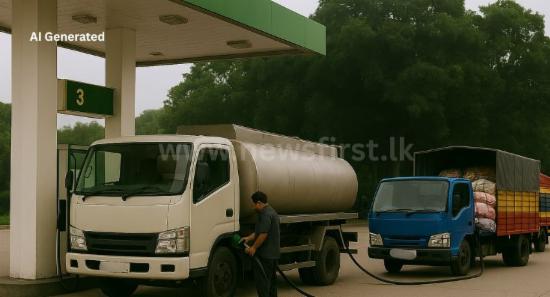
Dr. Jayatissa added that by reducing fuel consumption in non‑essential areas and carefully managing existing reserves, the country would be in a stronger position when future shipments arrive. He said this necessity prompted the introduction of several measures, including the QR‑based fuel distribution system.
Other Articles

-831438_550x300.jpg)
-831414_550x300.jpg)


Featured News

News 1st, MTV Channel (Pvt) Ltd, MBC Networks (Pvt) Ltd, 45/3, Braybrooke Street, Colombo-02.
T.P : +94 114 792 700, Fax : +94 114 792 733
T.P : +94 114 792 700, Fax : +94 114 792 733




 |  | .webp) |
|---|---|---|
 |  |  |
 |  |  |
 |
