.webp)


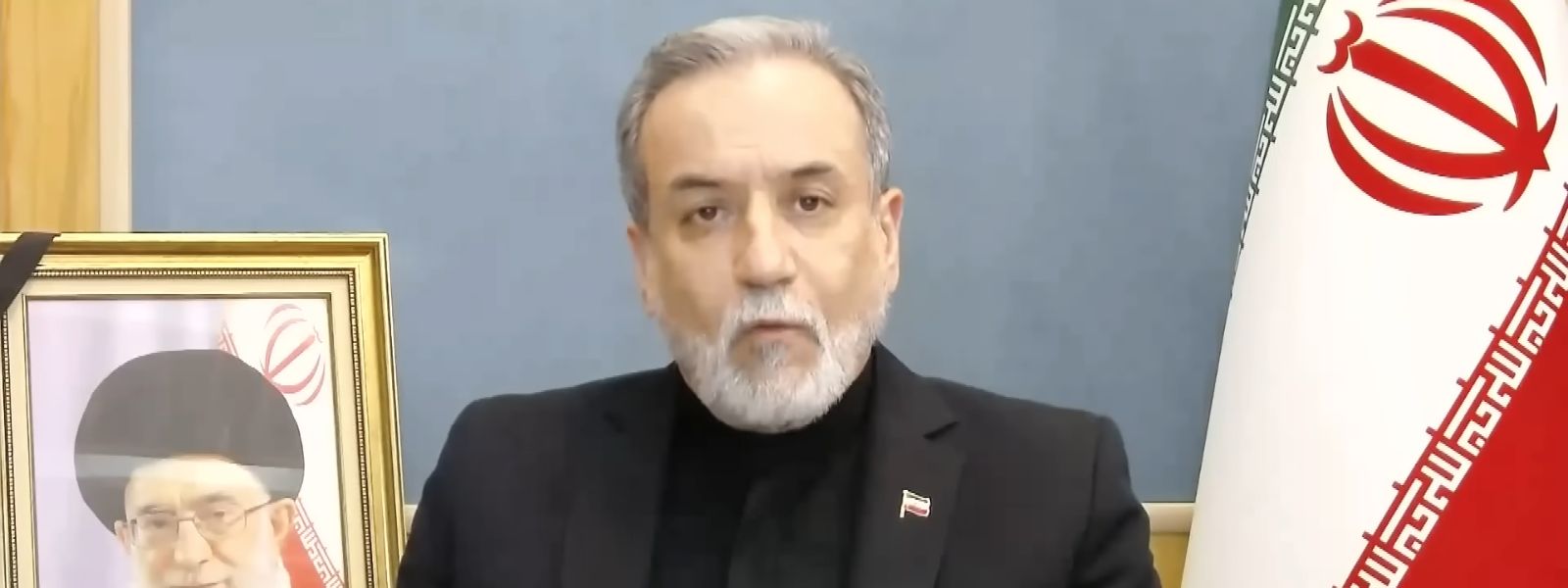
Iran Says Negotiations With US 'Not on the Table Anymore'



.png )
COLOMBO (News 1st); Iran’s Foreign Minister Abbas Araghchi said it is too early for the country’s newly selected leader to make comments regarding potential contact with the United States, but added that renewed negotiations with Washington are not expected to take place.
Responding to a journalist’s question on whether Iran’s leadership has had recent contact with U.S. officials and whether negotiations or a ceasefire discussion was possible, Araghchi said previous experiences had eliminated that possibility.
He stated that Iran had a “bitter experience” negotiating with the United States.
Araghchi said Iran entered talks last June, only for the U.S. to attack “in the middle of negotiations.” He added that this year the United States attempted to reassure Iran that circumstances were different, promising no intention to attack and expressing a desire to resolve Iran’s nuclear issue peacefully.
According to Araghchi, Iran accepted these assurances, but after three rounds of talks, during which the U.S. negotiating team said “big progress” had been made, the United States again chose to attack. Because of this, Araghchi said, “talking with Americans anymore would be on our agenda anymore.”
The journalist on PBS News Hour, then noted that the conflict had entered its tenth day and asked what Iran believed the U.S. and Israel were trying to achieve through the war.
Araghchi said the United States and Israel attempted to reach key objectives but failed.
He claimed they expected a rapid victory or regime change “in a matter of two or three days,” which did not occur. He described their initial plan as a failure, adding that subsequent plans had also failed.
He said he did not believe the United States or Israel had any “realistic end game,” citing what he described as chaos in their actions and statements. Araghchi accused them of launching blind attacks, including on residential areas, hospitals, schools, and infrastructure, which he called “a very dangerous move.”
He added that the attacks had global consequences, saying, “as a result, you can see the oil prices everywhere in the world.”
Araghchi noted that after ten days of fighting, he believed the United States and Israel were now “aimless.”
Other Articles


-830190_550x300.jpg)





Featured News




News 1st, MTV Channel (Pvt) Ltd, MBC Networks (Pvt) Ltd, 45/3, Braybrooke Street, Colombo-02.
T.P : +94 114 792 700, Fax : +94 114 792 733
T.P : +94 114 792 700, Fax : +94 114 792 733




 |  | .webp) |
|---|---|---|
 |  |  |
 |  |  |
 |
