.webp)


-828801.jpg)
Sri Lanka Targets Growth as Key Competitive Advantage



.png )
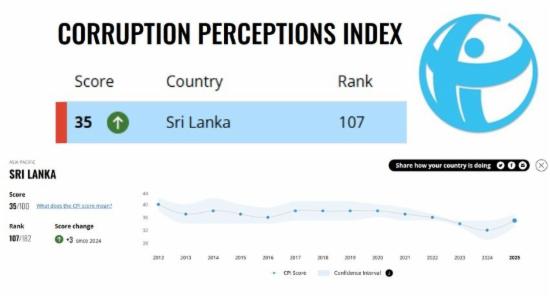
COLOMBO (News 1st); Sri Lanka’s Secretary to the Ministry of Finance, Harshana Suriyapperuma, says stability, rule of law, and the government’s zero-tolerance approach to corruption are central to strengthening investor confidence and creating an environment conducive to renewed business interest and foreign direct investment.
He said the government is paying close attention to governance and financial discipline to reduce risk for businesses and position Sri Lanka as a destination that investors and companies will consider again.
Suriyapperuma noted that the administration’s ambition is to build on the strengths the country already possesses.
Highlighting the importance of economic expansion, he said Sri Lanka’s competitive advantage can be defined in one word: growth. As part of this effort, nearly Rs. 96 billion has been allocated in the budget to support the SME sector, with particular emphasis on women entrepreneurs, young entrepreneurs, and exporters looking to enter markets beyond Sri Lanka’s relatively small domestic base.
Suriyapperuma said global, geopolitical, and natural challenges, including recent disasters, require policies that strengthen economic resilience and the country’s ability to withstand shocks. According to him, this journey has already begun, with the government’s policy framework designed to build confidence in the business community and ensure that rule of law prevails while creating conditions that promote efficiency and better returns.
He added that despite the cyclone, Sri Lanka is approaching 2026 from a position of strength. Treasury buffers contributed to strong capital expenditure performance in 2025, recording significant progress between April and December even with December affected by the disaster.
Suriyapperuma said the government intends to continue building a predictable economy with policy consistency that encourages businesses, investors, and FDIs to consider Sri Lanka as a viable destination. He affirmed that Sri Lanka will continue engaging with bilateral and multilateral partners, investors, and stakeholders, realigning policies as needed to respond to global challenges while meeting local requirements. Policies, he said, will be reviewed and fine-tuned regularly.
Other Articles
-830653_550x300.jpg)

-794075-830635_550x300.jpg)
-830629_550x300.png)




Featured News




News 1st, MTV Channel (Pvt) Ltd, MBC Networks (Pvt) Ltd, 45/3, Braybrooke Street, Colombo-02.
T.P : +94 114 792 700, Fax : +94 114 792 733
T.P : +94 114 792 700, Fax : +94 114 792 733




 |  | .webp) |
|---|---|---|
 |  |  |
 |  |  |
 |
