.webp)


UN Report Reveals Shocking Toll of Cyclone Ditwah



.png )
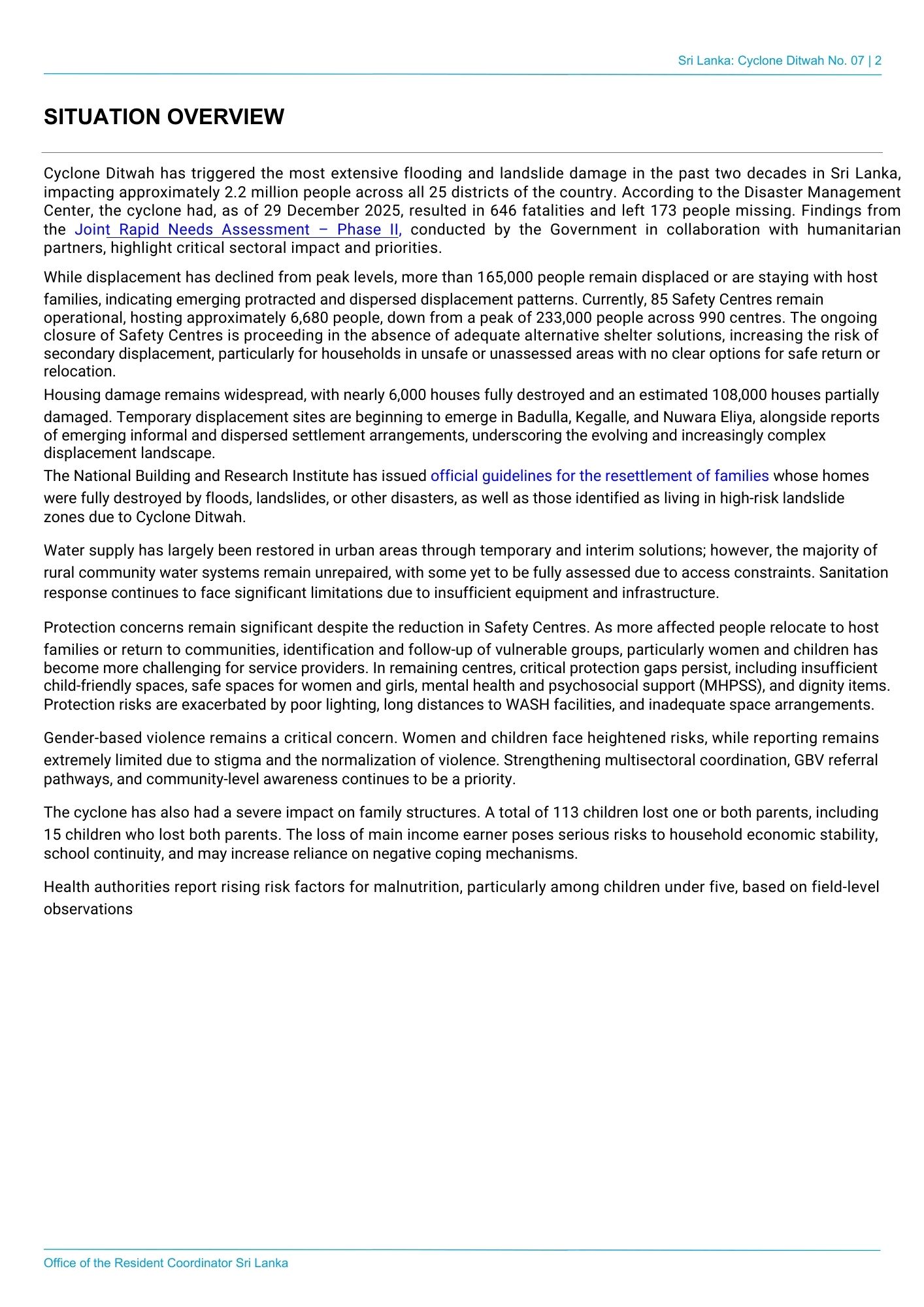
COLOMBO (News 1st); Sri Lanka is confronting one of its most catastrophic natural disasters in recent memory as new data from the United Nations’ Cyclone Ditwah Situation Report reveals the scale of destruction left behind by the storm.
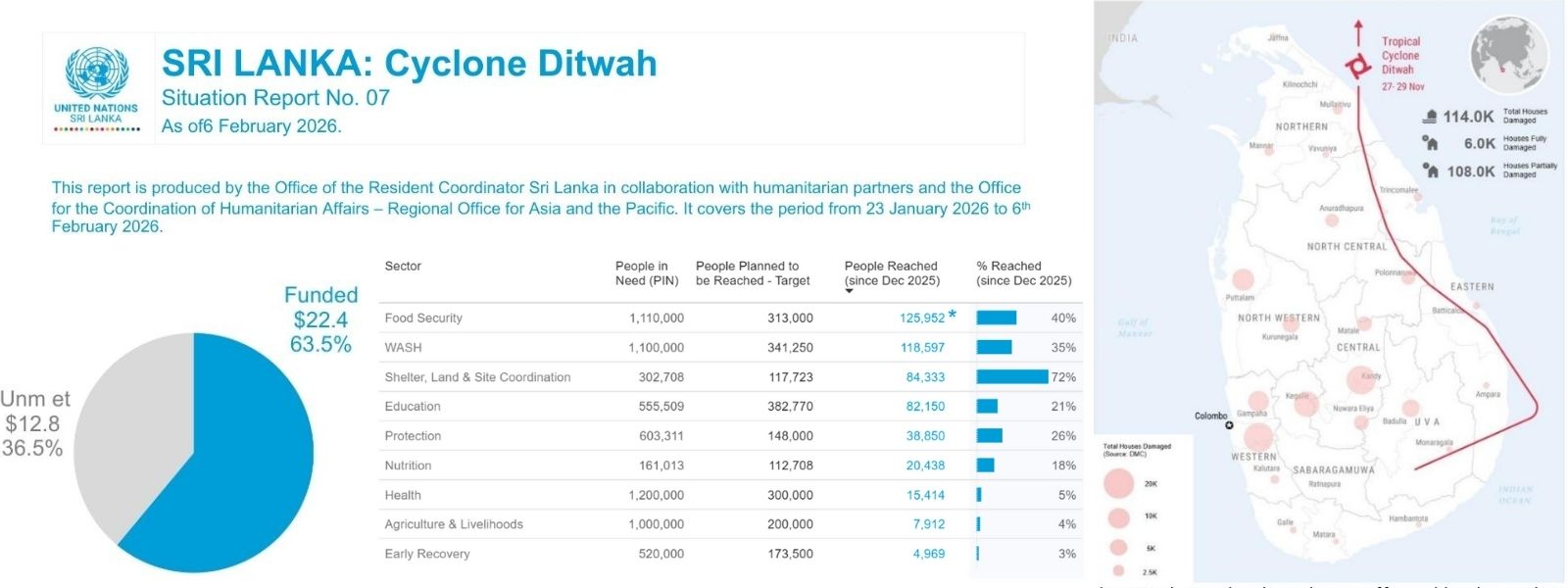
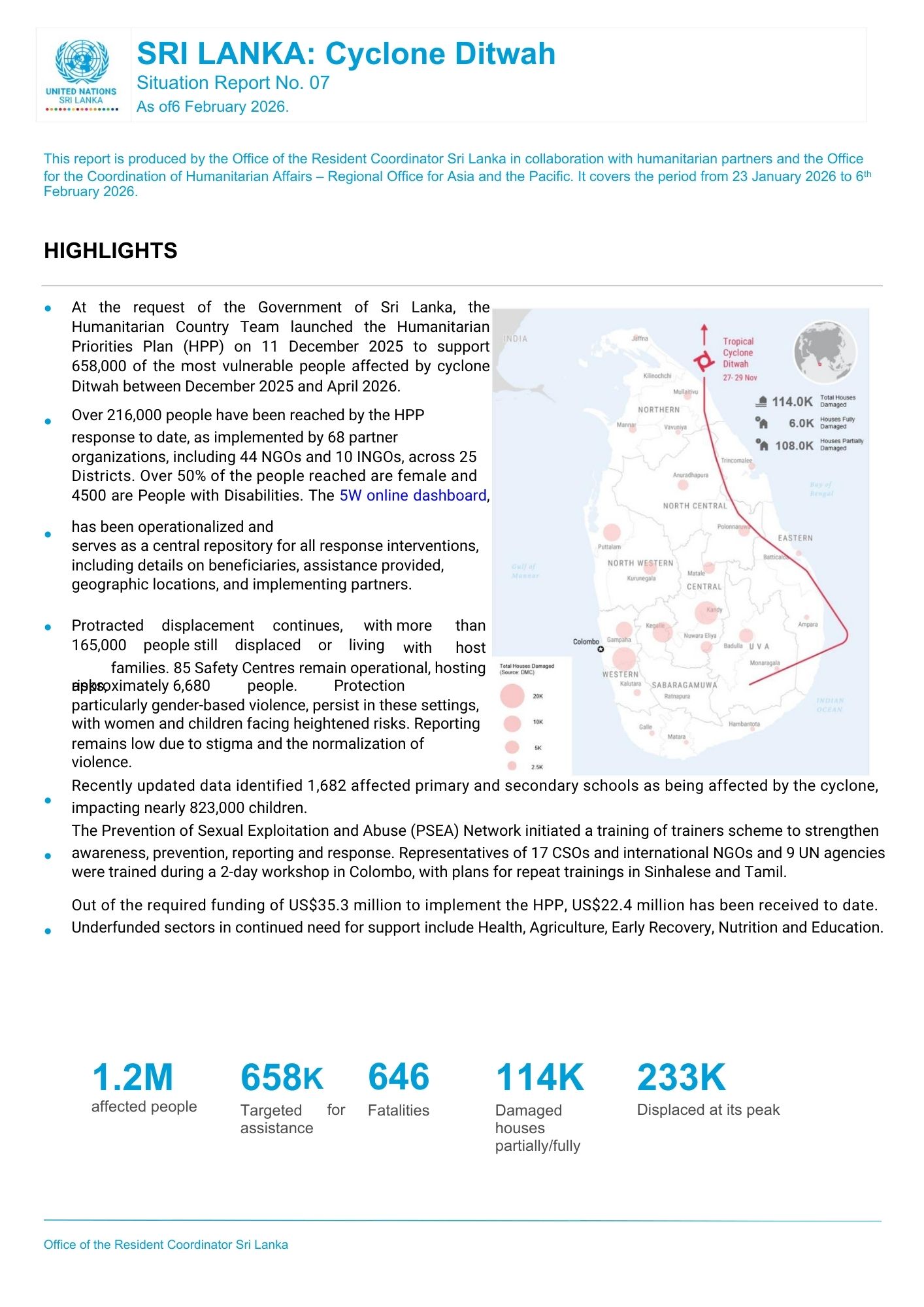
The Government of Sri Lanka had requested the United Nations' activation of the Humanitarian Priorities Plan (HPP) in December 2025 to support 658,000 of the most vulnerable citizens through April 2026.
Since its launch, the HPP has provided life-saving assistance to 216,000 people, delivered through 68 partner organizations, including 44 NGOs and 10 INGOs. Women account for more than half of the beneficiaries, while 4,500 people with disabilities have also been reached.
One of the most devastating sectors has been education. Newly compiled data confirm that 1,682 primary and secondary schools were affected, disrupting education for nearly 823,000 children. Key learning materials, textbooks, bags, uniforms, remain in short supply for 458,609 school-aged children and 68,000 preschoolers, while 900 children with disabilities urgently need customized supplies.
More than 1,382 schools and 2,720 preschools require repairs or replacement of essential infrastructure. Around 500 schools that served as temporary shelters need thorough cleaning and sanitation upgrades.
Nutrition risks are escalating, especially among children and pregnant women. Diet quality has deteriorated dramatically, with limited access to protein, fruits, and vegetables.
The report identifies 161,013 people needing nutrition support. 3,500 children requiring treatment for Severe Acute Malnutrition (SAM) and 32,000 children requiring support for Moderate Acute Malnutrition (MAM).
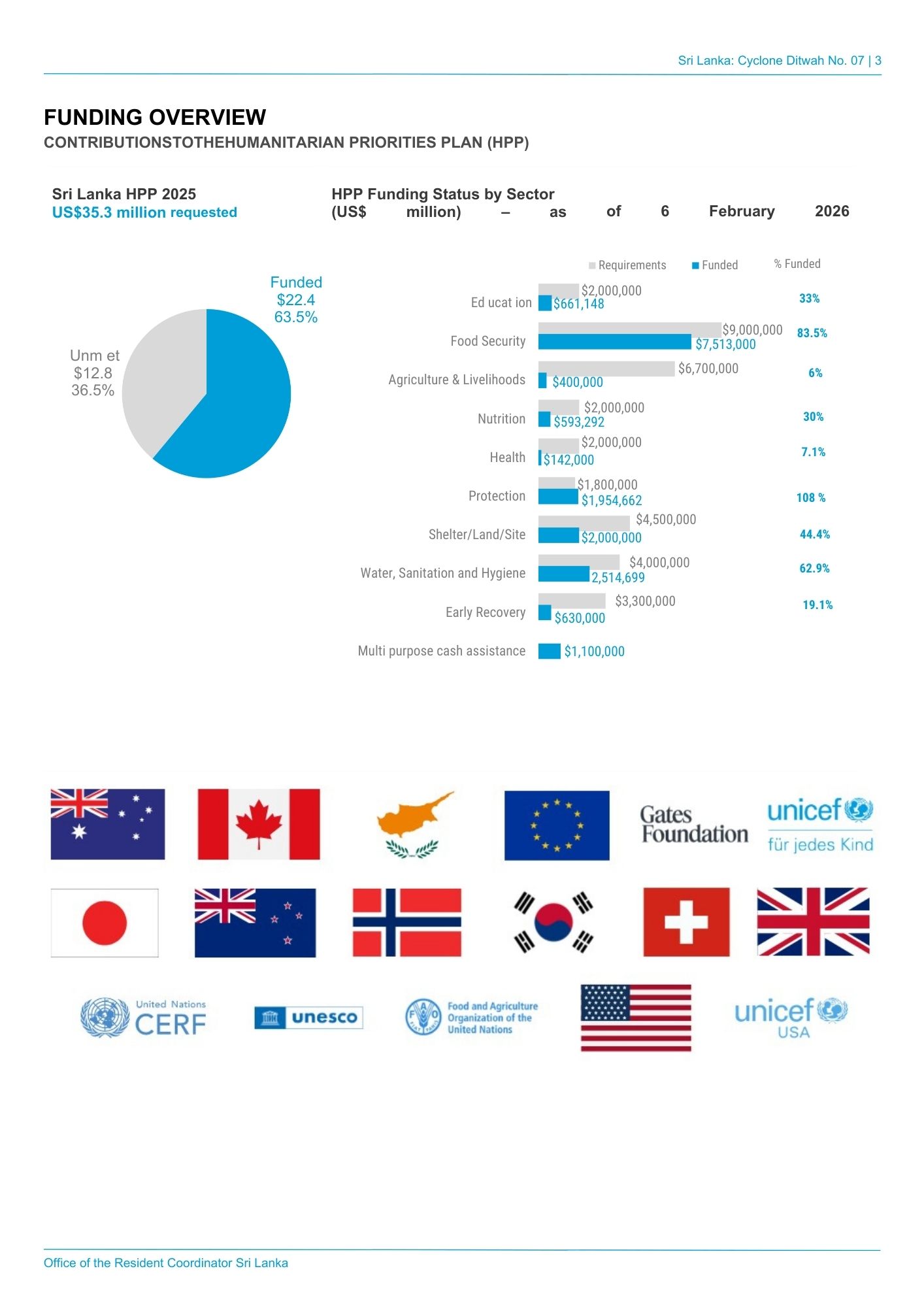
Of the US$35.3 million required for the HPP, only US$22.4 million has been funded, leaving a US$12.8 million gap. Several life-saving sectors, including Health, Agriculture, Nutrition, and Education, remain underfunded.
Additional international support outside the HPP totals US$17.17 million, alongside massive in-kind contributions ranging from medical teams and drones to food packs, boats, generators, and tents provided by more than 20 countries.
Other Articles
-854864_550x300.jpg)
-854858_550x300.jpg)





.png)


Featured News




News 1st, MTV Channel (Pvt) Ltd, MBC Networks (Pvt) Ltd, 45/3, Braybrooke Street, Colombo-02.
T.P : +94 114 792 700, Fax : +94 114 792 733
T.P : +94 114 792 700, Fax : +94 114 792 733




 |  | .webp) |
|---|---|---|
 |  |  |
 |  |  |
 |
