.webp)


IMF Warns: Emergency Spending Must Be Targeted, Transparent



.png )
COLOMBO (News 1st); The International Monetary Fund says its Executive Board approved emergency financial support of about US$206 million for Sri Lanka under the Rapid Financing Instrument (RFI), responding to what it described as the catastrophic impact of Cyclone Ditwah, which struck on November 28 and left a trail of death, displacement, and nationwide disruption.
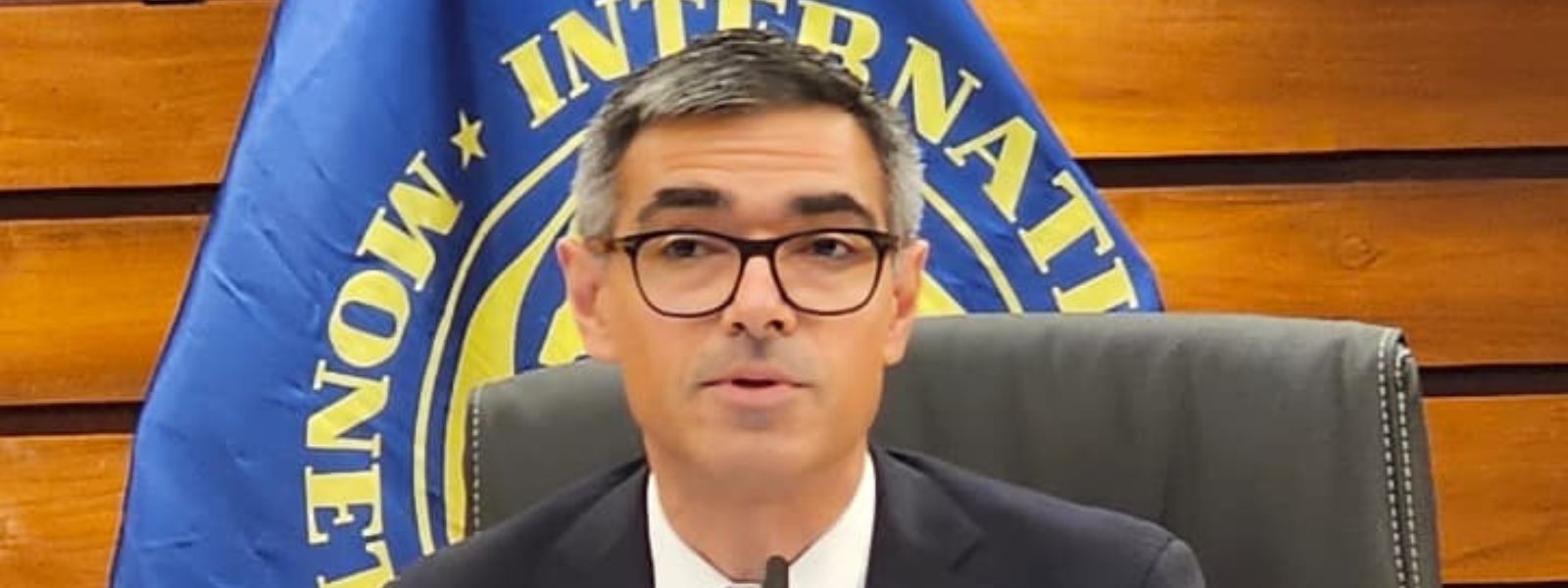
In a detailed statement, Evan Papageorgiou, IMF Mission Chief for Sri Lanka, said the IMF’s emergency support is intended to help Sri Lanka confront urgent balance of payments needs and fiscal pressures triggered by the disaster—an intervention designed to stabilize the country’s near-term financing position as the full scale of losses continues to emerge.
“The IMF’s emergency support will help Sri Lanka address urgent balance of payments needs and fiscal pressures arising from the disaster,” he said.
The IMF Mission Chief noted the Sri Lankan government moved quickly, rolling out what he described as a comprehensive relief package—including:
Direct support to affected families
Restoration of critical infrastructure
Measures to protect the most vulnerable
“The government responded swiftly with a comprehensive relief package,” Papageorgiou said, highlighting “direct support to affected families, restoration of critical infrastructure and measures to protect the most vulnerable.”
Crucially, he pointed to Sri Lanka’s strong fiscal performance in 2025 as the foundation enabling this response—and underscored a major parliamentary decision taken the same morning.
“The authorities’ strong fiscal performance in 2025 has provided a foundation for this response,” he said. “And this(19) morning the Parliament approved the enactment of the 2026 supplementary budget, which authorizes an additional 500 billion rupees to address the urgent need for relief and reconstruction.”
According to Papageorgiou, this supplementary allocation is meant to do more than simply fund immediate rescue and relief.
“The supplementary budget will help bridge the gap between immediate humanitarian needs and the longer term reconstruction efforts,” he said.
Papageorgiou stressed the cyclone struck at a moment of cautious national recovery—just as Sri Lanka has been emerging from a deep economic crisis.
He said the IMF-supported reform program under the Extended Fund Facility (EFF) had already begun to show results, citing:
Robust economic recovery
Price stability
Progress in rebuilding foreign exchange reserves
He added that revenue-based fiscal consolidation and public financial management reforms have strengthened discipline and reduced risks.
On debt, he said restructuring has provided significant breathing space—and moved public debt toward a more sustainable track.
But Papageorgiou also issued a blunt reminder: Sri Lanka is not out of danger.
“However, the economy remains fragile and GDP has not yet returned to its pre-crisis level,” he said.
Given the scale of devastation and the time required to establish credible estimates of economic impact, Papageorgiou said the fifth review under the EFF has been deferred.
“The IMF will field a mission to Sri Lanka in early 2026 to resume discussions on how the program can best support recovery and reconstruction efforts while preserving the objectives and policy priorities that have underpinned the recent progress,” he said.
Papageorgiou said the economic impact of Cyclone Ditwah is “significant and still unfolding.” While he cautioned it is too early to deliver a high-confidence assessment, he warned that economic activity is likely to be affected in the short term.
He singled out two sectors as particularly exposed:
Agriculture
Tourism
Papageorgiou also pointed to likely knock-on effects:
Inflation likely to rise because of supply disruptions
Current account deficit likely to widen over the next year
Even so, he argued that the government’s relief measures—backed by the IMF and other partners—should begin to cushion the blow and set the stage for recovery.
“The government’s relief measures supported by the IMF and other development partners should go some way to addressing these challenges and should lay the groundwork for recovery,” he said.
In the immediate term, Papageorgiou said the government must accommodate the shock and prioritize protecting people—lives and livelihoods—especially those hit hardest.
“In the short term, the authorities need to accommodate the significant natural disaster and act to help those affected the most and protect lives and livelihoods,” he said.
But he paired that with a firm governance message: emergency spending must meet high standards.
“The authorities need to ensure that emergency spending is efficient, well targeted and transparent,” he said.
He also stressed that all emergency expenditure should be executed in full compliance with the Public Financial Management Act, supported by stronger monitoring and routine disclosure.
Papageorgiou delivered clear direction on monetary discipline, saying the Central Bank of Sri Lanka (CBSL) should continue to avoid using money creation to fund the budget.
Looking forward, he said sustained reforms will be critical to restoring stability and supporting reconstruction and recovery, including better systems to choose and manage investments.
“The steadfast implementation of reforms will be crucial to restoring macroeconomic stability and supporting Sri Lanka’s recovery,” Papageorgiou said, adding: “Public investment management reforms will help prioritize reconstruction projects and ensure value for money.”
He also noted CBSL has already moved to ease pressure on those hit by the disaster.
“The Central Bank has announced measures to support affected borrowers and stands ready to provide liquidity support to the financial system if necessary,” he said.
Papageorgiou said the IMF is working closely with Sri Lankan authorities to determine how best to support the country and complete the next EFF review as quickly as possible.
“We are working closely with the authorities to understand how we can help and how to complete the next review under the EFF program as soon as possible,” he said.
He also restated the shared objectives that remain at the center of the IMF-supported program:
Restoring fiscal and debt sustainability while protecting the vulnerable
Safeguarding price stability and financial sector stability
Rebuilding external buffers
Strengthening governance
Advancing growth-oriented structural reforms
“Our shared objectives remain restoring fiscal and debt sustainability while protecting the vulnerable, safeguarding price and financial sector stability, rebuilding external buffers, strengthening governance and advancing growth-oriented structural reforms,” Papageorgiou said.
He praised the Sri Lankan government and CBSL for what he called a rapid, decisive response—and emphasized the IMF’s commitment to protecting recent progress.
“Let me conclude by commending the Sri Lankan government and the Central Bank of Sri Lanka for their swift and decisive response to the disaster,” he said. “The IMF remains dedicated to supporting Sri Lanka and safeguarding its hard-won gains and navigating the road ahead.”
Other Articles
-820172_550x300.jpg)

-820154_550x300.jpg)

-810965_850x460-820142_550x300.jpg)






Featured News
-819380_550x300.jpg)

-812087_550x300.jpg)
-810262_550x300.jpg)
News 1st, MTV Channel (Pvt) Ltd, MBC Networks (Pvt) Ltd, 45/3, Braybrooke Street, Colombo-02.
T.P : +94 114 792 700, Fax : +94 114 792 733
T.P : +94 114 792 700, Fax : +94 114 792 733




 |  | .webp) |
|---|---|---|
 |  |  |
 |  |  |
 |
